
APPLICATIONS / MANUFACTURER DIRECT
Tenant submetering can help building owners allocate electricity use across suites, but it is not automatically the same as utility revenue metering. The distinction affects meter selection, installation points, data handling, and who must approve the arrangement. Switchgear Builder Virginia manufactures custom switchgear and can coordinate specified metering provisions for new equipment. Project requirements, component choices, schedules, and ratings are subject to quote and verification. Start by defining what each meter is expected to measure, who will use its readings, and whether the serving utility has separate requirements.
Define the Metering Purpose
Owner submetering typically supports internal allocation, tenant reporting, or energy management; utility revenue metering serves the utility’s billing and service rules. A meter installed for owner use should not be assumed acceptable for utility billing, nor should its readings be treated as a substitute for a required utility meter. Before specifying switchgear, identify the parties that will rely on each reading and how it will be used. Confirm lease, accounting, and applicable regulatory requirements with the responsible professionals, and ask the utility whether it imposes metering or access conditions. These answers influence meter type, measurement point, communications, and who maintains the data system. Clear purpose prevents a common scope gap: equipment designed to display consumption but not to satisfy the actual billing or reporting workflow.
Choose Each Measurement Point
A submeter measures the electrical load downstream of its sensing point, so the point’s relationship to tenant distribution matters. A meter on a tenant feeder may capture that feeder’s load, while shared services, house loads, or downstream branches may be excluded or included depending on the one-line design. Document which loads belong to each tenant and how common-area consumption will be handled. Specify the circuit or feeder to be measured, the expected voltage and phase, and the sensing arrangement required by the selected equipment. The engineer should check available space, conductor routing, and coordination with protective devices and maintenance access. For a hypothetical multi-tenant project, separate feeder measurement may offer clearer allocation, but only if the distribution layout and ownership boundaries support it. Confirm the final points against drawings before release.
Set Accuracy Expectations
Accuracy needs depend on what decisions the readings support. A trend used to compare usage over time may have different requirements from readings used to allocate tenant charges. Establish the required meter accuracy, applicable standards, operating range, and measurement method with the engineer and the parties responsible for billing or compliance; do not infer an acceptable level from a product label alone. Confirm whether the specification calls for current transformers, direct-connected measurement, or other components, and define their ratios and compatibility with the intended meter. Errors can arise when the meter setup does not match the actual system or when configuration values are entered incorrectly. If a utility revenue meter is part of the project, obtain its requirements directly from the utility. Keep utility metering and owner-submetering obligations distinct in schedules and equipment documentation.
Plan Data Interfaces
Meter readings are useful only when the data can reach the intended users in a usable form. Specify whether readings will be viewed locally, collected by a building management or energy platform, or exported to another system. Identify required communications methods, protocols, network responsibility, data points, and any gateway or software supplied by others. Compatibility should be verified across the meter, communications hardware, and receiving system; a protocol name alone does not establish that every data point will transfer as intended. Define who configures addresses, validates readings, manages access, and responds to communication failures. Also clarify whether the project needs interval data, demand values, alarms, or simple cumulative consumption. These choices can affect meter selection and panel space, so settle them before equipment drawings are finalized rather than treating integration as a later field detail.
Coordinate the Switchgear Scope
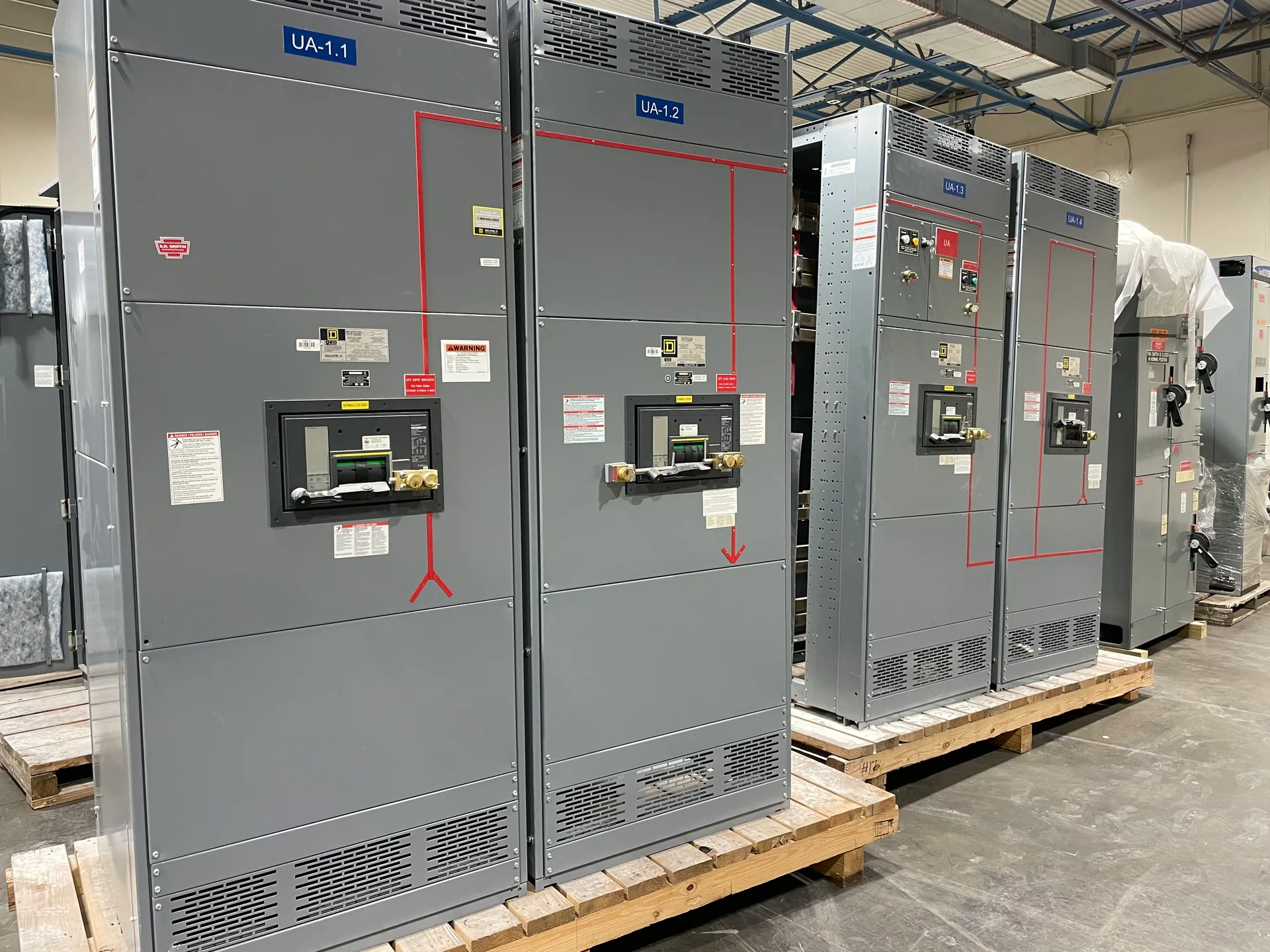
For a new switchboard package, provide the equipment supplier with the one-line diagram, tenant load boundaries, meter schedule, required data interfaces, and utility criteria that apply. Identify which meters and accessories belong in the switchgear scope and which are furnished or configured by the electrical contractor, utility, or controls provider. Check that proposed meter locations permit installation and service without obstructing equipment operation, and coordinate required compartments or provisions with the design team. Switchgear Builder Virginia offers custom builds using all-American components and direct USA manufacturing; available metering arrangements, ratings, and schedules require project-specific review and quotation. UL 891 applies only where the specified equipment is an applicable low-voltage switchboard and must be verified for the actual assembly. Resolve open requirements in submittals before release so the delivered configuration matches the approved project documents.