
PRODUCTS / MANUFACTURER DIRECT
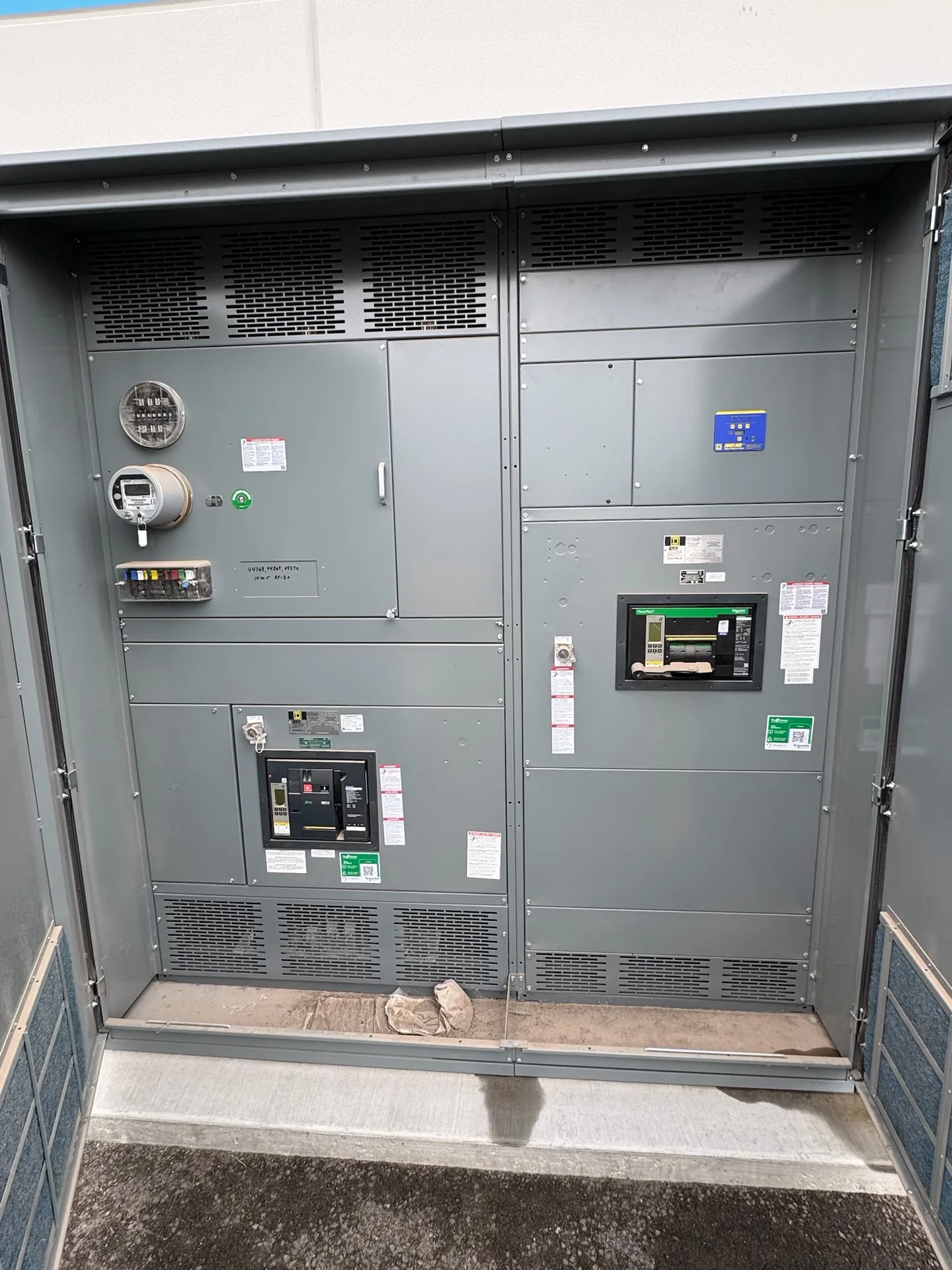
Utility metering cabinets establish the boundary between a utility’s metering equipment and a customer’s electrical installation. Their layout affects where current transformers (CTs) fit, how authorized personnel reach the compartment, and whether the proposed arrangement meets the serving utility’s requirements. Switchgear Builder Virginia manufactures new, custom-built switchgear in the USA using all-American components, with nationwide shipping and short lead times subject to project review. Because acceptance rules differ by utility and service territory, treat dimensions, access provisions, ratings, and approval status as items to confirm—not assumptions. Share the service requirements and project drawings so the cabinet configuration can be evaluated against the intended installation.
Define the ownership boundary
Start by identifying which equipment and spaces belong to the utility and which belong to the customer. The boundary affects who supplies metering components, who may access each compartment, and how the service equipment connects to the metering arrangement. Do not assume the cabinet itself determines ownership: utility rules and project documents establish the required interface. Ask the serving utility to confirm its preferred arrangement, including whether CTs, test switches, meter wiring, or a separate meter enclosure are utility-furnished or customer-furnished. Record the agreed boundary on the one-line diagram and equipment drawings before dimensions are finalized. Clear ownership notes help prevent a cabinet that physically fits but leaves responsibility for wiring, access, or components unresolved. Final scope, construction details, and availability remain subject to quotation and technical review.
Confirm utility acceptance
Utility acceptance is a design input, not a detail to leave until equipment is complete. Service manuals, approved-product information, and engineering direction can vary by utility, territory, service type, and project. Provide the utility with the proposed metering arrangement early enough to resolve cabinet location, enclosure type, access, and connection requirements. Ask whether the utility needs a specific drawing format, product information, or written review before fabrication. An accepted cabinet in one territory should not be assumed acceptable elsewhere, and general dimensions found in another utility’s manual are not a substitute for project-specific confirmation. Keep the current utility correspondence and applicable requirements with the approved drawings. Switchgear Builder Virginia can review the information supplied for a custom new build; utility approval, inspections, and any required listing or acceptance must be verified for the actual project.
Size the CT compartment
CT compartment dimensions must accommodate the specified transformers and the conductors, bus, supports, and working access required by the approved design. Begin with the utility’s stated CT type, arrangement, orientation, and connection details rather than choosing an enclosure from a generic size alone. Confirm conductor entry and exit points, bend space, terminal locations, and the space needed to install or remove components. Also check how barriers and doors affect usable interior dimensions; outside cabinet measurements do not describe clear working space. If the utility has not supplied CT dimensions or a layout, request that information before drawings are released. Any proposed dimensions should be treated as preliminary until checked against the selected components, electrical design, and utility requirements. The final cabinet arrangement, ratings, and construction are subject to quote and verification.
Plan access and separation
Access provisions should reflect the utility’s rules and the physical location of the metering equipment. Confirm which doors or covers must be reachable by utility personnel, which areas require customer access, and whether locks, seals, hinges, or door swing are specified. Check that walls, adjacent equipment, piping, and planned construction will not obstruct the required approach or opening. Where metering and customer equipment share an assembly, clarify required barriers and compartment boundaries on the drawings; do not assume a common cabinet means every space has the same access permissions. These details matter for inspection, meter work, and future maintenance, but exact requirements are utility-specific. Do not plan service or access around energized equipment without qualified personnel and applicable procedures. Resolve access and separation comments with the utility and project engineer before fabrication to reduce avoidable layout changes.
Prepare a useful submittal
A focused submittal lets reviewers assess the actual interface instead of guessing from a product label. Include the one-line diagram, service voltage and current information, proposed CT compartment layout, cabinet dimensions, conductor entry points, and notes identifying utility- versus customer-supplied components. Add door and access details, mounting or location information, and any utility comments already received. Mark open items clearly so preliminary assumptions are not mistaken for approved requirements. For a low-voltage switchboard, UL 891 may apply where the assembly and project scope qualify; confirm the applicable standard and requested documentation rather than treating it as universal. Switchgear Builder Virginia can manufacture custom new assemblies in the USA with all-American components and ship nationwide. Lead times and any inspections, tests, approvals, or ratings must be established and verified for the quoted configuration.