
APPLICATIONS / MANUFACTURER DIRECT
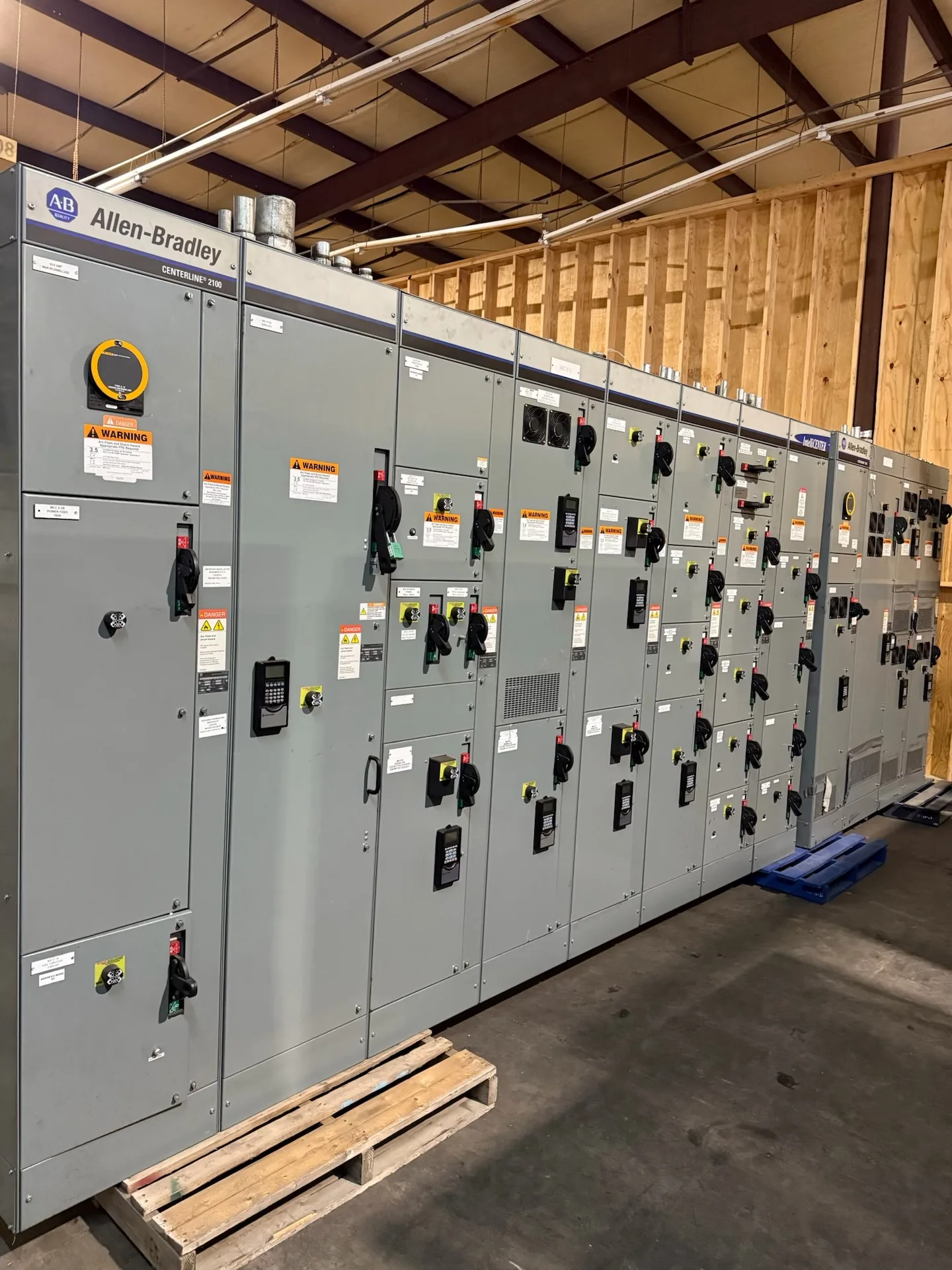
High short-circuit duty affects how equipment is selected, arranged, and documented—not just which breaker appears on a one-line diagram. Switchgear Builder Virginia builds custom new switchgear for projects where fault-current capability needs careful review. The design team should establish available fault current at each equipment point, then compare it with applicable assembly ratings, device ratings, and study assumptions. Final selections, ratings, and schedules depend on project documents and verification.
Map Fault Current
Start with the power-system model, not a catalog rating. Available fault current can differ between the service entrance, transformer secondary, main distribution lineup, and downstream equipment because source strength, transformer impedance, conductor length, and system configuration change along the path. Ask the engineer to identify the maximum available current at each relevant point and document the assumptions, including utility contribution, transformer data, and operating configurations. A normal tie arrangement and an alternate configuration may produce different values. If those inputs are missing or outdated, request clarification before equipment selection is finalized. The result is a location-specific design basis rather than one number applied across an entire project. This review helps buyers compare proposals on matching assumptions and identify where a change in source, transformer, or layout could affect the required equipment capability.
Compare the Ratings
Assembly short-circuit current rating (SCCR) and an individual breaker’s interrupting rating answer related but different questions. The assembly rating applies to the equipment in its evaluated configuration; the breaker interrupting rating concerns the device’s capability to interrupt fault current under its specified conditions. A breaker with a suitable interrupting rating does not, by itself, establish that the complete assembly has an adequate SCCR. Review the actual lineup configuration, protective devices, and manufacturer documentation, and compare each applicable rating with the available fault current at that point. Also confirm which rating terminology and evaluation basis apply to the project’s equipment type. For low-voltage switchboards where applicable, UL 891 requirements may be part of the specification review. Do not assume that a component substitution or alternate arrangement preserves the original assembly rating; request documented confirmation for the proposed build.
Review Coordination
A coordination study evaluates how protective devices are intended to respond to faults across the system. It can help the design team assess selectivity and clearing behavior, but it does not replace checking the assembly SCCR or each device’s interrupting rating. Share the current study, one-line diagram, and device settings with the equipment designer, and ask whether the proposed devices and configuration match those documents. Pay particular attention to mains, feeder breakers, ties, and any alternate sources that change fault contribution. If the study is preliminary, identify that status so equipment decisions are not mistaken for final settings or approval. Coordination goals can involve tradeoffs: a selective response in one operating region may affect clearing time or device choices elsewhere. The engineer should resolve those priorities and confirm the final design basis; do not infer coordination performance from a breaker nameplate alone.
Check the Full Configuration
Ratings depend on more than the main device. Review bus arrangement, protective-device combinations, enclosure and lineup configuration, and any series-rated or tested combinations that the project proposes. Such combinations should be accepted only when supported by applicable documentation and permitted for the specific application; do not assume that devices from different proposals can be mixed while retaining a stated rating. Ask for the rating basis and the exact configuration it covers, including relevant options and restrictions. If the project includes generators, parallel sources, tie breakers, or later expansion, make sure the fault-current study represents those conditions. A future operating mode can change the duty at equipment points, so it belongs in the engineering review before the specification is released. Custom builds can address project-specific layouts and requirements, subject to design review and verification of the selected equipment ratings.
Prepare a Verifiable Scope
For quote review, provide the one-line diagram, equipment schedule, fault-current values by location, study status, and applicable specification sections. Identify voltage class and whether the request concerns a low-voltage switchboard or other switchgear, since standards and rating terminology differ by equipment type. Flag unresolved utility or transformer data, planned source changes, and required coordination objectives instead of treating estimates as confirmed values. Then compare proposals for matching scope: lineup sections, main and feeder devices, documented assembly rating, device ratings, and any required submittal records. Switchgear Builder Virginia manufactures new custom equipment in the United States using all-American components, with nationwide shipping and short lead times; schedules and ratings remain subject to quote and verification. A clear design basis helps the project team assess fit while leaving final engineering judgments and approvals with the responsible professionals.