
GLOSSARY / MANUFACTURER DIRECT
A drawout breaker is designed to move between defined positions within equipment built to accept that breaker. The arrangement can allow a compatible breaker to be moved to a disconnected or withdrawn position for specified work, without treating the device as a loose, universal replacement. For buyers planning new equipment, the key question is not simply whether a breaker is called drawout; it is whether its frame, connections, operating mechanism, and enclosure are designed to work together. Switchgear Builder Virginia manufactures new custom switchgear and can discuss the configuration for your project. Equipment details, ratings, compatibility, and schedules are subject to quote and verification.
What “drawout” means
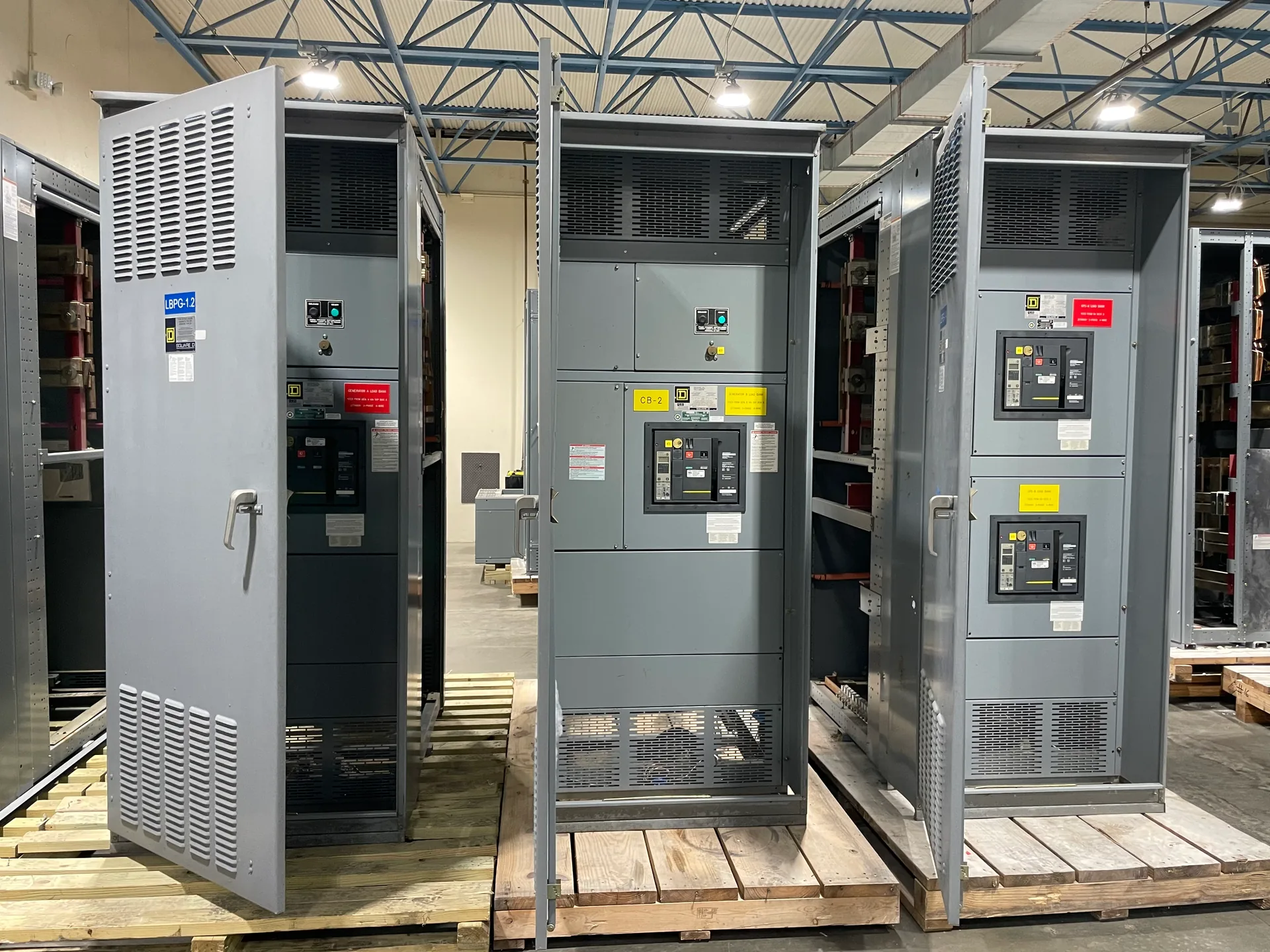
A drawout breaker is mounted in a compatible compartment so it can be moved along a designed path through designated positions. Depending on the equipment design, those positions may include connected, test, disconnected, or withdrawn. The names, functions, and permitted operating sequence are specific to the assembly; not every design provides every position or uses the same terminology. In the connected position, the breaker is arranged to make the intended circuit connections. In a test or disconnected position, some connections may be separated while other functions differ by design. “Withdrawn” generally refers to removal from its operating position, but the method and limits must come from the equipment documentation. The term describes an equipment arrangement, not a promise that any breaker can be pulled from any panel. Verify the actual positions and functions with the manufacturer’s drawings and instructions.
Not universally interchangeable
Drawout does not mean universal. A breaker must be designed for the receiving equipment, including the relevant frame and compartment dimensions, primary connection arrangement, secondary wiring or control interface, and required operating mechanism. The equipment may also rely on mechanical keying or interlocks that are specific to the design. Even breakers with similar appearances or nominal electrical ratings may differ in ways that prevent safe, intended operation together. A replacement decision therefore cannot rest on the word “drawout,” a photograph, or a single nameplate value. For a new project, buyers should identify the system requirements and ask that the proposed breaker and assembly be specified as a compatible combination. For existing equipment, confirm the exact manufacturer, model, and documentation before planning a replacement or modification. Compatibility requires verification; it should not be assumed from general product labels.
Why buyers consider it
A drawout arrangement may help organize maintenance and testing plans by providing designed positions for the breaker within its compartment. It can also support a project’s operating approach where the owner needs particular isolation or testing functions. These benefits depend on the equipment design, operating procedures, available space, and personnel training; the term alone does not establish a maintenance interval, reduce every outage, or make work risk-free. Buyers should compare the chosen arrangement with a fixed-mounted alternative in light of the application, access requirements, operating practices, and project budget. A drawout design may involve a more specialized compartment and breaker interface, so coordination and documentation deserve attention during specification. Ask which positions are provided, what each position permits, and what tools or approved procedures are required. Base the decision on verified equipment details and the facility’s needs.
Specify the complete assembly
When requesting a quote, describe the application and identify the required system voltage, continuous current, interrupting duty, available fault information, and control or protection needs for review. These are project requirements, not proof that a particular breaker or assembly has a matching rating. Ask the manufacturer to confirm the proposed breaker type, compartment arrangement, connection details, designated positions, interlocks, and applicable documentation. Also clarify whether the equipment is low-voltage or medium-voltage; terminology and construction vary by equipment class, and ratings must be verified for the specific design. Switchgear Builder Virginia builds new custom switchgear with all-American components and direct USA manufacturing. For applicable low-voltage switchboard assemblies, UL 891 may be relevant; confirm whether it applies to the requested assembly. Final configuration, ratings, and schedule are subject to quote and verification.
Review before operation
Before equipment is accepted or operated, review its approved drawings, labels, manuals, and project submittals to confirm the breaker matches the intended compartment and that the stated positions and functions are clear. Confirm the required ratings, accessories, control wiring, and protection coordination with qualified project personnel. Any inspection, testing, approval, or listing should be verified for the actual equipment and scope rather than inferred from the word “drawout.” Do not force a breaker, bypass an interlock, or rely on another model’s instructions; use the manufacturer’s approved procedures and qualified personnel. If an existing installation is being replaced or modified, document its equipment identity and interface requirements before specifying new equipment. Switchgear Builder Virginia ships nationwide, with timing confirmed during quoting. The useful definition is simple: drawout describes a designed movement arrangement, while compatibility and performance depend on the complete, verified equipment configuration.