
INDUSTRIES / MANUFACTURER DIRECT
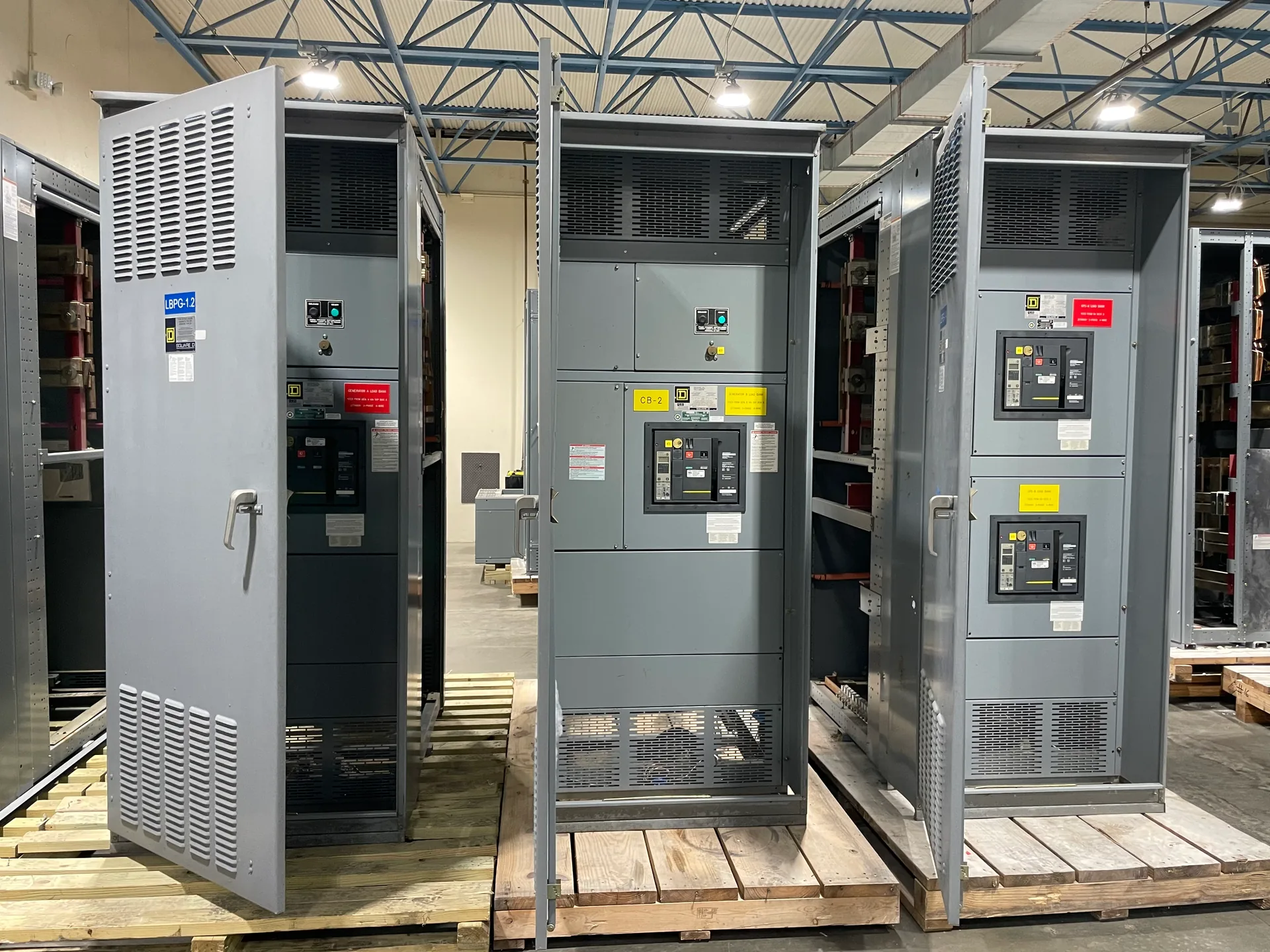
Semiconductor facilities can place unusual demands on electrical distribution: sensitive process equipment, tightly managed access, and expansion plans that may need to coexist with ongoing operations. Switchgear Builder Virginia manufactures new switchgear in the USA using all-American components, with custom builds and nationwide shipping. The right arrangement depends on the project’s one-line diagram, load data, fault study, operating modes, and site requirements. Use the considerations below to develop a specification; confirm ratings, configuration, applicable approvals, and schedule for the particular project.
Protect Process Continuity
Start by identifying which loads cannot tolerate interruption, which can transfer to alternate sources, and which may shut down in a controlled sequence. Semiconductor process tools, exhaust systems, environmental controls, and facility support loads may have different continuity needs; the owner’s engineers should define their priorities rather than assume every load requires the same arrangement. Those priorities can influence bus sections, feeder grouping, transfer provisions, and the location of isolation points. A more segmented design may help contain the effect of certain planned maintenance or equipment faults, but it can add footprint, components, and coordination work. Conversely, a simpler lineup may reduce complexity while limiting operating flexibility. Document normal and abnormal operating modes, including planned maintenance states, so the design team can evaluate the tradeoffs against process risk and verify the proposed switchgear configuration.
Coordinate Fault Protection
Protection settings and interrupting ratings need to be evaluated against the project’s available fault current, source configuration, transformer data, and downstream equipment. A coordination study can help engineers assess how protective devices are expected to respond to faults across the system and whether selective operation is achievable for specified operating modes. Do not infer a switchgear rating from facility size or semiconductor use: ratings and device selections require project-specific study and verification. Multiple sources, ties, generators, or other alternate feeds may change fault levels and protection behavior, so the design basis should describe each intended arrangement. The study team should also identify assumptions that could change as equipment is selected or the system expands. Switchgear Builder Virginia can build to verified project requirements; final ratings, device options, and applicable evaluations remain subject to quote and confirmation.
Plan Clean-Facility Access
A switchgear room’s location and access route can affect how equipment is delivered, installed, inspected, and maintained. For a hypothetical project with controlled or clean areas nearby, the owner may need to define boundaries, permitted pathways, temporary barriers, personnel procedures, and any restrictions on dust, packaging, or work timing. These site rules should be coordinated with the electrical design and construction teams before the lineup dimensions and delivery sequence are finalized. Consider working clearances, door openings, turning space, floor loading, overhead obstructions, and the route from receiving to the final room; verify each against actual site drawings and equipment submittals. Access requirements can influence lineup segmentation and connection details, but splitting equipment may add field work and interfaces. Confirm the facility’s specific protocols rather than assume a universal cleanroom standard or operating procedure.
Make Expansion Deliberate
Future capacity is useful only when the initial design identifies what can be added and what must change to support it. The engineering team can document anticipated load blocks, reserved lineup space, spare feeder provisions, bus arrangements, and any planned source changes. Each provision has tradeoffs: unused space and capacity may increase initial footprint or cost, while a compact design may require more extensive shutdowns or replacement work during expansion. Spare positions alone do not establish that future loads can be served; available capacity, fault duty, protection coordination, heat, and upstream infrastructure all need review. For staged construction, define which sections are intended for each phase and how boundaries, temporary operating states, and commissioning responsibilities will be managed. Verify that the proposed expansion path fits both the electrical study and the facility’s approved project documents.
Build to Verified Requirements
A useful switchgear specification connects operating needs to drawings, studies, and procurement decisions. Provide the manufacturer with the one-line diagram, system voltage, available fault-current information, source and tie arrangements, feeder schedule, metering needs, room constraints, and required submittal documents. Identify which details are fixed and which remain under engineering review. For applicable low-voltage switchboards, UL 891 assemblies may be specified when the project requirements call for them; confirm applicability and requested documentation for the actual equipment. UL 891 does not establish suitability for every system condition or replace project engineering. Switchgear Builder Virginia manufactures custom new equipment in the USA with all-American components and ships nationwide. Configuration, ratings, approvals, and schedule are determined through project review and quote, with final selections verified against the approved design and site conditions.