
PRODUCTS / MANUFACTURER DIRECT
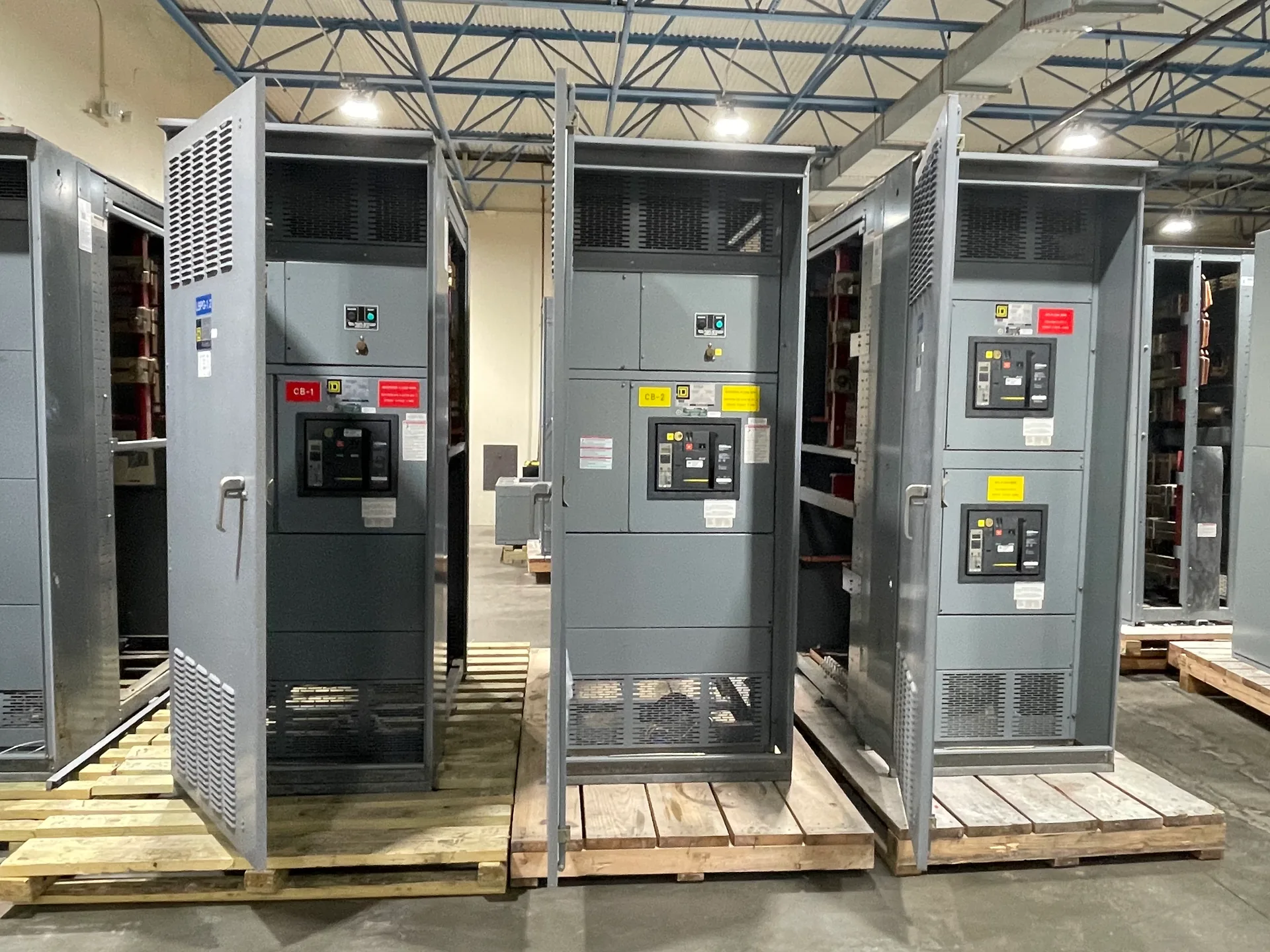
Medium-voltage breaker switchgear brings circuit interruption, protective relaying, control power, and equipment access together in a coordinated assembly. Buyers comparing configurations should start with the system voltage, available fault current, operating conditions, and the loads that need protection—not with a breaker name alone. Switchgear Builder Virginia manufactures new custom switchgear in the USA using all-American components and ships nationwide. Available arrangements, ratings, schedules, and features are subject to review and confirmation in a project quote. The decisions below outline what to discuss when specifying medium-voltage breaker switchgear.
Interruption and ratings
A medium-voltage circuit breaker must be selected for the electrical system it will serve, including nominal voltage, continuous current, and the fault conditions the equipment must withstand and interrupt. These are separate considerations: a breaker’s current rating alone does not establish that the complete assembly suits a particular installation. Buyers should provide available fault-current information, system grounding details, operating frequency, and the intended source and load arrangement for engineering review. The requested interrupting duty and equipment ratings must be confirmed against the project requirements; do not infer them from a product category or a general description. Breaker technology, operating mechanism, and lineup arrangement can affect maintenance approach, footprint, and operational preferences. Switchgear Builder Virginia can review requested configurations for custom new equipment, with each rating and available option subject to quote and verification. This medium-voltage topic does not imply a low-voltage switchboard listing.
Protection and relays
Protective relays detect selected electrical conditions and issue a trip command when configured criteria are met. The right functions depend on the system study, grounding method, source arrangement, connected equipment, and coordination with upstream and downstream devices. Buyers should identify the protection functions their engineer requires, such as overcurrent or ground-fault protection where applicable, and provide the intended trip logic and coordination criteria for review. A relay’s capabilities do not establish that a particular scheme is included or suitable; relay model, inputs, settings, communications, and wiring all require confirmation. Consider whether operators need local indications, event records, remote status, or interfaces to a control system, then specify those needs rather than assuming them. Settings should be developed and verified by qualified project personnel using the applicable study and equipment documentation. Available relays and control configurations are options to confirm during quotation.
Control power
Breaker operation and protective tripping rely on control power, so its source and required behavior deserve attention during specification. Identify whether the project calls for an AC or DC control-power source, its nominal voltage, the expected operating sequence, and any required backup or monitoring. The selected arrangement can influence auxiliary components, wiring, battery or power-supply provisions, and interfaces with site systems. Do not assume a control-power source is part of a quoted lineup or that a particular breaker mechanism will match an existing supply. Provide available one-line diagrams, control schematics, and interface requirements for review, including any remote trip, close, alarm, or status signals. Where continuity of protection during loss of normal control power matters, have the project engineer define the required design and verification criteria. Switchgear Builder Virginia can discuss custom configurations; included equipment, ratings, and interfaces must be confirmed in the quote.
Lineup and access
The physical lineup should support the installation space, cable routing, operating clearances, and maintenance tasks expected at the site. Share room dimensions, equipment access paths, cable-entry direction, conduit or trench details, and adjacent equipment constraints early, because these can limit feasible arrangements. Ask how breaker compartments, doors, barriers, and access points are arranged in the proposed configuration, and clarify which inspection or service tasks require access to each area. Also discuss whether the project needs front or rear access and how the lineup will be positioned relative to walls and other gear. These details affect layout and work planning, but they do not establish a particular enclosure or maintenance feature unless confirmed for the ordered equipment. Any access or service procedure should follow the final equipment documentation and site safety rules; this page is not a live-work guide. Drawings and physical dimensions are subject to project review.
Confirm the configuration
A useful request for quote gives the manufacturer enough information to check that the proposed breaker switchgear fits the application. Include the one-line diagram, system voltage, continuous-load needs, available fault-current study, grounding method, source and feeder count, protection requirements, control-power details, and installation constraints. Note environmental conditions and any required interfaces or project specifications, then identify which items are mandatory and which are preferred options. Ask for the proposed ratings, arrangement, and included components to be stated clearly so the project team can compare them with its design basis. Manufacturing schedules and shipping timing depend on the confirmed scope and must be discussed for the specific quote; short lead times are not a delivery commitment. Switchgear Builder Virginia manufactures new custom switchgear in the USA with all-American components and nationwide shipping. Final configurations and ratings remain subject to quote and verification.