
PRODUCTS / MANUFACTURER DIRECT
Panelboards distribute power from a main device or upstream source to branch circuits serving lighting, receptacles, equipment, and other loads. Choosing a configuration starts with the electrical drawings and the conditions at the installation—not a circuit count alone. Switchgear Builder Virginia manufactures new custom electrical equipment in the United States using all-American components, with nationwide shipping. For a panelboard project, confirm the intended application, system voltage, incoming arrangement, branch-circuit needs, and available fault current so the proposed equipment can be evaluated against the project documents.
Branch-Circuit Distribution
A panelboard divides an incoming electrical supply among branch circuits, with each circuit protected by a specified overcurrent device. The circuit schedule should identify the connected loads, required poles, and any equipment that needs a dedicated circuit. Consider both present needs and documented future capacity: leaving planned spaces may help accommodate later additions, but unused spaces do not by themselves establish that the panel can accept any breaker or load. The enclosure, interior, bus, devices, and wiring arrangement must suit the application and installation conditions. Share the one-line diagram, panel schedules, load information, and equipment requirements when requesting a custom build. Switchgear Builder Virginia can review the stated requirements for new equipment; final configuration, compatibility, and ratings remain subject to engineering review and quote.
Main Device Choices
A panelboard may be specified with a main breaker, a main-lug arrangement supplied from an upstream overcurrent device, or another configuration appropriate to the documented system. These choices affect how the panel is supplied, protected, isolated, and coordinated with upstream equipment. Do not select based only on the service size or a preference for a particular handle arrangement: the designer must define the source, conductor arrangement, overcurrent protection, and applicable project requirements. A main-lug panel depends on suitable upstream protection; its suitability cannot be judged without the upstream device and installation details. A main breaker adds a device at the panel, but does not automatically resolve every protection or coordination question. Identify the requested main type in the schedule, then verify its rating, interrupting capability, and compatibility for the specific application before ordering.
Circuit Count and Space
Circuit count should reflect the panel schedule, not just the number of loads listed in a proposal. Record each circuit’s pole count, breaker type where specified, and whether it serves a dedicated, multi-pole, or other defined load. Then compare the schedule with the proposed interior and enclosure, including any requested spare positions. Physical spaces, usable breaker positions, and circuit capacity are not interchangeable: some devices occupy multiple positions, and not every breaker type is suitable for every interior. Confirm the exact circuit arrangement and any restrictions in the equipment documentation instead of assuming a generic circuit count applies. If future circuits are anticipated, identify them as project requirements and ask how the proposed configuration accommodates them. Final space, device, and bus details require verification against the selected design and application.
Voltage and Fault Current
State the system voltage and phase configuration from the project documents, along with the intended source and grounding arrangement where specified. A panelboard must be appropriate for that electrical system; voltage alone does not establish that it is suitable. Available fault current at the installation point is also essential. The equipment’s short-circuit or interrupting ratings, protective devices, and upstream conditions must be reviewed for the application. Do not treat a building’s service size, a nearby panel’s label, or an assumed utility value as a verified fault-current figure. Provide the current study or other design information used for the project, and identify any required rating or coordination criteria. The engineer or responsible electrical professional should confirm applicable values and requirements. Equipment ratings and any approval or listing requirements must be verified for the specific quoted assembly.
Panelboards and Switchboards
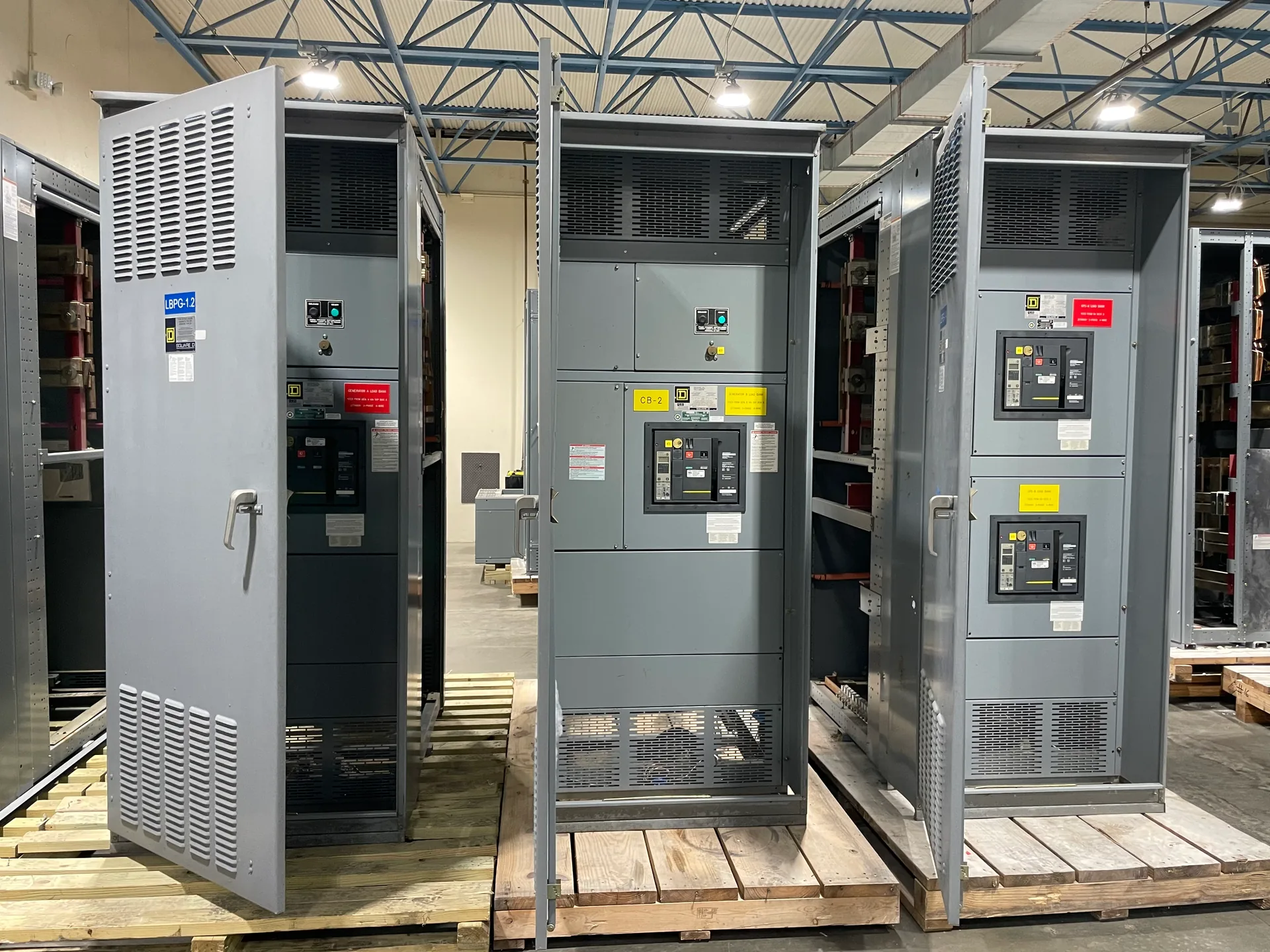
Panelboards and switchboards both distribute power, but they are distinct equipment categories, not interchangeable names. A panelboard commonly organizes branch-circuit overcurrent devices in a panel interior and enclosure; a switchboard is a different assembly with its own construction, application, and specification requirements. The project documents, not a casual label, should determine which equipment is required. If drawings call for a switchboard, substituting a panelboard may change the intended arrangement, ratings, or installation requirements; if they call for a panelboard, a larger assembly is not automatically a suitable replacement. Switchgear Builder Virginia manufactures new custom equipment and can review the stated scope to clarify what is being requested. UL 891 applies to applicable low-voltage switchboards, not panelboards as a blanket claim; verify the required equipment category, standards, and documentation for the project.