
PRODUCTS / MANUFACTURER DIRECT
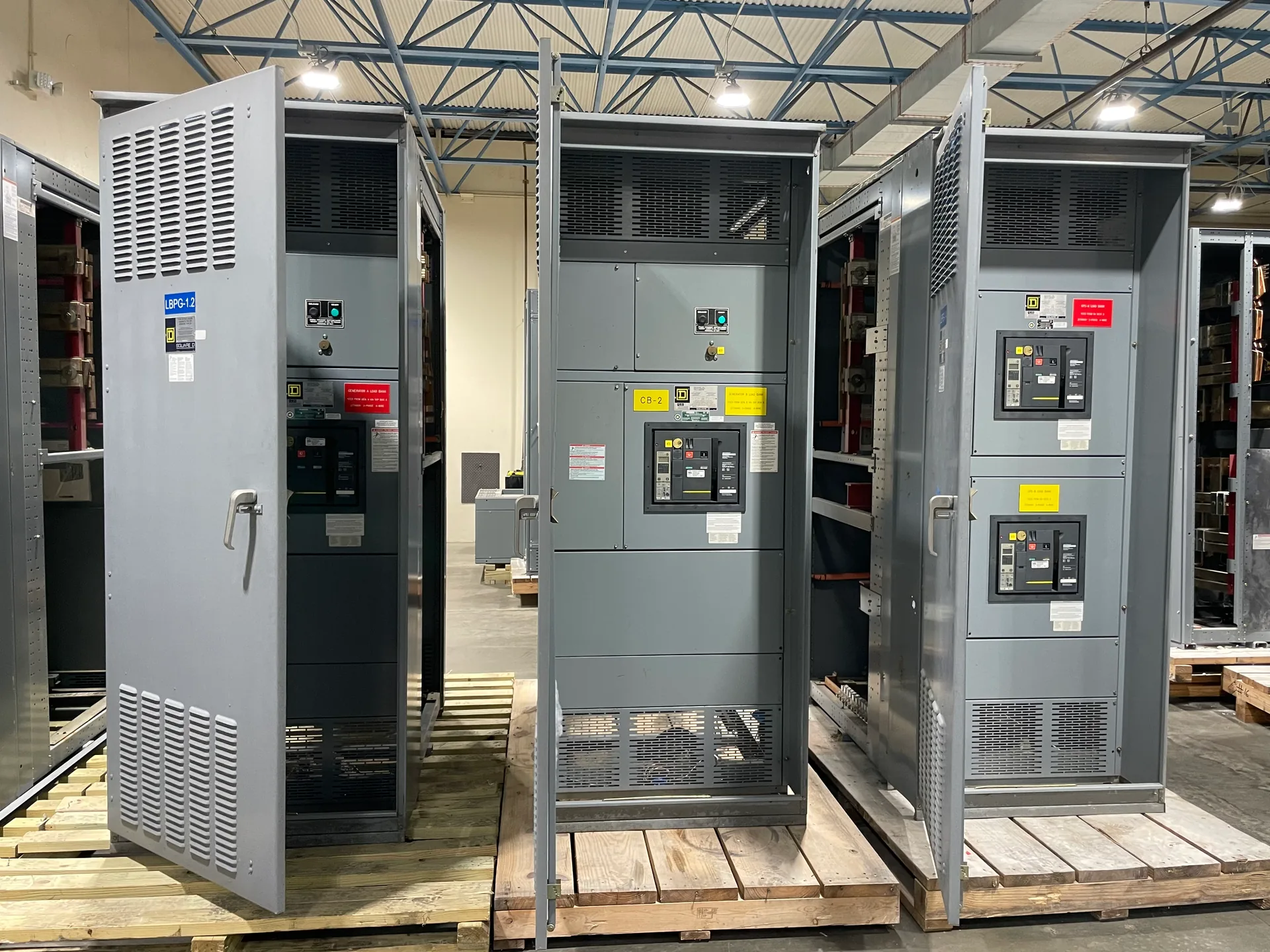
Switchgear Builder Virginia manufactures new vacuum circuit breaker switchgear for medium-voltage applications, with custom builds, all-American components, and nationwide shipping. A vacuum interrupter extinguishes the arc inside a sealed chamber when contacts separate; that principle is only one part of a suitable lineup. Voltage, fault duty, control scheme, insulation, enclosure, and interfaces must work together. Use the details below to frame a quote and identify what needs confirmation against the project and existing system.
How Vacuum Interruption Works
Inside a vacuum circuit breaker, separating contacts create an electrical arc within a sealed vacuum interrupter. The interrupter is designed to extinguish that arc as current passes through its natural zero point, limiting the arc’s duration compared with interruption in air. This does not mean the complete switchgear is maintenance-free or suitable for every duty. Breaker mechanism, contact wear, operating frequency, and the condition of the surrounding insulation still matter. For a new lineup, identify the system voltage, continuous current, available fault current, and the protective device’s intended role. These inputs help determine whether a proposed breaker and its interrupter are appropriate. Ask for the offered breaker’s documentation and applicable ratings, then have them checked against the project requirements. Vacuum describes the interruption medium, not a complete performance rating for the lineup.
Breaker and Lineup Fit
A breaker must fit both the electrical duty and the physical arrangement of its switchgear cell. Buyers should confirm the voltage class, continuous-current requirement, short-circuit duty, control voltage, and intended switching application. Also identify whether the design needs a drawout arrangement, specified interlocks, particular connections, or provisions for future expansion; these details affect the lineup layout and interfaces. A breaker that appears similar to an existing unit may still differ in dimensions, primary contacts, secondary plug, operating mechanism, or control sequence. Provide available one-line diagrams, equipment schedules, and interface information for review rather than assuming interchangeability. Switchgear Builder Virginia can develop custom new equipment, but final breaker selection, ratings, and compatibility remain subject to quote and verification. The goal is a coordinated assembly, not simply a vacuum breaker with a matching nominal voltage.
Protection and Controls
The protective relay and breaker must be specified as a working pair. Start with the system’s protection objectives, available fault information, instrument-transformer details, trip and close control voltages, and any required signaling or communications. Then confirm relay functions, settings responsibility, wiring interfaces, and how the breaker receives a trip command. A relay model or feature list alone cannot establish that a protection scheme is selective or coordinated; the project engineer should review the system study and application. Decide whether the lineup needs local controls, remote status, alarms, or integration with a plant monitoring system, and document those points before fabrication. These choices can affect panel space, wiring, terminals, and testing scope. Identify which settings, drawings, and verification records are expected with the quoted assembly. Availability and exact configuration are confirmed for the specific build, not assumed from a generic product description.
Insulation and Environment
Vacuum interruption does not determine the insulation system for the whole lineup. Bus, supports, cable terminations, barriers, and clearances are separate design considerations, shaped by voltage class, installation environment, and the selected equipment arrangement. Tell the manufacturer whether the switchgear will be indoors or exposed to demanding conditions such as dust, humidity, corrosive atmosphere, elevation, or temperature extremes. Those conditions can affect enclosure choices, material selection, space, and maintenance planning, but any environmental capability must be confirmed for the quoted design. Check cable entry direction, phase arrangement, grounding provisions, and termination space against the actual site layout. Review the project specification for required construction details and applicable approvals; do not infer an approval or rating from the use of vacuum breakers. A clear site and interface package helps surface conflicts before the lineup is built and shipped.
Maintenance and Quote Review
Plan maintenance around the selected breaker manufacturer’s instructions, operating conditions, and the owner’s maintenance program. Vacuum interrupters are sealed components, but the breaker still has a mechanism and electrical connections that may require inspection or service. Ask what maintenance tasks and inspection intervals apply to the specific offered breaker, what wear indicators or records are available, and which work requires qualified personnel. Do not assume a generic interval fits every duty. For a quote, gather the one-line diagram, system voltage and fault data, feeder functions, relay requirements, control power, cable and bus interfaces, environmental conditions, and requested documentation. Ask the supplier to identify proposed breaker model, lineup arrangement, ratings, exceptions, and verification steps. Switchgear Builder Virginia manufactures new switchgear in the USA, uses all-American components, and ships nationwide. Lead time and technical details are established through quote review; schedules and ratings require confirmation.