
RATINGS / MANUFACTURER DIRECT
Available fault current is the prospective current that could flow at a specific point in an electrical system if a fault occurs. For a new switchboard or switchgear package, that value helps determine whether the equipment and its protective devices are suitable for the installation. The utility or project electrical engineer should provide the value and identify its location and assumptions; it should not be guessed from a general system description. Switchgear Builder Virginia uses project information to develop custom equipment, with ratings and schedules subject to quote and verification.
Get the value at the right point
Fault current changes as it travels through a system, so a value is useful only when its location is clear. Ask the utility or electrical engineer to identify the point of evaluation, such as the service entrance or another specified bus, and to state the system conditions used in the calculation. The service voltage, transformer data, conductor lengths and sizes, and upstream equipment can all affect the result. A value calculated at a transformer secondary should not automatically be treated as the value at a downstream switchboard. If a project has multiple sources, such as utility and generator supply, request the applicable operating scenarios and clarify whether the value is maximum, minimum, or otherwise qualified. Resolve missing or conflicting data before equipment selection. Clear inputs let the design team compare ratings at the intended location instead of relying on assumptions.
Match the assembly and devices
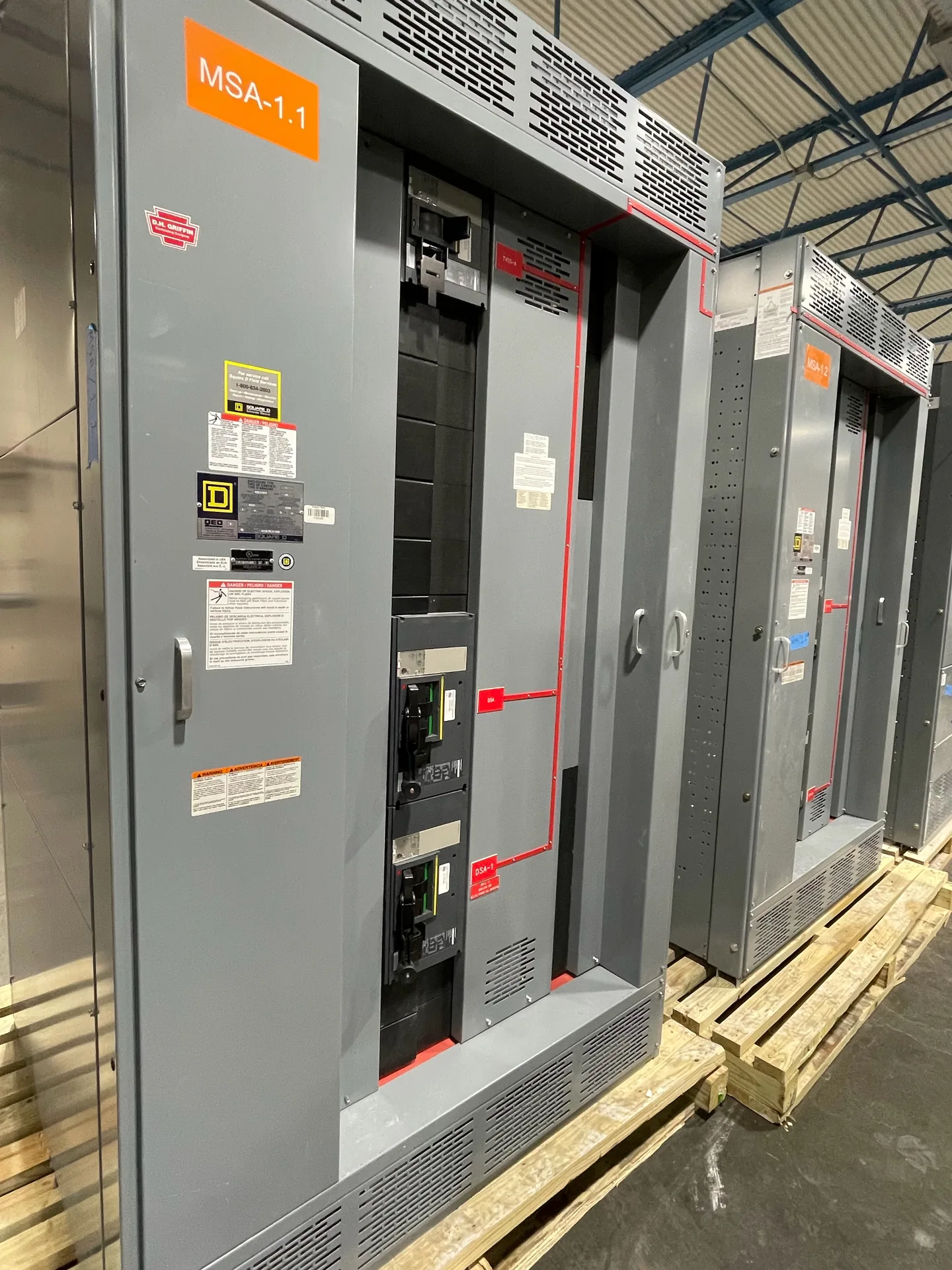
Compare the available fault current with the ratings that apply to the complete equipment and to the protective devices inside it. A circuit breaker’s interrupting rating addresses its ability to interrupt fault current under stated conditions; it does not, by itself, establish that the entire switchboard has an adequate short-circuit rating. The assembly rating and any required withstand or short-time ratings must also suit the design and the specified protective scheme. The ratings are related, but they are not interchangeable labels. Review the nameplate and manufacturer documentation for the exact equipment configuration, voltage, and conditions, rather than checking a single number in isolation. For applicable low-voltage switchboards, UL 891 construction may be relevant, but the required listing and rating still need project-specific confirmation. Confirm device and assembly selections together before releasing the design.
Check protective coordination
Protective-device choices affect how a system responds to a fault, but coordination goals do not replace adequate equipment ratings. An engineer may evaluate breaker settings, fuse characteristics, and selective coordination needs against the fault-current study and the intended system arrangement. A current-limiting device or series-rated combination may be considered only when its use is permitted by the applicable equipment documentation and accepted for the project. Do not assume that adding a higher-rated breaker or changing a setting makes an assembly suitable; the complete combination and its application must be verified. Ask the engineer to provide the intended device schedule, settings information where applicable, and any required coordination study. This helps the manufacturer align the proposed lineup with defined requirements, while leaving system protection decisions and approval with the responsible design professionals and authorities.
Account for system changes
Available fault current can change when the electrical system changes. A transformer replacement, utility supply change, generator addition, larger conductor, altered feeder route, or different operating configuration may affect the value at downstream equipment. Existing study information can help orient a project, but it may not describe the final configuration. Ask the electrical engineer to confirm that the calculation reflects the equipment and sources planned for installation, and to identify any assumptions that remain open. If the value or system arrangement changes during design, send the revised information for another review before ratings are finalized. This matters when replacing a switchboard or planning adjacent new equipment, because connecting to an existing system does not make its original fault-current data current. Keep approved drawings, study results, device schedules, and equipment submittals aligned through design review.
Make the quote reviewable
A useful quote package identifies the stated available fault current, its evaluation point, system voltage, and the equipment ratings requested. Include the one-line diagram, utility or engineer-provided data, source and transformer details, protective-device schedule, and any specified withstand or coordination requirements. If information is preliminary, mark it as such and identify who will confirm it before approval. Switchgear Builder Virginia manufactures new custom equipment and can review the supplied requirements when preparing a proposal; project ratings, configuration, and schedule remain subject to quote and verification. For applicable low-voltage assemblies, confirm the required UL 891 scope and documentation with the project team. Nationwide shipping is available, but shipping does not determine whether a design meets a site’s electrical requirements. Final equipment selection and installation should follow approved project documents and applicable review.