
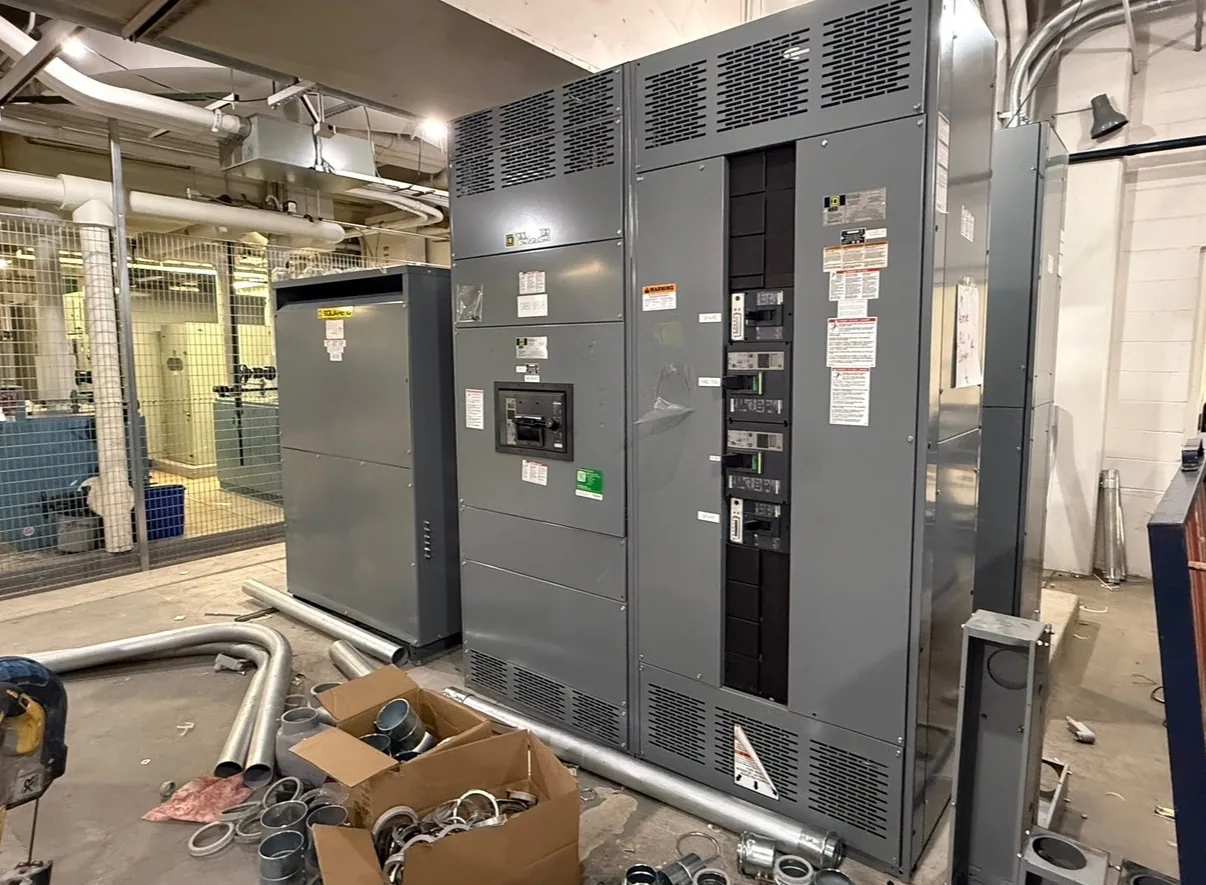
APPLICATIONS / MANUFACTURER DIRECT
Pump station power distribution starts with a clear division between incoming service, motor-feeding equipment, standby power, and process controls. Switchgear Builder Virginia manufactures new, custom switchgear and distribution assemblies in the USA using all-American components. The right arrangement depends on the project’s voltage, motor starting method, operating sequence, environmental conditions, and responsibilities among the electrical and controls teams. Use the decisions below to organize requirements for a quote; equipment configuration, ratings, schedules, and applicable assembly standards require project-specific review and verification.
Map the Loads
Start with a motor and load schedule that identifies each pump, its voltage and phase, nameplate information, expected operating sequence, and whether it must run with other loads. Separate normal operating pumps from standby or intermittent equipment, then account for auxiliaries such as ventilation, lighting, heaters, and receptacles when they belong in the distribution scope. This inventory helps determine feeder quantities, protective-device needs, bus arrangement, and space for future circuits. Motor starting is a key design input: across-the-line, reduced-voltage, or drive-based starting can affect current demand, coordination, and the equipment lineup. Do not select equipment from horsepower alone. The electrical engineer and motor or drive supplier should confirm applicable ratings and starting requirements. A complete load schedule also makes it easier to identify missing data before a quote is prepared.
Account for the Site
A pump station may expose electrical equipment to moisture, condensation, corrosive substances, washdown, dust, or temperature swings, but conditions vary by room and installation location. Describe the actual environment and distinguish indoor electrical rooms from areas near wet wells, process piping, or exterior openings. Enclosure construction, material, ventilation, space heating, and equipment placement are options to evaluate against verified site conditions; do not assume one enclosure type suits every station. Include available floor space, access for installation and maintenance, cable entry direction, and any limits on moving equipment into the room. If flooding or water intrusion is a credible site concern, the project team should establish the equipment elevation and protection requirements before the lineup is specified. Final environmental suitability depends on the documented conditions and selected configuration, not simply on the pump station label.
Coordinate Standby Power
If standby generation is part of the project, define which pumps and auxiliaries should remain available during an outage, how loads will be prioritized, and whether operation is sequential or simultaneous. The generator, transfer equipment, distribution lineup, and motor-starting method must be evaluated together; a source sized only from running load may not address starting demands or permitted voltage dip. Identify who furnishes and coordinates transfer equipment, generator controls, protective devices, and interconnection wiring. Their physical location and electrical boundaries should appear in the one-line diagram and scope documents. Some projects may require a transfer arrangement or other source-selection equipment, but the suitable configuration depends on the design and applicable requirements. Confirm fault-current information, source characteristics, and coordination responsibilities with the responsible engineer. No particular standby rating or transfer feature should be assumed until project data are reviewed.
Separate Power and Controls
Draw a clear boundary between power distribution and process control. The switchgear scope may include motor-feeding devices and designated control power provisions, while pump sequencing, level sensing, alarms, communications, and station automation may belong to a separate control panel or integrator. That division is project-specific and should be stated rather than inferred from a device name or equipment label. Provide the control team with the intended source and load interface, required status or trip signals, interlock expectations, and any communication points identified by the design. Confirm which party supplies field wiring, control transformers or power supplies, and interface terminals. Avoid embedding control logic assumptions in a switchgear quote when the sequence has not been approved. A coordinated responsibility matrix helps prevent gaps between electrical distribution, motor control, instrumentation, and the process-control system before procurement documents are finalized.
Verify the Submittal Basis
Before requesting pricing, assemble the one-line diagram, load and motor schedules, source and fault-current data, equipment location, environmental criteria, and control-interface requirements. State whether the lineup is new construction or part of an expansion, and identify connection points to existing systems without assuming their capacity or condition. Ask the project engineer to confirm system voltage, protective-device criteria, interrupting and withstand requirements, and any applicable code or owner specifications. For a low-voltage switchboard where applicable, UL 891 assembly requirements can be identified for review; that standard does not establish requirements for medium- or high-voltage switchgear. Switchgear Builder Virginia can review custom-build needs and nationwide shipping logistics, with configuration, ratings, and schedule subject to quote and verification. A complete submittal basis helps compare proposals on scope and interfaces rather than on incomplete equipment descriptions.