
APPLICATIONS / MANUFACTURER DIRECT
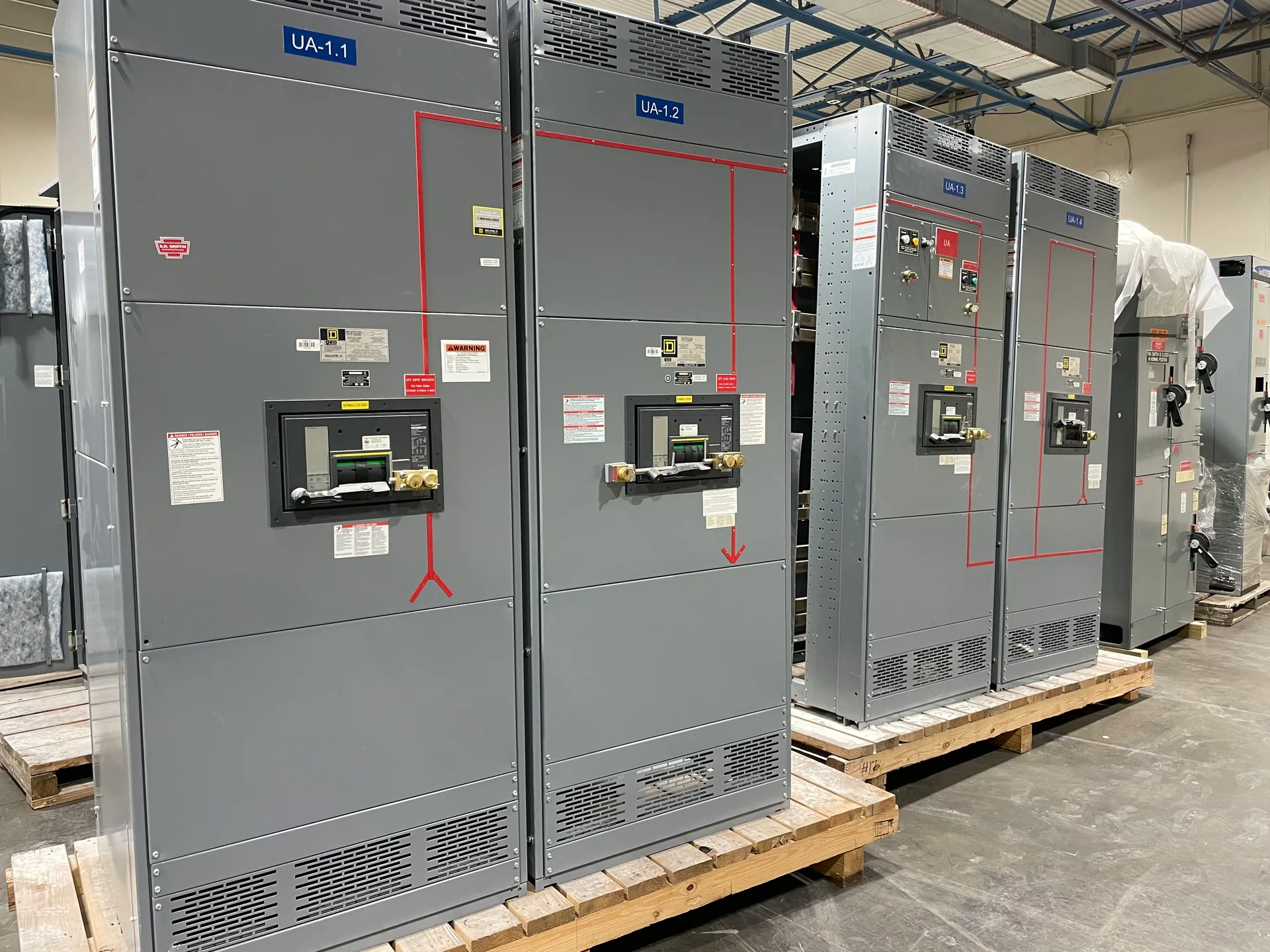
Refrigeration plant power distribution must account for how compressors start, how long equipment runs, and what happens when a component or power source is unavailable. Switchgear Builder Virginia manufactures new, custom switchgear in the USA using all-American components, with nationwide shipping and short lead times subject to project scope and quote. The right arrangement depends on verified equipment data, operating conditions, and the facility’s continuity plan—not a generic refrigeration load estimate.
Start With Load Data
Build the distribution plan from the refrigeration equipment schedule, not just the plant’s total horsepower. Gather each compressor motor’s voltage, full-load current, starting method, operating sequence, and manufacturer requirements, along with condenser fans, pumps, evaporators, and other connected loads. Ask the equipment supplier or electrical engineer to confirm which loads can run together and which are sequenced. A large motor starting while other loads are operating can affect voltage and equipment performance, so starting current and coordination matter alongside steady-state demand. Identify future capacity separately from present loads; spare space, bus capacity, and feeder provisions are different decisions. Switchgear Builder Virginia can use verified project information to develop a custom new assembly scope. Final component selections, ratings, and available configurations depend on engineering review and the project quote.
Choose Starting Approach
Compressor starting choices can influence feeder sizing, voltage dip, controls, and the way operating loads are staged. Across-the-line starting may be straightforward, but its inrush can be a concern in some systems. Soft starters or variable-frequency drives may suit particular compressor and process requirements, yet they introduce their own compatibility, heat, harmonic, bypass, and maintenance questions. Do not assume every compressor can use the same method: confirm motor and compressor manufacturer requirements, control sequence, and the engineer’s design basis. Decide whether motor controls are part of the switchgear scope or supplied as separate equipment, and establish who coordinates interfaces and protection. The distribution assembly should reflect that division clearly. Exact device types and ratings must be verified for the application; a brief description of the plant does not establish suitable products or a final design.
Plan For Continuous Duty
Refrigeration equipment may operate for extended periods, but continuous operation alone does not establish a switchboard’s required rating. Have the responsible electrical professional verify calculated loads, conductor and bus requirements, ambient conditions, enclosure location, and applicable design criteria. Consider the plant room’s temperature, moisture, dust, cleaning practices, and available working space when specifying the assembly. Environmental details can affect enclosure choices and equipment arrangement, so describe the actual installation rather than relying on a generic indoor assumption. Review feeder count and routing, cable entry, access for inspection, and room for future changes before the layout is finalized. For applicable low-voltage switchboards, UL 891 construction may be specified subject to confirmation of the project’s requirements and quoted assembly. Ratings, options, and approvals are not implied by an application page; they must be confirmed for the particular order.
Monitoring And Alarms
Useful monitoring begins with operational questions: which loads need status indication, what conditions should trigger an alarm, and who needs the information? The plant controls designer can identify whether the distribution system should provide breaker position, trip indication, metering, or communication interfaces. Confirm protocol, point list, signal ownership, and wiring responsibilities with the controls team before selecting devices. More instrumentation can improve visibility, but it also adds configuration, integration, and maintenance work; avoid specifying points that have no defined use. Decide where readings will be viewed and whether the switchgear supplies signals only or includes a broader control interface. Verify that monitoring equipment fits the electrical and environmental design. Switchgear Builder Virginia can consider requested monitoring in a custom-build scope, subject to engineering review and quote. No particular communications feature or control-system compatibility should be assumed until documented and verified.
Standby And Coordination
A standby plan should begin by identifying which refrigeration loads are essential, how much capacity must remain available, and how quickly the facility can tolerate an interruption. The electrical engineer and equipment suppliers should verify generator capacity, transfer arrangement, motor-starting sequence, and whether drives or controls behave as intended on the alternate source. Not every load needs standby power, and attempting to start too many motors together may exceed available capacity. Define the intended operating sequence and confirm protection coordination across normal and standby configurations. Where continuity depends on multiple sources or transfer equipment, specify the required interfaces and responsibility for their supply. Switchgear Builder Virginia manufactures new custom equipment in the USA and ships nationwide; schedules and ratings depend on verified scope and quote. Final arrangements, applicable UL 891 requirements for low-voltage switchboards, and any testing or approvals must be confirmed for the project.