
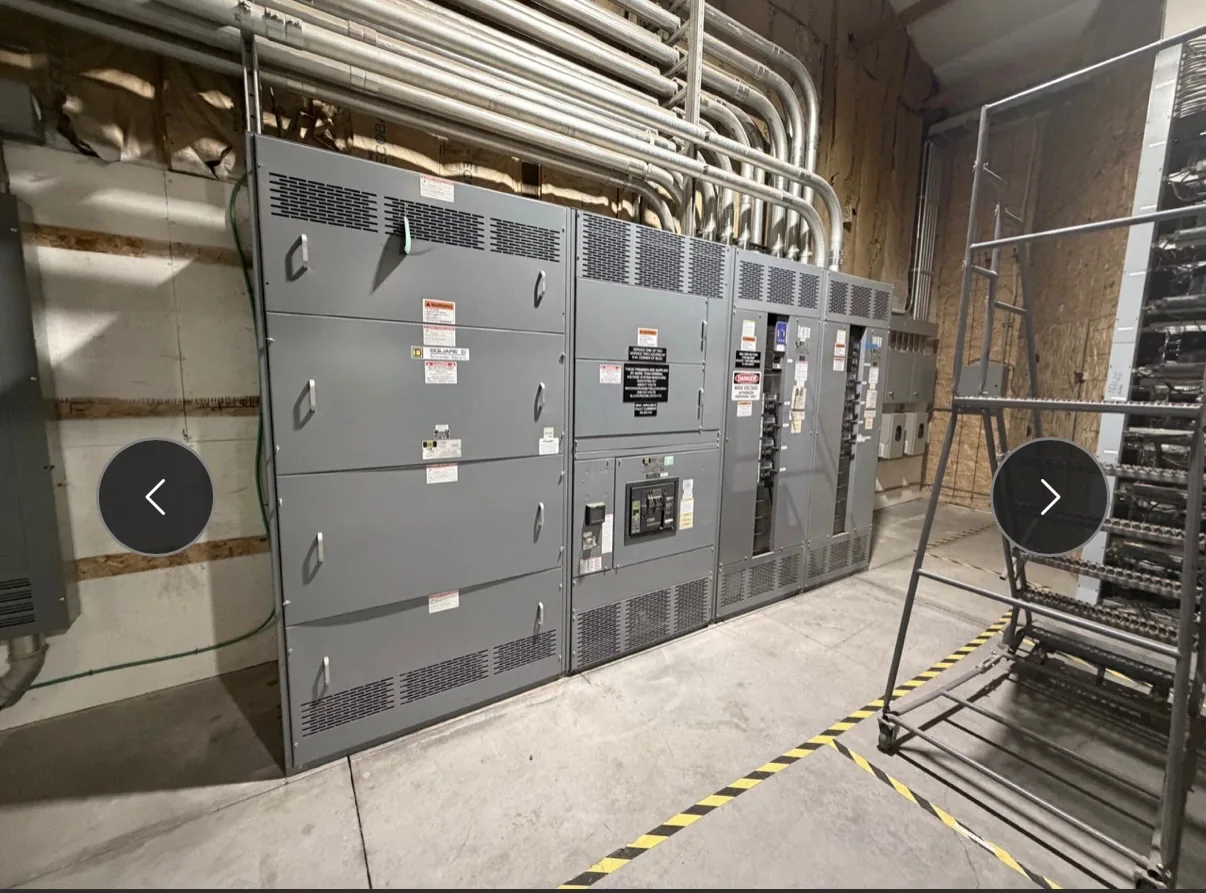
APPLICATIONS / MANUFACTURER DIRECT
Solar interconnection switchgear connects a photovoltaic system to a facility’s electrical distribution, but the right arrangement depends on where the project connects and how power can flow. Switchgear Builder Virginia manufactures new, custom-built equipment in the USA using all-American components, with nationwide shipping. Project teams should define the point of interconnection, inverter characteristics, existing system limits, and utility review requirements before selecting an arrangement. Ratings, schedules, and equipment details are subject to quotation and verification.
Define the Connection Point
Start by identifying the proposed point of interconnection: it may be at service equipment, a distribution switchboard, a dedicated feeder, or another location accepted for the project. The chosen point affects which bus, conductors, and protective devices must accommodate solar output, along with what equipment needs to be coordinated or modified. A one-line diagram should show the utility source, facility loads, photovoltaic inverters, transformers if present, and the proposed connection. Confirm ownership boundaries and review responsibilities with the facility team, engineer, and utility rather than assuming a common arrangement applies. Switchgear Builder Virginia can develop new custom equipment around defined project requirements; the final configuration depends on drawings, site information, and applicable approvals. Establishing the connection point early helps avoid specifying a lineup that cannot fit the electrical topology or review process.
Check Backfeed Capacity
Solar inverters can supply current into facility distribution equipment, so the design review should consider backfeed as well as the facility’s normal utility-fed load. The relevant limits depend on the actual bus and device ratings, the location and size of the solar connection, inverter output, and system configuration. Do not infer available capacity from a panel label or a general rule of thumb; have the engineer evaluate the applicable equipment and calculations. Multiple sources, storage, generators, or planned expansion can change the analysis. Project documents should identify normal and alternate operating conditions and state which sources may operate together. Switchgear ratings and layouts are selected or verified against those details, not assumed from a solar system’s nameplate alone. If existing equipment is retained, its condition, documentation, and suitability require project-specific review before the new equipment is specified.
Plan Isolation and Protection
Interconnection design must establish how the solar source can be isolated for the operating conditions and maintenance boundaries defined by the project. The required devices, their locations, and their coordination with inverter controls and other sources depend on the design and utility requirements. Protection settings and schemes should be developed by qualified project professionals using verified inverter data, fault information, and system studies; they are not interchangeable across installations. Consider how the equipment will be identified, accessed, and incorporated into the facility’s operating procedures, without assuming that a particular switch or breaker alone satisfies every need. Provide drawings and device requirements early so the switchgear arrangement can accommodate the intended functions. Any proposed inspection, testing, or approval must be confirmed for the specific equipment and project. Never use a generic layout as a substitute for engineered protection review.
Prepare for Utility Review
Utility review may affect the acceptable connection point, protection approach, metering interface, disconnect provisions, and required project documents. Requirements vary by utility and project, so confirm the applicable process directly with the reviewing parties rather than treating a previous installation or sample drawing as precedent. A useful submittal package can include a current one-line diagram, inverter manufacturer and model information, output characteristics, equipment ratings, operating modes, and protection documentation, as requested. Resolve comments before equipment details are finalized when practical; late changes to connection location or device requirements can affect the lineup and schedule. Switchgear Builder Virginia can quote a custom new-build configuration from defined requirements, but utility acceptance and approval remain project-specific and must be verified. A proposed schedule is subject to quote and coordination, not a promised delivery date.
Specify the Equipment
A clear equipment specification should state the system voltage, available fault information, continuous current needs, enclosure and installation conditions, connection arrangement, source count, and required devices, with each item confirmed by the project engineer. Include inverter output and operating data rather than relying only on total solar capacity. For applicable low-voltage switchboard assemblies, UL 891 requirements may be relevant; applicability and the equipment’s specific ratings must be verified for the quoted configuration. UL 891 does not establish medium- or high-voltage switchgear ratings. Custom equipment can help align the lineup with a project’s defined interface and space constraints, but dimensions, ratings, components, and lead-time expectations require review and quotation. Switchgear Builder Virginia provides direct USA manufacturing, all-American components, and nationwide shipping. Share coordinated drawings and utility comments to support an accurate project-specific proposal.