
BUYING INTENT / MANUFACTURER DIRECT
Planning a switchgear expansion starts with evidence about the equipment already installed—not an assumption that a vacant compartment or unused breaker space can accept another section. For a new-equipment quote, Switchgear Builder Virginia can use existing ratings, drawings, connection details, available room, and project requirements to evaluate the proposed scope. Some information may be missing or outdated; identify what is confirmed, what is estimated, and what needs field verification. Final compatibility, ratings, layout, schedule, and price remain subject to engineering review and quote.
Document the Existing Gear
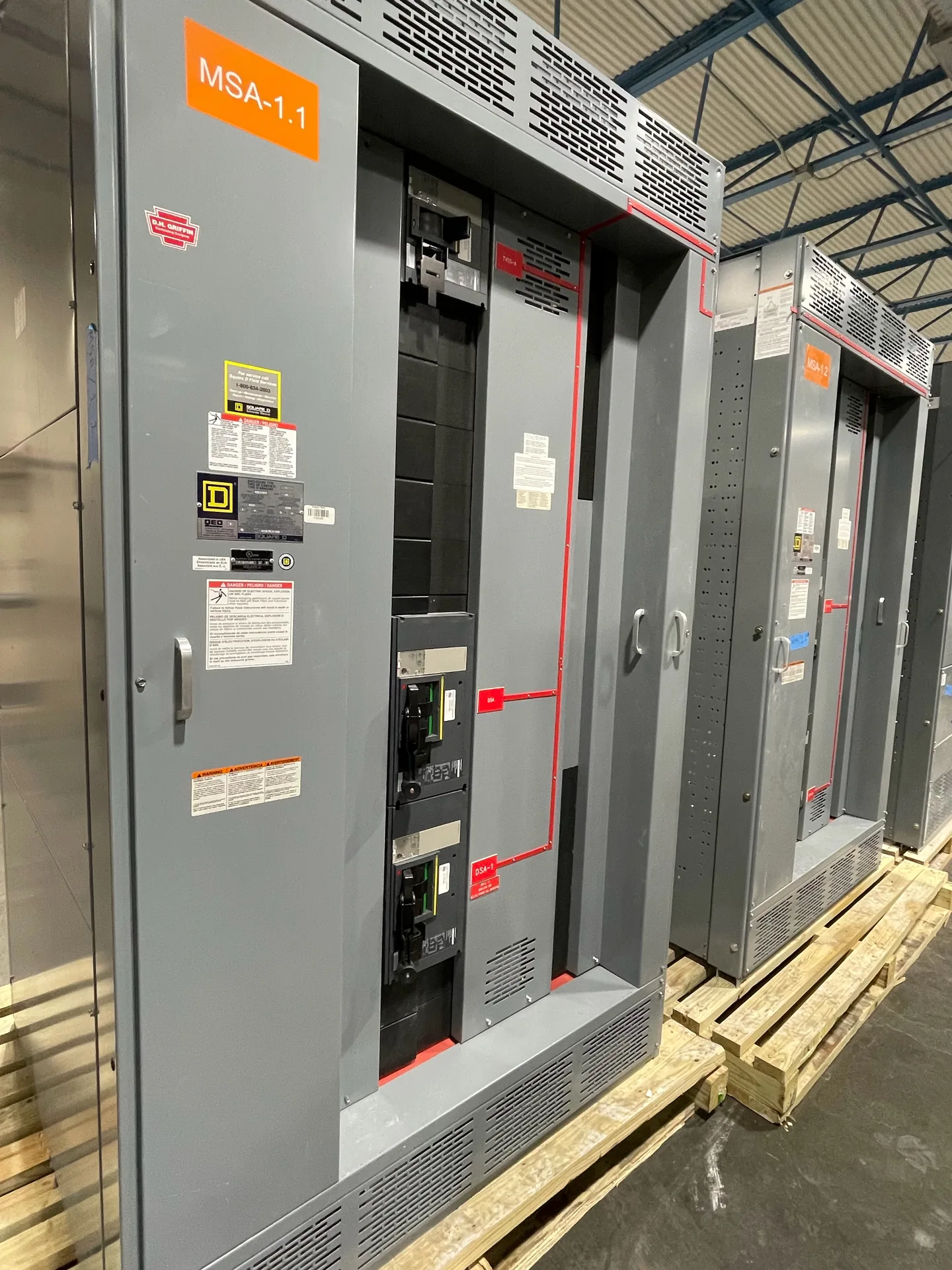
Start with clear photographs of the nameplate, lineup, section fronts, and accessible connection areas, along with the equipment manufacturer, model, and approximate installation date if known. Send the latest one-line diagram, equipment schedules, and manufacturer drawings; mark revisions or discrepancies rather than silently treating old documents as current. Record the existing bus rating and voltage from reliable equipment information, but distinguish nameplate data from values copied from an unverified drawing. Note breaker types and frame sizes only when they can be identified safely and confidently. These details help define what the new equipment must coordinate with, but they do not prove that an expansion is compatible. If records are incomplete, say so in the quote request. A qualified project team may need to verify field dimensions, labels, and configuration before a final design or price can be confirmed.
Map the Interfaces
Describe exactly where the new lineup is intended to connect: at an end section, between existing sections, or through a separate connection arrangement. Include the existing lineup’s manufacturer drawings and note section width, height, depth, bus orientation, bus material if documented, and any transition or splice details shown. Identify barriers, cable entry zones, and nearby obstructions that could affect the proposed interface. Matching the visible cabinet dimensions alone does not establish electrical or mechanical compatibility; bus geometry, bracing, insulation clearances, and connection details may also matter. If the original manufacturer or design cannot be established, flag that early rather than assuming a standard interface. The quote should distinguish a proposed new lineup from any field tie-in work, which may require separate design, coordination, and qualified installation. Confirm who will provide verified field measurements and who is responsible for reviewing the connection design.
Verify Capacity and Fault Duty
Provide the system voltage, stated bus rating, available fault-current information, and protective-device data needed to evaluate the new equipment. Attach the study or utility information that supports fault duty when available, and note its date, assumptions, and the point in the system it addresses. A bus rating is not the same as spare capacity: load growth, demand, feeder loading, and operating arrangement can affect whether the existing system can support an expansion. Ask the responsible electrical engineer to determine the required ratings and confirm coordination with upstream and downstream devices. Do not infer interrupting or withstand capability from a cabinet label, breaker appearance, or a neighboring section. Final equipment ratings and any applicable listing requirements must be verified for the actual design and application. Where low-voltage switchboards are specified, UL 891 may be relevant to applicable assemblies; it does not establish medium- or high-voltage switchgear requirements.
Check Space and Access
Send a dimensioned plan or verified measurements showing the proposed lineup footprint, ceiling height, doorways, corridors, and the route from receiving point to final position. Note floor openings, overhead services, columns, adjacent equipment, and access restrictions that might influence section dimensions or shipment configuration. Identify whether the expansion is expected to sit beside the existing lineup or in another location, and provide required working-space dimensions from the project design for review. Do not treat an apparent gap as usable space until site conditions and applicable project requirements are checked. Delivery access and final positioning are separate considerations: a section that fits its operating location may not pass through the planned route. Include any constraints on section splits or handling, but leave lifting plans and installation methods to qualified personnel. The proposed arrangement, dimensions, and shipping configuration remain subject to review and quote.
Make the Quote Actionable
Organize the request into confirmed facts, open questions, and decisions still needed. State the intended function of the added section, the desired connection point, target project milestones, and any specified standards or owner requirements, without treating a target date as a delivery commitment. Ask the manufacturer to identify assumptions, exclusions, information needed to finalize ratings, and whether the quoted scope covers equipment only or additional services. Provide a clear point of contact for drawing review and confirm who will approve the final design. Switchgear Builder Virginia manufactures new custom equipment with direct USA manufacturing, all-American components, short lead times, and nationwide shipping; actual configuration, schedule, and ratings depend on project review and quote. If the proposed application is an applicable low-voltage switchboard, ask whether a UL 891 assembly is required and verify that requirement for the specified design. A complete package makes decisions clearer without presuming compatibility.