
COMPARISONS / MANUFACTURER DIRECT
Choosing between a main-breaker and main-lug switchboard affects where the service disconnect sits, how upstream protection is arranged, and what operators can isolate at the equipment. The right choice depends on the electrical one-line, service configuration, applicable code requirements, utility criteria, and the project’s operating plan—not simply on a preference for fewer components. Switchgear Builder Virginia manufactures new switchboards to project requirements, with all-American components, custom builds, short lead times, and nationwide shipping. The following comparison outlines decisions to resolve with the design team and verify for the specific installation; schedules and ratings are subject to quote and verification.
Where the Disconnect Sits
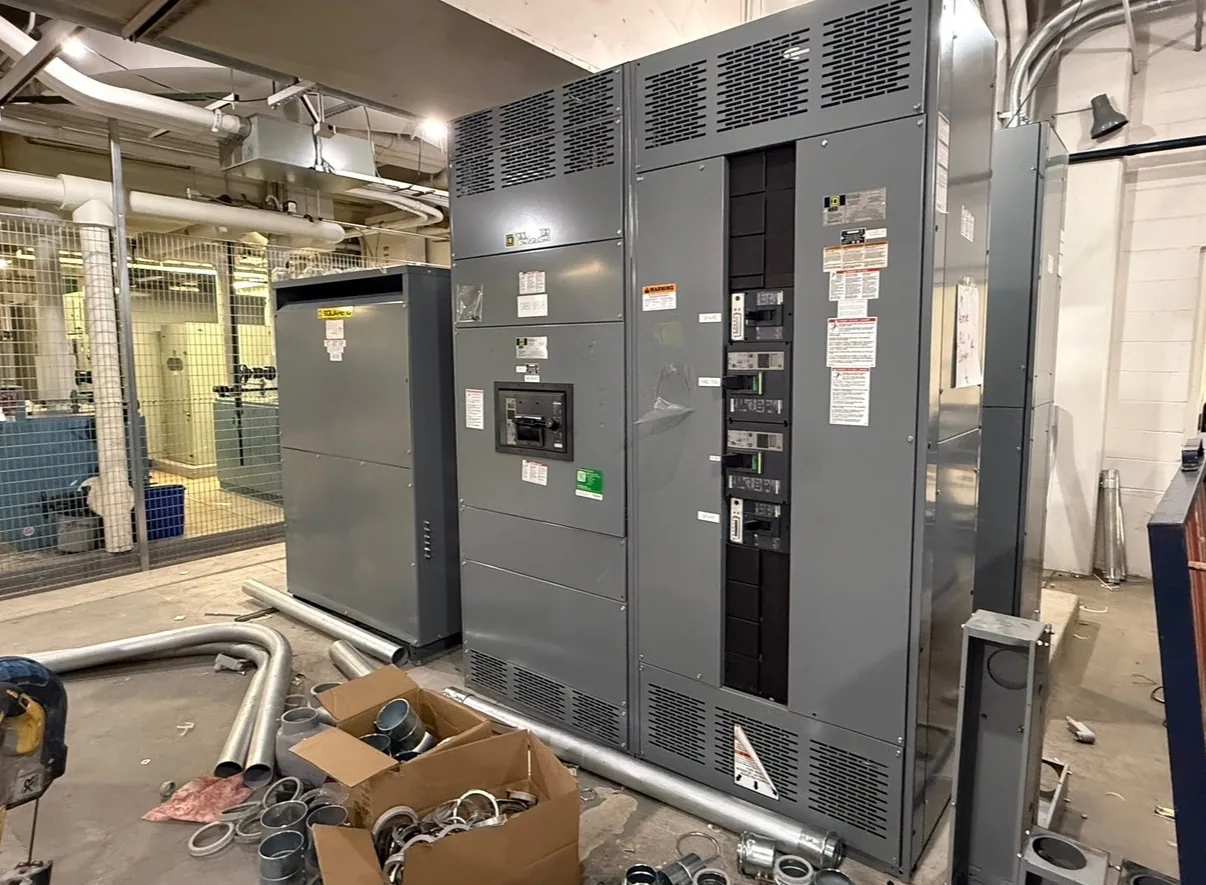
A main-breaker switchboard includes a main circuit breaker at the board, providing a local device for disconnecting the board’s downstream distribution. That arrangement can make the equipment boundary easier for operators to identify, but the breaker’s interrupting rating, trip functions, and coordination with upstream and branch devices must suit the system design. A main-lug switchboard receives conductors at lugs and does not include that main breaker as its incoming disconnect. Its supply therefore relies on an appropriately arranged upstream disconnect and overcurrent protection, as established by the project design. Neither arrangement is automatically the better choice: the practical question is which device is intended to perform each protective and isolation function, and where it must be located. Confirm the one-line, equipment scope, and governing requirements before selecting a configuration.
Upstream Protection
With a main-lug arrangement, the upstream device is especially important because it provides protection and disconnection for the switchboard’s incoming supply as specified by the design. The engineer should establish its location, rating, conductor path, and relationship to the board, then verify that the proposed arrangement meets applicable code and utility requirements. A main-breaker board does not eliminate upstream design decisions: the service and feeder configuration may still require upstream protection, and the main breaker must coordinate with other devices where coordination is required. Buyers should provide available fault-current information, protective-device details, and the intended system arrangement for review rather than infer compatibility from a catalog label. Protection settings and ratings depend on verified project data. Resolve these inputs before finalizing the equipment schedule, since changing the protective scheme can affect the one-line, connections, and switchboard layout.
Service and Feeder Configuration
Start the comparison with the source and the equipment’s role in the system. A board serving as service equipment may have different disconnect, bonding, and labeling requirements than a downstream feeder board; the actual treatment depends on the installation and applicable rules. The project team should confirm whether the incoming conductors are service conductors or a feeder, where the service disconnect is located, and how grounding and bonding are specified. Also identify conductor material and size, entry direction, termination space, number of sources, and any transfer or tie arrangement in scope. A main-lug design may fit a layout where the required disconnect is elsewhere, while a main-breaker design may place the disconnect at the board. These are design alternatives, not blanket code conclusions. Provide the approved one-line and specifications so the proposed construction can be checked against the actual service configuration.
Access and Operations
Consider how authorized personnel will identify and operate the disconnect, and how the equipment fits the room and operating plan. A main breaker can provide a clearly located switching point at the board, but it adds a device whose operating mechanism, space, and maintenance needs belong in the design review. With main lugs, operators may need to use a separate upstream disconnect; the route, access, labeling, and operating procedure should be clear in the project documents. Review working and service clearances, door and aisle conditions, cable access, and the consequences of isolating the board. Do not treat these points as permission to work on energized equipment; installation, inspection, and operation must follow qualified personnel and approved procedures. For a custom build, share layout constraints and required access points early. The final arrangement should reflect verified site conditions, not assumptions about a typical electrical room.
Specify and Verify
For a useful quotation, provide the one-line diagram, system voltage and phase, incoming and outgoing feeder requirements, available fault-current data, protective-device information, enclosure and layout needs, and any project-specific utility criteria. State whether the scope calls for a main breaker or main lugs, and identify the intended upstream disconnect where applicable. Ask the design team to verify code requirements, device coordination, service classification, ratings, and clearances for the actual installation. Applicable low-voltage switchboards may be specified as UL 891 assemblies where required; applicability and the requested assembly details must be confirmed for the project. Switchgear Builder Virginia manufactures new switchboards with custom configurations and all-American components, and ships nationwide. Lead times, ratings, and final construction are subject to quote and verification. Compare proposals by matching the approved documents and scope, not by comparing the two labels alone.