
COMPARISONS / MANUFACTURER DIRECT
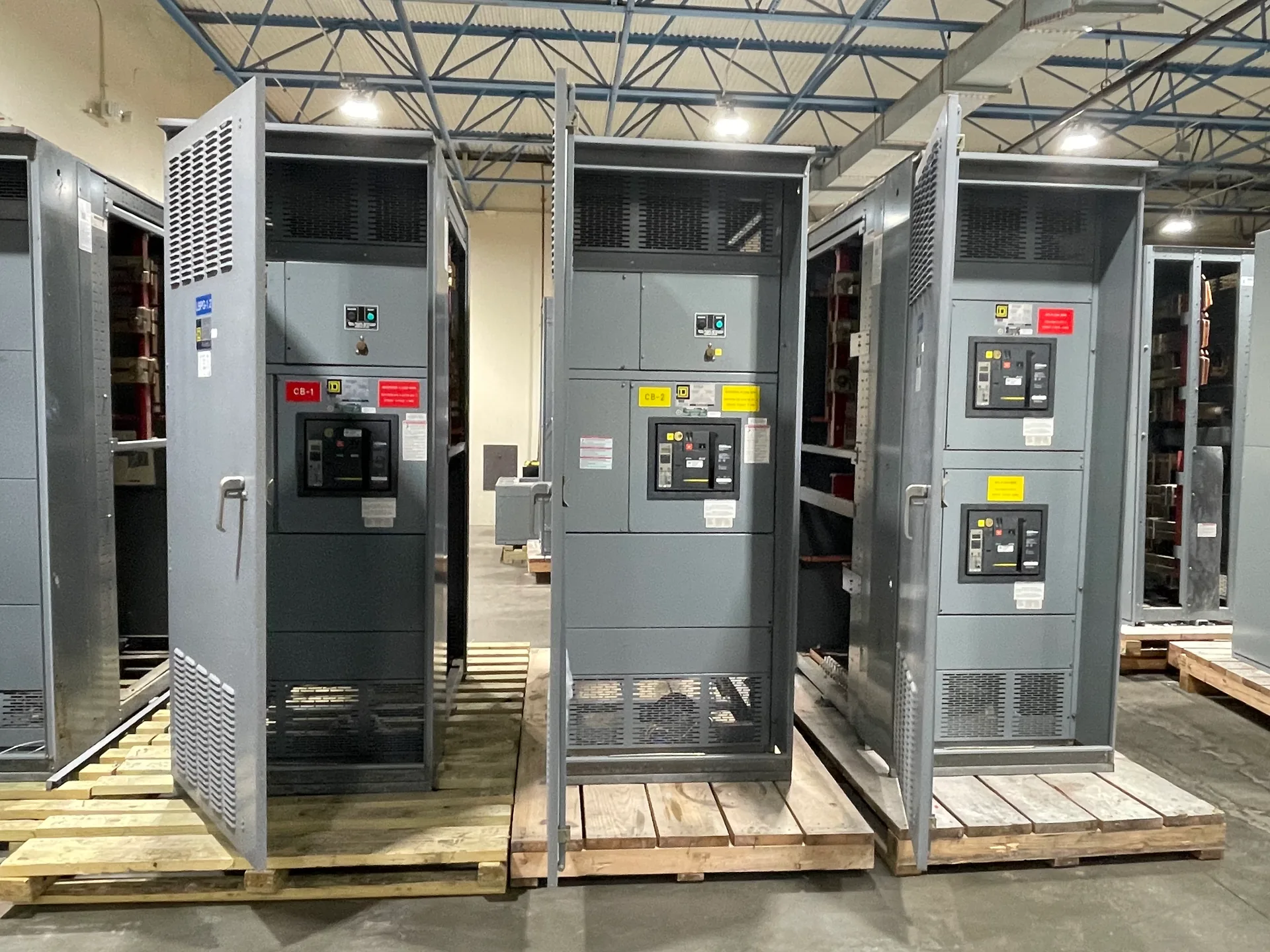
Choosing main-tie-main or single-ended distribution is a decision about what should remain energized when a source or section is unavailable. A tie breaker can let one source support loads normally served by another, but that option depends on source capacity, protection coordination, operating rules, and a workable transfer sequence. Single-ended distribution is simpler, yet an outage or maintenance task may interrupt more of the served load. Switchgear Builder Virginia builds custom new switchgear in the USA with all-American components and ships nationwide. The right arrangement depends on verified project conditions, not the diagram alone; confirm utility requirements, equipment ratings, and operating procedures before selecting a configuration.
How the layouts differ
A single-ended lineup has one incoming source feeding its bus and outgoing circuits. If that source or a critical bus section is unavailable, loads on it may lose power until the condition is resolved or an approved alternate supply is connected. A main-tie-main arrangement divides distribution between two main sections and places a tie breaker between them. With the tie normally open, each source can serve its own section; under an approved sequence, the tie may connect the sections so one source supports some or all loads on the other side. That is not automatic redundancy by itself. The alternate source must be independent enough for the intended contingency, and its capacity, protection, and operating arrangement must support the transfer. Buyers should compare the one-line diagrams and state explicitly which loads are expected to stay energized in each operating condition.
Redundancy has limits
Main-tie-main can improve continuity for selected loads, but it does not make every failure harmless. If both mains depend on the same upstream source, shared transformer, feeder route, or other vulnerable element, a common failure can still interrupt both sections. Even with independent sources, the surviving source may not have enough capacity for the full connected load. The design may therefore require load shedding, priority groups, or a deliberate limit on what transfers. Single-ended equipment avoids some of that transfer complexity, but its service interruption can be broader when the sole source or bus must be taken out. Ask the design team to map credible outage cases to affected loads, available source capacity, and recovery steps. The comparison should describe expected performance, not imply that either topology provides uninterrupted service or a particular level of availability without project-specific analysis.
Transfer sequence and controls
A main-tie-main design needs a defined sequence for opening and closing breakers. The sequence may be manual, electrically controlled, or part of a specified automatic transfer scheme; those are distinct project choices, not interchangeable labels. Interlocking can help prevent prohibited breaker combinations, while control logic and status indication help operators understand which source is connected to each section. The design team must establish whether paralleling the sources is permitted or whether the sequence must break one connection before making another. That decision depends on source characteristics and utility requirements. Specify normal breaker positions, the conditions that initiate transfer, whether transfer is automatic or operator-directed, and how the system returns to its normal state. Also identify what happens if a breaker fails to operate or a control signal is unavailable. Verify the intended sequence in approved drawings and procedures before procurement and commissioning.
Fault duty and protection
Connecting bus sections through a tie can change the available fault current and the way protective devices coordinate. The evaluation should consider each permitted source and breaker configuration, including whether both sources can ever feed a fault through the tie. Equipment interrupting ratings, bus bracing, and protective-device settings must be appropriate for the verified conditions; do not assume a rating based only on the normal operating arrangement. A single-ended lineup may have a more straightforward set of source cases, but its fault duty still depends on the source and system design. Provide the manufacturer with current system data and the engineer’s approved one-line, including any restrictions on simultaneous connections. Utility fault-current information and coordination decisions should be confirmed by the responsible project professionals. Ratings and configurations are subject to quote and verification. For applicable low-voltage switchboard assemblies, confirm whether UL 891 requirements apply to the specified equipment.
Maintenance and project fit
Maintenance planning can favor either arrangement depending on the loads and procedures. A tie may let operators keep selected loads served while a section is isolated, but only when the remaining source can carry them and the approved switching plan permits it. Isolation points, access, breaker removal, and the work scope all affect whether that option is useful. A single-ended system may be easier to understand and operate, with fewer tie controls and operating states, but planned work on its main source or bus can require a wider shutdown. Compare the consequences, staffing, and procedures for actual maintenance tasks rather than counting breakers alone. Utility rules, available space, future expansion, and the owner’s load priorities can also shape the choice. Switchgear Builder Virginia can provide custom new equipment for a defined project; schedules and ratings are confirmed through quotation and technical review, not assumed from the topology.