
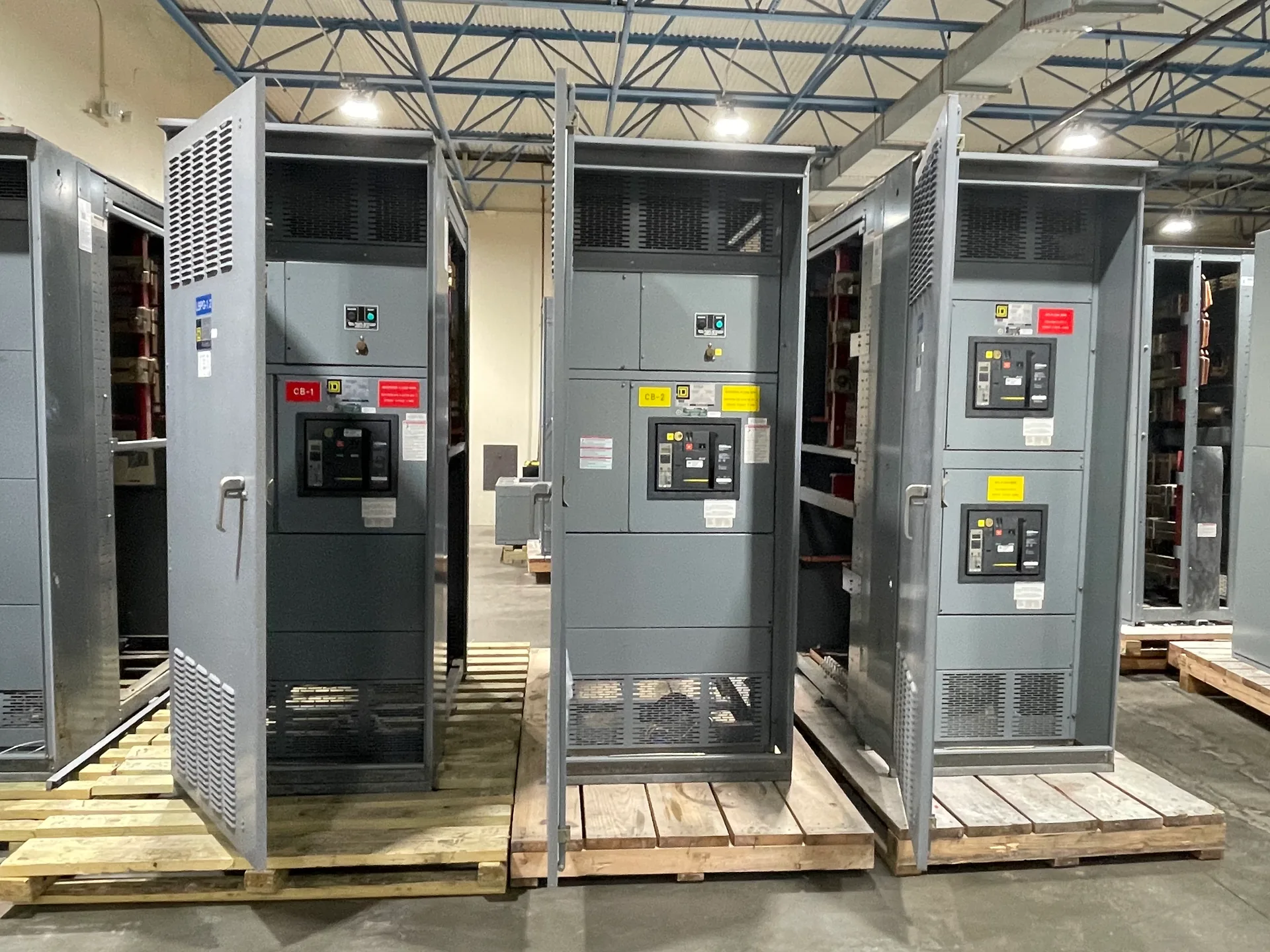
COMPARISONS / MANUFACTURER DIRECT
Compare switchgear options by starting with the electrical system they must serve, not a feature list alone. Voltage, available fault current, load profile, operating priorities, space, and project scope shape which construction and protective-device choices deserve review. Switchgear Builder Virginia manufactures new, custom-built equipment in the USA using all-American components and ships nationwide. For applicable low-voltage switchboards, UL 891 assemblies may be considered. Confirm the required ratings, construction, approvals, and schedule against project documents and supplier data before selecting an approach.
Construction and access
Compare construction by looking at the installation, maintenance approach, and consequences of equipment downtime. A switchboard may suit some low-voltage applications where its layout and access arrangement meet the project requirements; other applications may call for a different assembly or equipment class. Evaluate front access, rear access, compartment separation, cable entry, working space, and room to remove or service components. These choices affect enclosure dimensions and how the equipment fits the electrical room. More separation or specialized access can add space and coordination requirements, while a compact arrangement may constrain future work. Ask suppliers to document the proposed construction and dimensions, then check them against drawings and site conditions. Ratings, construction details, and applicable standards require project-specific verification. Switchgear Builder Virginia can discuss custom-built new equipment and short lead times, with schedule confirmed by quote.
Protective devices
Protective devices should be compared by their function in the system, not by brand or feature count alone. Review the required interrupting capacity, continuous-current needs, trip functions, coordination objectives, and available fault-current study. A fuse-based approach and a circuit-breaker approach can differ in replacement considerations, adjustment flexibility, selectivity, and the way maintenance is planned. Those differences do not establish that one is universally safer or more suitable. Confirm that device ratings and settings align with the system study, upstream and downstream equipment, and applicable project requirements. Ask for device model data and coordination documentation rather than relying on a general product description. If future load changes matter, determine whether the proposed devices and assembly can accommodate them without assuming that a later modification will be feasible. Final selection and protection settings should be reviewed by qualified project professionals.
Sources and continuity
Compare source arrangements by deciding what must remain energized during an outage and which transitions the project actually requires. A single source can be simpler where interruption is acceptable; a second source, transfer equipment, or a more complex arrangement may support continuity goals but adds equipment, controls, coordination, and operating decisions. Determine whether sources are independent, how loads are prioritized, and what happens when a source or transfer component is unavailable. Do not assume that adding a second feed automatically provides redundancy: the full path, including upstream supply and distribution, matters. Clarify whether transfer is manual or automatic, what monitoring is needed, and who will operate and maintain the system. Have the design team verify ratings, control sequences, interlocking requirements, and any utility or project constraints. Compare documented operating scenarios, not just one-line diagram labels.
Replacement approach
For a replacement project, compare a new assembly with a carefully engineered modification to the existing system. Replacing equipment may provide a clearer path to matching current project requirements, but it can affect footprint, cable routing, shutdown duration, and connected equipment. A modification may preserve some existing infrastructure, yet compatibility, condition, available space, and the scope of required engineering must be established first. Record the existing nameplates, dimensions, bus details, protective-device information, and drawings where available; have qualified professionals assess the installation before choosing a path. Do not infer that a component will fit or that an old rating carries over to a new configuration. For new custom equipment, Switchgear Builder Virginia can review project requirements and supplier data with the buyer. The proposal and schedule remain subject to quote, design review, and verification.
Compare supplier data
Use a consistent comparison sheet so proposals address the same technical scope. Request the proposed equipment type, voltage and current ratings, short-circuit information, enclosure and access details, protective-device schedule, source arrangement, dimensions, and included documentation. Mark each item as specified, proposed, or still requiring confirmation. Compare exclusions and interface responsibilities too: incoming and outgoing connections, controls, metering, and coordination can be described differently across bids. For applicable low-voltage switchboards, ask whether a UL 891 assembly is required and confirm the proposed assembly's applicable status; do not apply that designation to medium- or high-voltage equipment. Check lead-time assumptions against the project schedule, but treat dates as subject to quote and verification rather than promises. Switchgear Builder Virginia offers direct USA manufacturing, all-American components, custom builds, short lead times, and nationwide shipping. Select based on verified fit and documented requirements.