
COMPARISONS / MANUFACTURER DIRECT
SCCR and interrupting rating address related but different parts of a short-circuit design. SCCR describes the fault-current level an assembly is rated to withstand under specified conditions; an overcurrent protective device’s interrupting rating describes its ability to interrupt fault current. Neither rating alone settles equipment selection. Buyers need the available fault current at the equipment location and documentation that supports the complete configuration. Switchgear Builder Virginia manufactures new, custom switchgear in the USA using all-American components, with short lead times and nationwide shipping. For applicable low-voltage switchboards, UL 891 assemblies may be specified; applicability and ratings must be verified for the quoted design.
Two different ratings
SCCR is an assembly-level short-circuit withstand rating: it addresses the equipment as a coordinated configuration, not just the main breaker. Interrupting rating belongs to a protective device and describes the fault current that device can interrupt at its stated voltage and conditions. Those values may be shown in the same project documents, but they are not interchangeable. A breaker with a high interrupting rating does not automatically make every bus, connection, or assembly suitable for that fault level. Likewise, an assembly SCCR does not establish that each installed protective device can interrupt the fault current it may encounter. Compare the exact equipment, device, voltage, and rating basis rather than treating one large number as an all-purpose short-circuit rating. This distinction is central when specifying new equipment. ([code-authorities.ul.com](https://code-authorities.ul.com/wp-content/uploads/2014/04/ul_PanelboardShortCircuitRatings2.pdf))
Start with fault current
The practical comparison begins with the available fault current at the equipment’s point of connection, established for the project by qualified design professionals using the applicable system information. Compare that value with the assembly’s applicable SCCR and with each relevant protective device’s interrupting rating at the system voltage. Both must be adequate for the available fault current, subject to the equipment’s documented rating method and conditions. Do not assume a utility value at a service entrance applies unchanged to downstream equipment; the system configuration and impedance affect fault current at different points. The quote package should identify the location and assumptions used, then allow the engineer and authority having jurisdiction to review them. If the fault-current study, source details, or device data are incomplete, treat the rating decision as open rather than infer a safe value. ([osha.gov](https://www.osha.gov/laws-regs/regulations/standardnumber/1910/1910.303))
Check the whole lineup
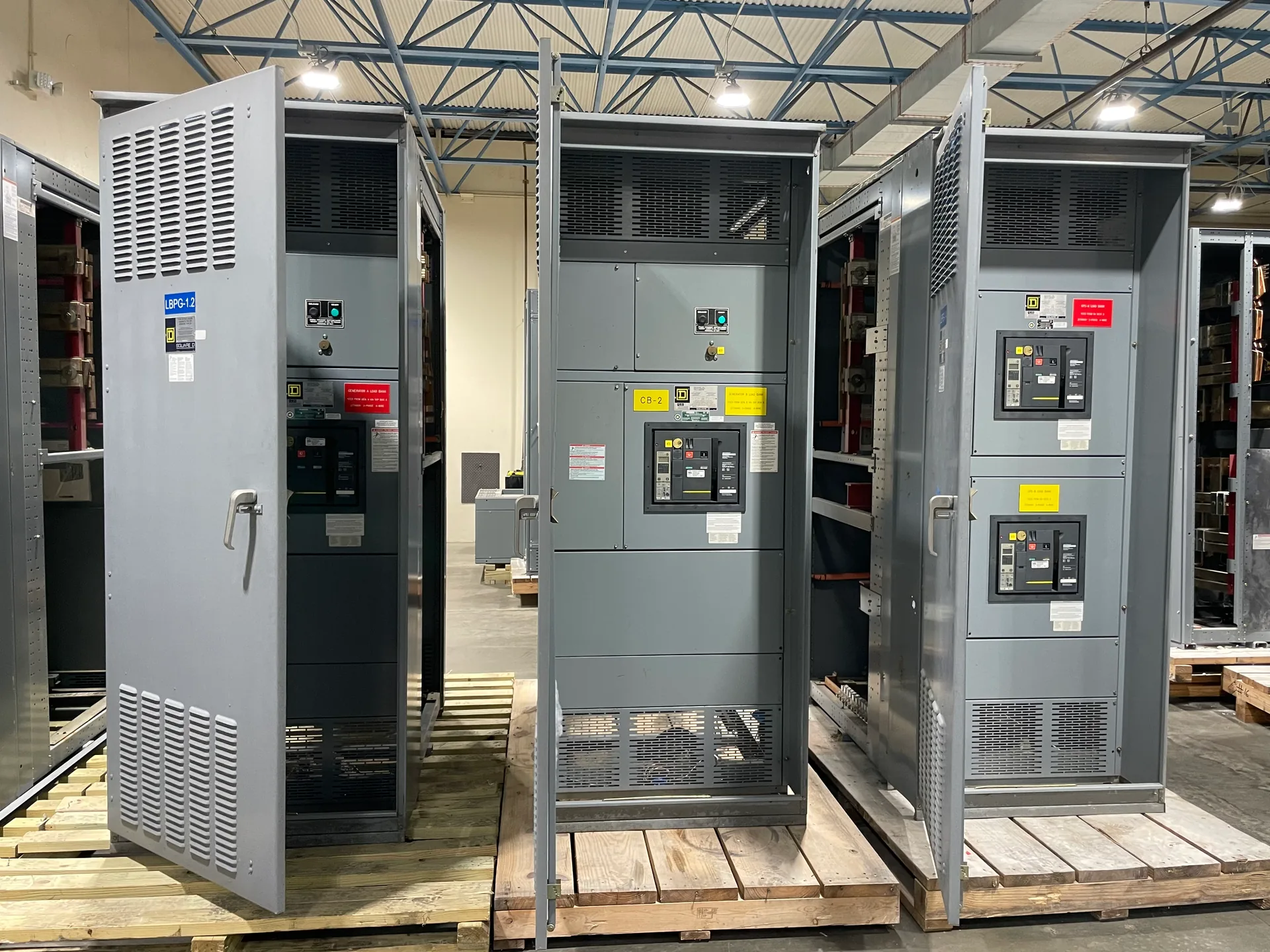
For a switchboard, the buyer should examine the rating of the assembled equipment and the protective devices installed within it, not merely the nameplate of one breaker. Ask which components and configuration support the stated SCCR, and whether the specified devices, trip units, fuses, or other protective elements match that basis. Substituting a device can affect the documented rating, so a replacement part should not be assumed equivalent just because its frame size or ampere rating looks similar. Where a series combination rating is proposed, verify that the exact upstream and downstream devices and installation conditions are covered by the applicable documentation; do not treat it as a generic shortcut. Switchgear Builder Virginia can quote custom new equipment to project requirements, with rating details subject to design review and verification. Applicable low-voltage switchboards may be specified as UL 891 assemblies; confirm scope for the specific build. ([ckm-content.se.com](https://ckm-content.se.com/ckmContent/sfc/servlet.shepherd/document/download/0691H00000EEJp3QAH))
Review project tradeoffs
A higher rating can expand design flexibility, but buyers should weigh it against equipment cost, footprint, component availability, and the project’s actual fault-current conditions. Choosing the largest number without checking system data may add cost without solving a coordination or documentation gap. Conversely, selecting a device based only on its interrupting rating can leave the assembly rating unaddressed. Ask the engineer to confirm both ratings, voltage applicability, and any proposed rating method against the project documents and the manufacturer’s supporting information. Also reconcile the single-line diagram, equipment schedule, protective-device submittals, and fault-current study so they describe the same configuration. These are procurement checkpoints, not field instructions. Do not ask installers to verify ratings by opening energized equipment; arrange reviews through qualified personnel under appropriate safety procedures. Rating adequacy depends on the specific design and verified conditions, not on a general comparison chart. ([osha.gov](https://www.osha.gov/laws-regs/regulations/standardnumber/1910/1910.303))
Specify the evidence
When requesting a new lineup, provide the system voltage, service or feeder location, available fault-current information, one-line diagram, and required protective-device details if available. State the SCCR and interrupting-rating requirements separately, and identify who will confirm fault current and final suitability. Request submittal documentation showing the quoted assembly configuration and device ratings, including any conditions or combinations needed for the stated rating. If the design changes—such as a different source, transformer, breaker, or fuse—ask whether the rating review must be revisited before approval. Switchgear Builder Virginia manufactures and supplies new custom switchgear directly in the USA, with all-American components, short lead times, and nationwide shipping; actual schedules and ratings are subject to quote and verification. For applicable low-voltage switchboards, UL 891 assembly requirements can be discussed in the quote. The final selection should satisfy both assembly and device requirements for verified available fault current.