
FAQ / MANUFACTURER DIRECT
Yes, a new switchgear assembly may be designed for shipment in multiple sections when transport limits, building access, or installation sequence make a single shipment impractical. The split must be planned around the equipment layout and the work required to reconnect sections at the site. Switchgear Builder Virginia manufactures custom equipment in the USA using all-American components and can review shipment approaches as part of a project quote. Whether a particular assembly can be divided, how its connections are arranged, and what work remains after delivery depend on the approved design. Confirm dimensions, handling routes, field connections, and responsibility for each task before finalizing project documents.
Why Split a Shipment?
A shipment split can address a narrow doorway, limited freight access, elevator capacity, weight restrictions, or a site sequence that favors moving smaller assemblies into position separately. It does not automatically mean the finished equipment occupies less floor space or requires less installation work. The design team needs the final lineup dimensions and estimated section weights early enough to compare them with the actual route from the delivery point to the electrical room. Check turns, overhead clearance, ramps, floor capacity, and staging space, not just the room entrance. If dimensions or access conditions are uncertain, treat them as open design inputs rather than assuming a standard split will fit. A custom shipment plan should be reviewed against the quoted equipment configuration and project handling plan; feasibility and schedule are subject to quote and verification.
Plan the Section Breaks
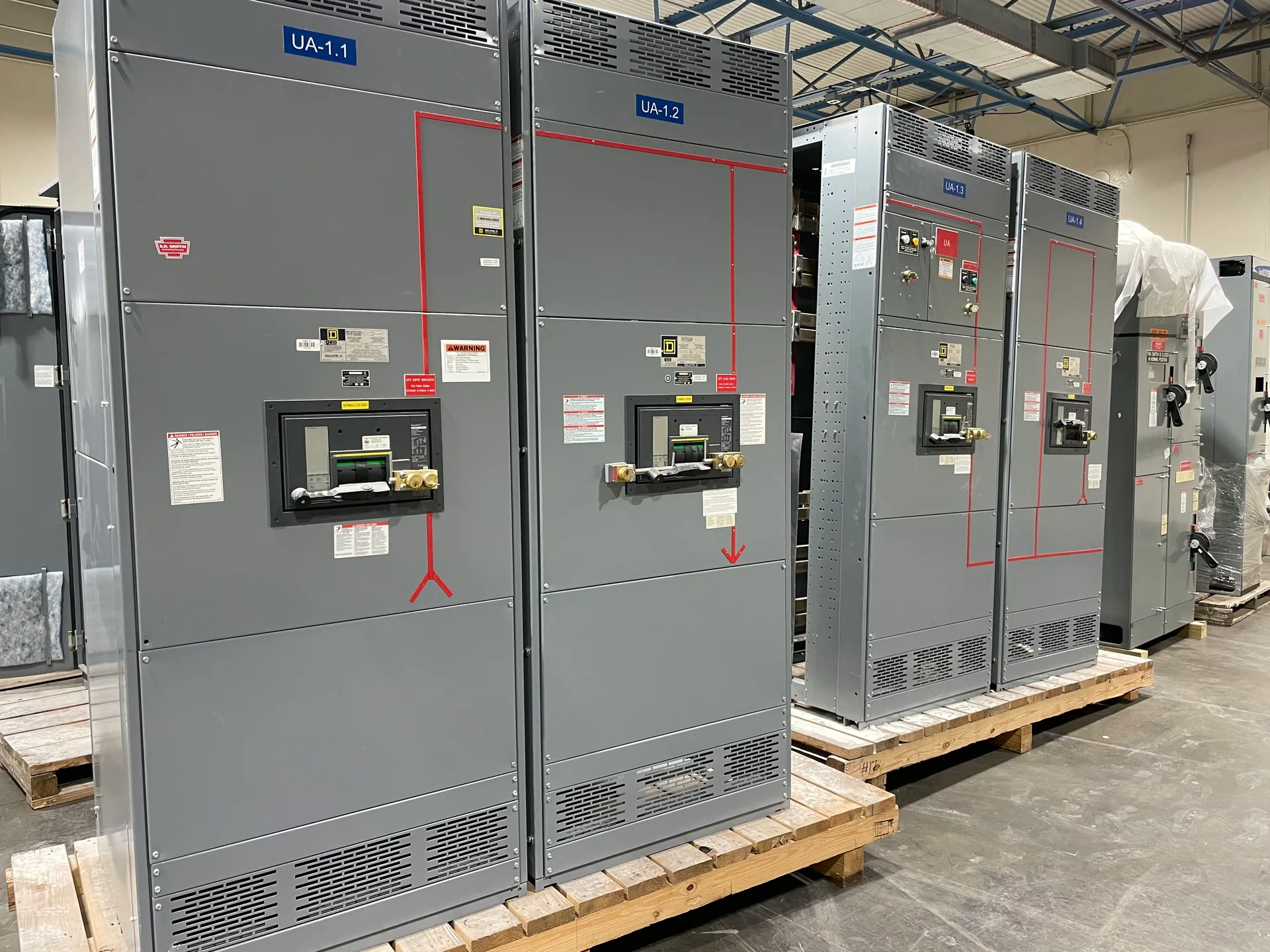
Section boundaries should be selected with the electrical arrangement and the physical assembly in mind. A break may affect bus connections, alignment, barriers, enclosure joints, and access for tools, so a convenient shipping division is not necessarily the best installation division. Request drawings that identify each shipping section, its overall dimensions, approximate weight, lifting or handling provisions, and the interfaces that must be joined in the field. Confirm whether the proposed division changes lineup order or requires particular sections to be set first. Compare the marked dimensions with the route and installation clearances available at the site. Do not rely on a general description such as “split for shipping” as a complete field plan. The quote and approved drawings should establish the specific configuration, subject to review and verification.
Field Bus Connections
When sections are shipped separately, the bus interfaces between them need explicit coordination. Project documents should identify which bus joints are made at the factory and which are completed after delivery, along with the applicable connection hardware, access requirements, and instructions. Confirm how the connection points remain protected during transport and whether the field crew will have enough working room to align and join them. The equipment-specific drawings and manufacturer instructions—not assumptions based on another lineup—should govern assembly. Field bus work can affect the completion sequence, inspection coordination, and readiness for commissioning, so assign the work to qualified personnel under the project’s approved procedures. Do not energize equipment until required assembly, checks, and approvals have been completed. Any requested ratings or features must be confirmed for the specific design and stated in the quote; they should not be inferred from the shipment method.
Access and Handling
A split only helps if every section can be safely received, moved, and positioned. Verify the delivery location, unloading equipment, clear travel path, temporary storage, and route into the electrical space. Compare the section dimensions and weights with site-specific limits, including door openings, turning areas, floor loading, and any lift or rigging constraints. Decide who provides unloading and movement equipment, who directs handling, and how weather or restricted receiving hours will be addressed. If access information changes after the equipment is designed, pause and review the approved drawings and handling plan before proceeding; a revised split may affect layout, interfaces, cost, or timing. Nationwide shipping is available, but shipping arrangements and project schedules are subject to quote and verification. Do not assume freight delivery includes unloading, placement, field assembly, or commissioning unless the written project terms say so.
Define Responsibilities
Before release, align the quote, drawings, and project scope on who coordinates freight, unloading, storage, placement, section alignment, field bus connections, and any required inspections or testing. Spell out what equipment documentation and assembly instructions will be provided, which tasks belong to the installing contractor, and what coordination is expected from other project parties. Confirm whether the shipment is intended to arrive in one delivery or multiple deliveries and how the receiving team will identify and protect each section. For applicable low-voltage switchboards, UL 891 assemblies may be specified where appropriate; confirm the exact scope and applicable requirements in project documents. That standard does not establish that every switchgear assembly is covered or resolve field responsibilities. Switchgear Builder Virginia can quote custom new equipment and a proposed shipment configuration, with dimensions, ratings, schedule, and terms verified for the project.