
GLOSSARY / MANUFACTURER DIRECT
A dead-front switchboard is arranged so that live electrical parts are not exposed at the front during normal operation. The term describes an important design feature, not a complete safety rating or proof of a particular listing. For a new switchboard, buyers should connect the term to the equipment’s intended use, applicable standards, configuration, and project requirements. Switchgear Builder Virginia manufactures custom equipment in the USA with all-American components; specific construction, ratings, schedules, and applicable approvals require verification for the quoted design.
The basic definition
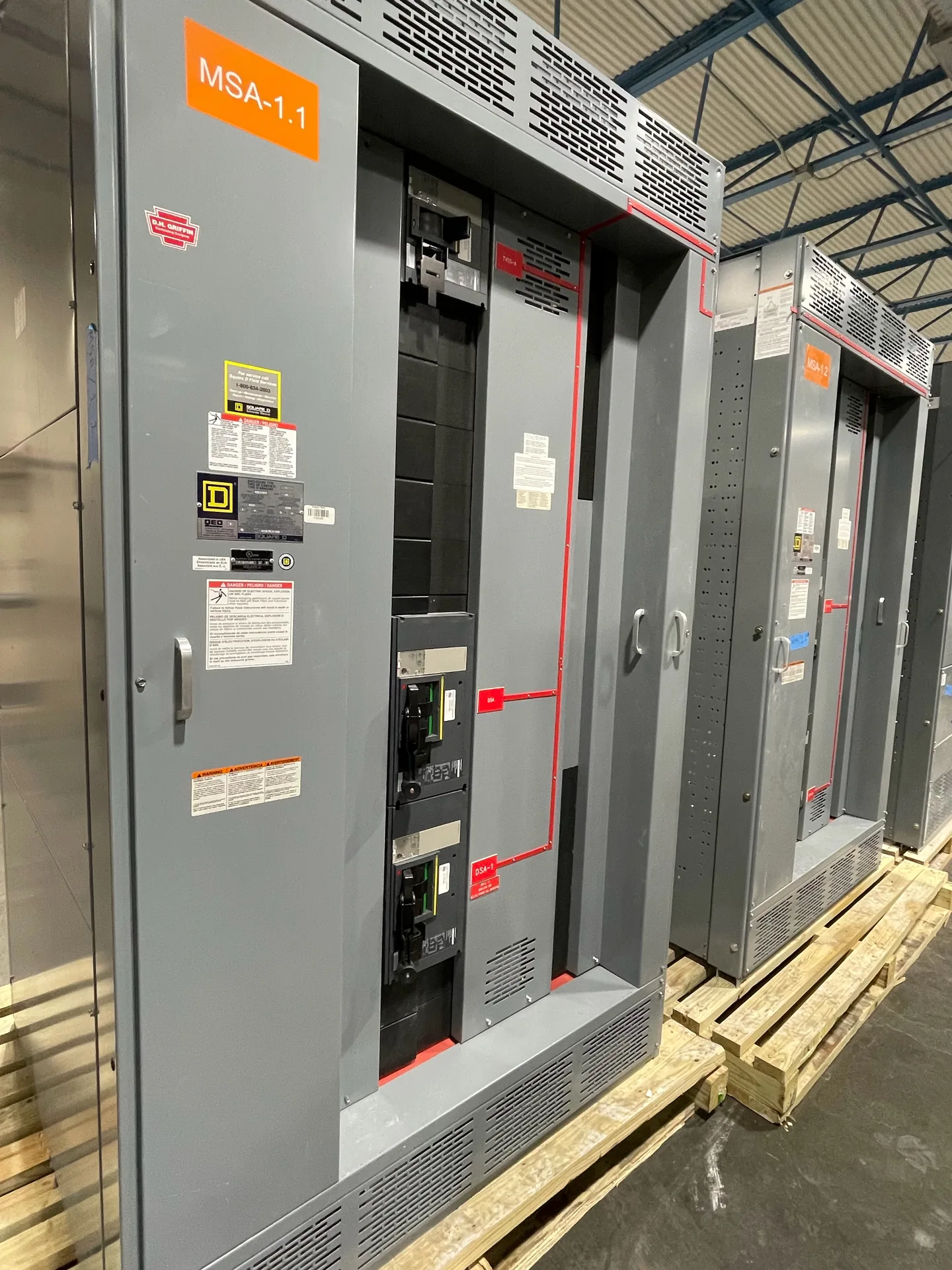
A dead-front switchboard has a front arrangement intended to keep energized parts from being exposed to a person standing at the front during normal operation. Covers, barriers, doors, and compartment layouts may contribute to that arrangement, depending on the design. The phrase does not mean every part is inaccessible under every condition, nor does it describe the equipment’s voltage, interrupting capacity, or suitability for a particular installation. It is a description of the front’s relationship to live parts. Buyers should distinguish that basic meaning from claims about arc-flash risk, internal barriers, or safe maintenance; those involve separate design details and operating conditions. When comparing proposals, ask what the term means for the specific lineup and which access points or operating tasks are included in the design review.
Standard and scope
For an applicable low-voltage switchboard, UL 891 is the relevant product standard to discuss when confirming the intended construction and evaluation basis. Mentioning UL 891 does not establish that a particular assembly is listed, certified, or covered by a specific approval. Confirm the proposed equipment’s documentation and status for the exact configuration being quoted. Dead-front describes an arrangement; it is not a substitute for verifying the standard, ratings, or project specifications. The phrase should not be applied as a claim about medium- or high-voltage switchgear, where the applicable equipment standards and terminology differ. Switchgear Builder Virginia can develop custom new equipment, with applicable standards and any requested listing or approval evaluated for the quoted assembly rather than assumed from a glossary term.
Why buyers care
A dead-front arrangement matters because routine operation and interaction at the switchboard front should not expose live parts as part of normal access. That distinction can inform how a buyer evaluates the lineup’s doors, covers, controls, metering, and maintenance access. It also helps teams communicate a design expectation across electrical engineering, facility operations, and procurement. However, the term alone cannot establish that an installation is safe for every task, that energized work is acceptable, or that hazards are eliminated. Equipment selection, installation, operating procedures, maintenance, and site conditions all affect risk. Ask the manufacturer to identify the relevant front-access features and provide the documents needed for engineering review. Avoid treating the label as a standalone substitute for project-specific safety planning or qualified review of the proposed equipment.
Questions for a quotation
When requesting a new dead-front switchboard, provide the one-line diagram, service conditions, available fault-current information, feeder and load requirements, dimensions, and any project specifications that are available. Identify how operators are expected to access controls and instruments, and whether the design must accommodate particular room clearances or cable-entry arrangements. Ask which portions of the assembly are included in the proposed scope, what ratings are being quoted, and what documentation or approvals can be verified for that exact build. Ratings and schedules remain subject to quote and technical review; a general product description cannot settle them. Custom construction may help align the assembly with project needs, but every option must be checked against the electrical design, installation conditions, and applicable requirements before release.
Term versus complete design
Dead-front is useful shorthand, but it is only one part of a switchboard specification. A buyer should separately confirm nominal voltage, continuous current, short-circuit performance, service arrangement, enclosure needs, incoming and outgoing connections, metering, controls, and any required protective devices. Each value and feature must be selected for the project and verified in the quote; the word dead-front establishes none of them. For low-voltage switchboards, ask whether UL 891 applies and what evidence is available for the particular assembly. Switchgear Builder Virginia manufactures new custom switchgear in the USA using all-American components and ships nationwide. Lead times are short, but timing depends on the quoted scope and schedule confirmation. Clear requirements help the manufacturer and project team review the same design assumptions before equipment is specified or ordered.