
GLOSSARY / MANUFACTURER DIRECT
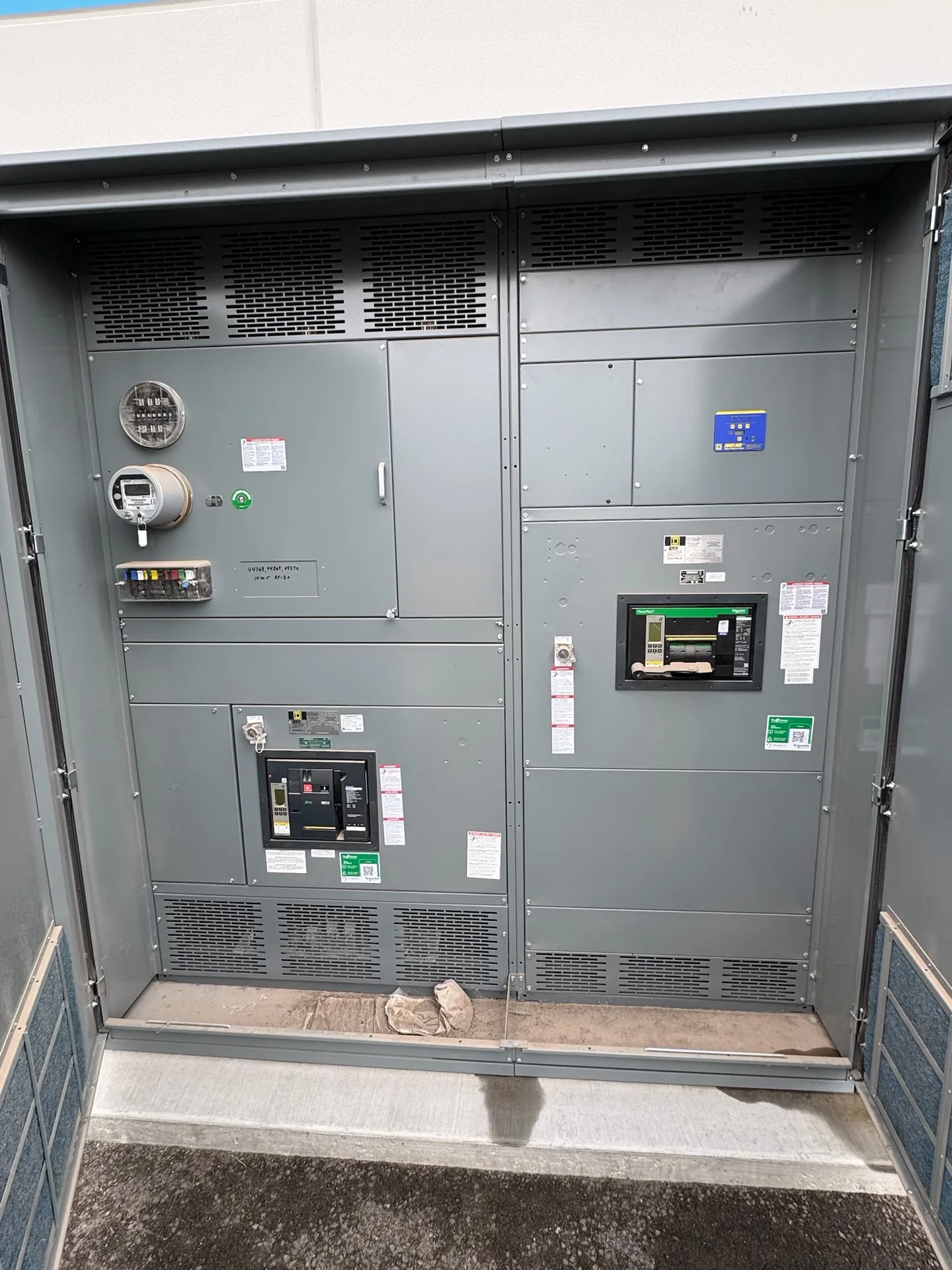
An equipment nameplate is the manufacturer’s identification and rating label attached to electrical equipment. It records details that help identify the specific assembly and assess whether it may suit a project. For replacement planning, a general product description or remembered rating is not a substitute for the actual plate: exact wording, values, and model information can affect the review. Switchgear Builder Virginia manufactures new, custom switchgear and can review nameplate information as part of a project discussion. The plate is one input, not a complete compatibility decision; drawings, site conditions, and project requirements may also need verification.
What a Nameplate Identifies
A nameplate is a durable label or marked plate affixed to equipment by its manufacturer. Depending on the equipment and design, it may identify the manufacturer, product type, model or catalog number, serial number, date or other production code, and electrical ratings. It provides a compact reference for distinguishing one assembly from another and connecting the physical equipment to its documentation. The information varies by product, manufacturer, and applicable requirements, so no single list describes every plate. A nameplate is not the same as a general label added later to identify a room, feeder, or owner’s asset number. Those labels can be useful, but they do not replace manufacturer identification. When describing existing switchgear, use the wording and values that are actually present rather than assuming a familiar model has standard features.
Ratings Are Not Interchangeable
Electrical ratings on a nameplate describe particular limits or characteristics of the identified equipment; they are not interchangeable shorthand for “capacity.” Depending on the assembly, the plate may show voltage, current, frequency, phase, or other rating information. A short-circuit or interrupting-related value, when present, must be interpreted in the context of the equipment and its documentation—not treated as a stand-alone promise that a replacement will fit. Similar-looking numbers can refer to different characteristics. Buyers should preserve units, symbols, and qualifiers exactly as shown, and should not infer a missing value from a panel schedule or another assembly. For a new switchboard, design and ratings need to be established for the application and verified against the project requirements. Applicable UL 891 assemblies may be available; whether it applies and what construction is required must be confirmed for the quoted design.
Why the Actual Plate Matters
For a replacement review, the actual nameplate helps establish what equipment is installed, rather than what someone recalls was installed. A clear photo can capture the manufacturer, model or serial identifiers, and ratings together, reducing ambiguity when records are incomplete or when several sections look alike. It can also help a reviewer locate relevant drawings or documentation, if available. But a plate alone cannot confirm that a new assembly will match the existing footprint, bus arrangement, connections, enclosure, access, or site conditions. Those details may require drawings, measurements, photographs of the surrounding equipment, and review by qualified project personnel. The purpose is to build a dependable scope before specifying new equipment. If the plate is missing, damaged, obscured, or difficult to read, note that rather than filling gaps with guesses; other records may help, but should also be checked.
How to Record the Information
Photograph the complete nameplate straight on, in focus, with enough light to read small characters. Include a wider image that shows where the plate sits on the equipment, and take separate close-ups if the label has multiple sections. Transcribe each field carefully, retaining units, punctuation, letter suffixes, and any prefixes; a single character can distinguish a model or configuration. Record which section or lineup the plate belongs to, since a multi-section installation may have more than one identification plate. Do not remove covers, approach exposed energized parts, or take risks to obtain a photograph. If access is uncertain, leave the task to appropriately qualified personnel following site procedures. Share the images with available drawings and project context for review. A legible image is useful evidence, not an approval or substitute for a complete engineering assessment.
Using It for a New Build
When planning new switchgear, provide the nameplate information alongside the project’s intended application, existing documentation, and known installation constraints. The review can then distinguish facts on the existing assembly from requirements for the new design. A nameplate value should not automatically be copied: the project may have changed, the original equipment may no longer reflect the intended system, or required information may be absent. Switchgear Builder Virginia manufactures new custom builds with all-American components and direct USA manufacturing; configuration, ratings, schedule, and applicable requirements remain subject to project review and quote verification. Nationwide shipping is available, but timing depends on the quoted scope and is not established by a nameplate. For applicable low-voltage switchboards, UL 891 requirements can be discussed and verified for the proposed assembly. Confirming the actual plate early helps frame questions, but final compatibility depends on the full project.