
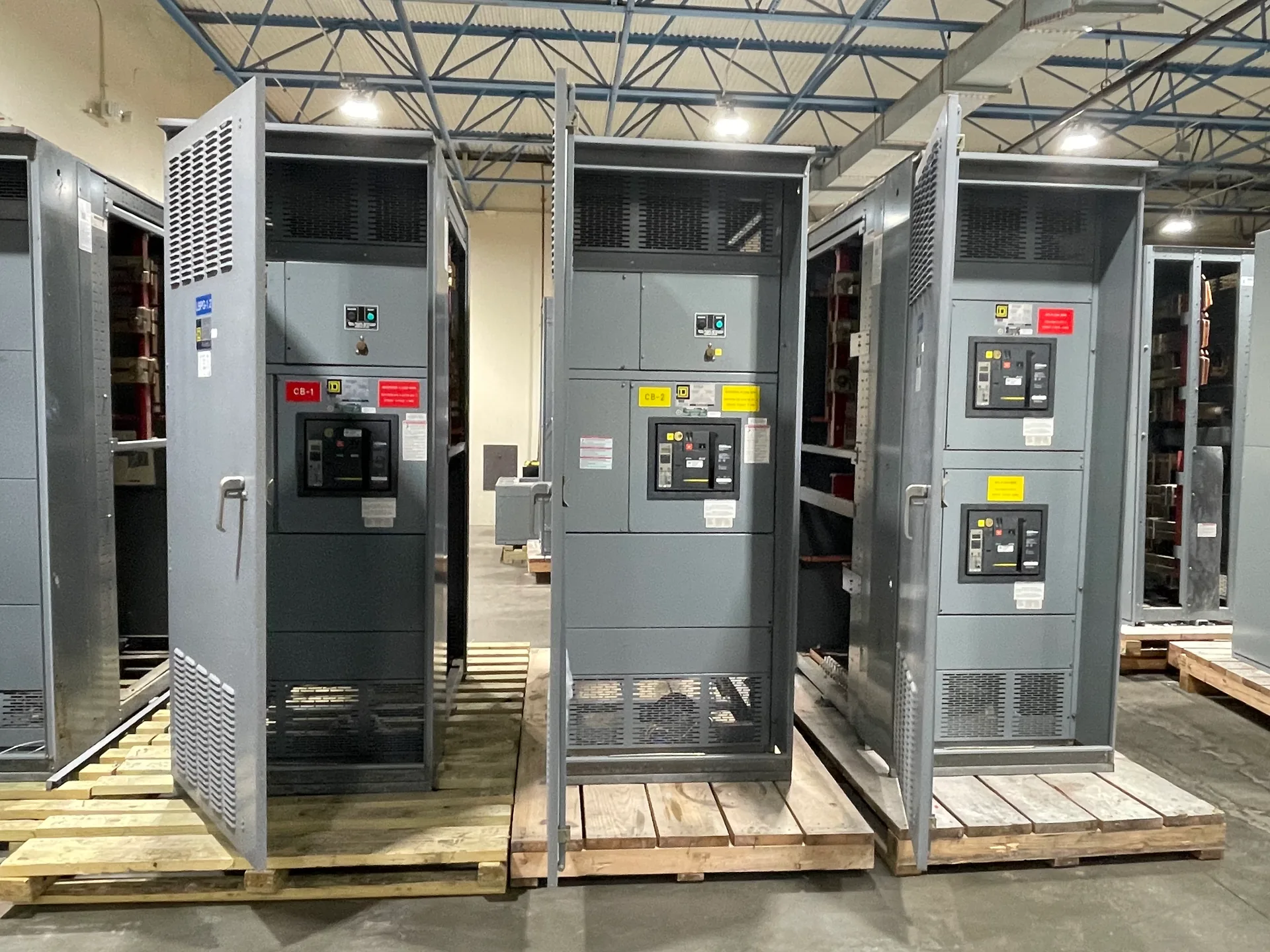
TECHNICAL GUIDES / MANUFACTURER DIRECT
Switchboard and switchgear standards are not interchangeable labels. The right requirement depends on the assembly’s design, voltage, intended use, project documents, and the authority reviewing the installation. UL 891 addresses applicable switchboards; it is not a blanket standard for every product called switchgear. Buyers should identify the equipment being specified, then confirm the standard, certification or listing expectations, and ratings that apply to that exact assembly. Switchgear Builder Virginia manufactures new custom equipment in the USA using all-American components, with short lead times subject to quote and verification and nationwide shipping.
Start With the Assembly
Begin by describing how the equipment is built and what it must do, rather than relying on a sales label alone. A switchboard and a metal-enclosed switchgear assembly may serve related distribution roles, but their construction and component arrangements can differ. Those differences affect which product standard or evaluation path belongs in the specification. Document the system voltage, service conditions, incoming and outgoing devices, metering, protection, and intended installation. Then ask the engineer of record or other responsible project professional to confirm the applicable requirements. This early classification helps prevent a common procurement problem: a specification that calls for one product type while drawings, protective devices, or operating needs point toward another. A custom build can address defined project needs, but customization does not remove the need to establish which standards and ratings apply.
Where UL 891 Fits
UL 891 is a standard for applicable switchboards, not a universal approval for anything described as switchgear. UL describes the standard as applying to switchboards, while project-specific construction and scope still matter. ([ul.com](https://www.ul.com/news/ul-offers-solutions-switchboard-makers)) Buyers should therefore avoid treating a UL 891 reference as proof that a different assembly type, voltage class, or complete installation has been evaluated under that standard. For an applicable low-voltage switchboard, specify the expected listing or evaluation clearly and request documentation for the proposed assembly. Confirm that the offered configuration, devices, and ratings align with the project documents; a familiar standard number by itself does not settle those details. Switchgear Builder Virginia builds UL 891 assemblies where applicable. Whether that designation fits a particular order must be verified against the actual design and quoted scope, not inferred from the word switchgear in a product description.
Switchgear Standards Need Scope
Switchgear standards address defined equipment scopes, not every power-distribution product as one broad category. For example, IEEE identifies C37.20.1 as covering metal-enclosed low-voltage power circuit-breaker switchgear within its stated scope. ([standards.ieee.org](https://standards.ieee.org/standard/C37_20.html)) That is distinct from UL 891’s switchboard scope. This difference matters when a project specifies compartmentalized breaker construction, operating arrangements, or other equipment details that are not captured by a generic phrase such as “main switchgear.” The correct standard still depends on the actual assembly and project requirements; a standard’s title alone does not establish compliance, listing, or suitability. Ask the project engineer to identify the governing standard and required evidence, then have the manufacturer confirm what the quoted configuration is designed to meet. For medium- or high-voltage equipment, identify the relevant product category and standard independently rather than applying UL 891 by habit.
Verify Ratings Separately
A standards reference is not a substitute for checking the electrical ratings and configuration required at the site. Review the project’s stated voltage, continuous current, short-circuit or withstand requirements, protective-device details, and environmental conditions with the responsible engineer. Confirm that the proposed assembly documentation addresses the required values and arrangement. Do not assume that a number shown in a catalog, an example specification, or a discussion of a standard proves a particular product’s rating. Those details are options or requirements to verify for the specific design and quote. Also clarify any required marking, evaluation, or approval documentation before release for manufacture. Switchgear Builder Virginia can develop custom new equipment around defined project requirements, but schedules and ratings remain subject to quote and verification. Asking focused questions before finalizing drawings helps expose mismatches while changes are still easier to coordinate.
Make the Specification Testable
A useful purchase specification identifies the assembly type, applicable standard, required certification or listing evidence, electrical ratings, device lineup, and project-specific features in clear, reviewable terms. Attach current one-line diagrams and relevant equipment schedules, and flag any conflicts for the design team to resolve. Ask the manufacturer to state which parts of the proposed assembly meet the stated scope and what documentation will accompany it. If the project’s requirements are unclear, seek clarification from the engineer of record or the authority responsible for review rather than assuming a standard applies. Switchgear Builder Virginia manufactures new switchgear and switchboards in the USA with all-American components, offers custom builds and nationwide shipping, and can review a defined request for quote. Lead time, configuration, applicable UL 891 scope, and ratings must be confirmed for the specific order; no generic label replaces that verification.