
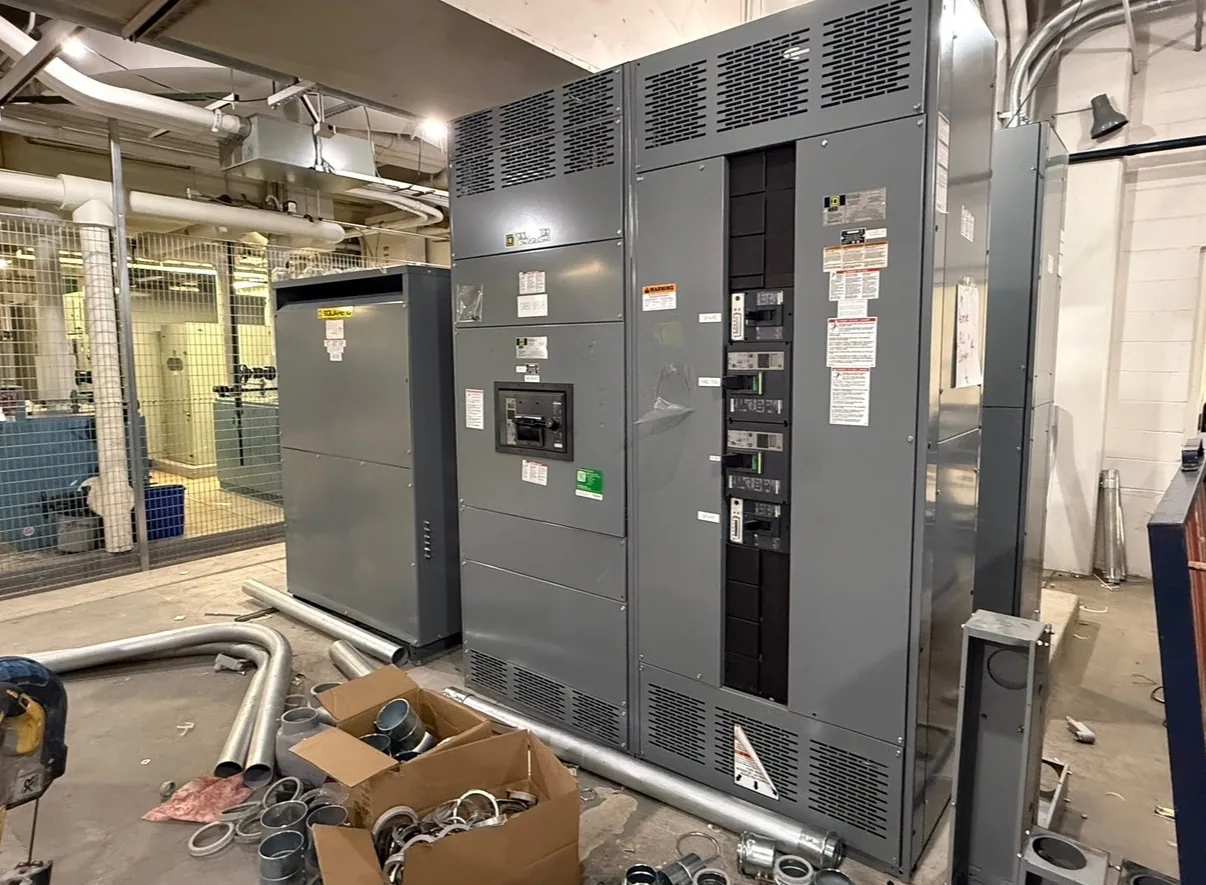
TECHNICAL GUIDES / MANUFACTURER DIRECT
Replacing switchgear is a decision about equipment condition, operating risk, outage planning, and the demands the system may face next. A useful framework separates evidence from assumptions: document what is known, identify what requires inspection or engineering, and compare replacement scope against operational constraints. Switchgear Builder Virginia manufactures new, custom-built equipment in the USA using all-American components, with nationwide shipping. The right configuration, ratings, schedule, and applicable approvals must be confirmed for the project; no single checklist can substitute for site-specific review.
Start With Evidence
Build the decision around documented condition rather than age alone. Gather available maintenance records, drawings, equipment labels, operating history, and records of faults or repairs. Note missing, conflicting, or outdated information instead of treating it as confirmed. A qualified inspection and engineering review can help determine whether observed wear, damaged components, heat-related evidence, corrosion, or repeated operating problems affect the replacement scope. Do not assume that an enclosure that looks sound establishes the condition of internal components. Likewise, a past interruption does not by itself prove that the entire lineup must be replaced. The key question is whether the existing equipment can continue to serve the required function at an acceptable, evaluated level of risk. Inspection access, test methods, and findings depend on equipment design and site conditions; arrange assessments through qualified personnel and avoid treating this framework as live-work guidance.
Compare Outage Paths
Downtime can shape the project as strongly as equipment selection. First identify which loads cannot be interrupted, which may tolerate a planned outage, and whether approved temporary arrangements are feasible. Then compare replacement sequences: a single coordinated outage may simplify interfaces, while staged work may reduce the amount of equipment unavailable at once but add temporary connections, sequencing requirements, and coordination. These are planning options, not assumptions that a site can support them. The owner, engineer, operations team, and relevant contractors should verify switching boundaries, access, shutdown windows, temporary-power needs, and restoration criteria before a schedule is set. Include time for engineering, submittal review, manufacturing, shipping, installation, and commissioning in the planning discussion. Switchgear Builder Virginia offers short lead times, but actual schedules depend on the quoted configuration and project verification; do not commit to an outage date until the complete plan is confirmed.
Resolve Documentation Gaps
Use the documentation review to identify what a replacement must connect to and what remains uncertain. Existing one-line diagrams, control schematics, cable schedules, settings records, dimensions, and equipment data may be incomplete or inconsistent with field conditions. Have qualified project personnel verify the information needed for design, including system arrangement, available fault-current data, grounding approach, feeder requirements, control interfaces, and installation constraints. Treat each value as a design input requiring confirmation, not as a rating to copy automatically from old labels or drawings. A clear gap list lets the team request targeted surveys or engineering work before equipment is specified. It also helps distinguish a like-for-like functional replacement from a broader redesign. If low-voltage switchboard construction is in scope, determine whether UL 891 applies to the requested assembly and verify applicable requirements for that project; it does not establish suitability for medium- or high-voltage equipment.
Check Compatibility
Compatibility means more than matching the outline of an existing lineup. Compare the proposed equipment with the electrical system, upstream and downstream devices, protective coordination, conductors, cable entry, room clearances, anchoring, ventilation, controls, and operating practices. Confirm which interfaces can remain and which may need modification. A footprint match may still leave unsuitable termination space or incompatible connections; conversely, a changed arrangement may be workable if the site and engineering allow it. Evaluate interrupting and withstand requirements, continuous current needs, voltage class, and other ratings against verified system data rather than assumptions. Identify applicable code, utility, owner, and inspection requirements with the responsible professionals, since obligations depend on the project. Custom builds can address defined project requirements, but every dimension, interface, rating, and approval remains subject to review and quotation. Nationwide shipping is available; shipping does not confirm site access, unloading, installation, or acceptance arrangements.
Plan for Future Loads
Forecast future loads before freezing the replacement scope. Ask which additions are approved, which are plausible but uncertain, and which are only long-range possibilities. For each scenario, review demand, feeder count, spare capacity, space, heat management, protection, and the effects on upstream equipment. More capacity is not automatically better: an oversized or expanded design can increase cost, footprint, coordination work, and installation complexity, while too little provision may make later changes disruptive. Have the engineer assess credible growth scenarios and identify where a reserved space, spare provision, or planned expansion path is technically and physically appropriate. Compare those options with the cost and risk of addressing growth later. A practical decision record should state assumptions, unresolved checks, outage constraints, selected scope, and the reason alternatives were rejected. Switchgear Builder Virginia can quote new equipment to a verified project scope; final ratings, configuration, applicable approvals, and schedule require confirmation.