
INDUSTRIES / MANUFACTURER DIRECT
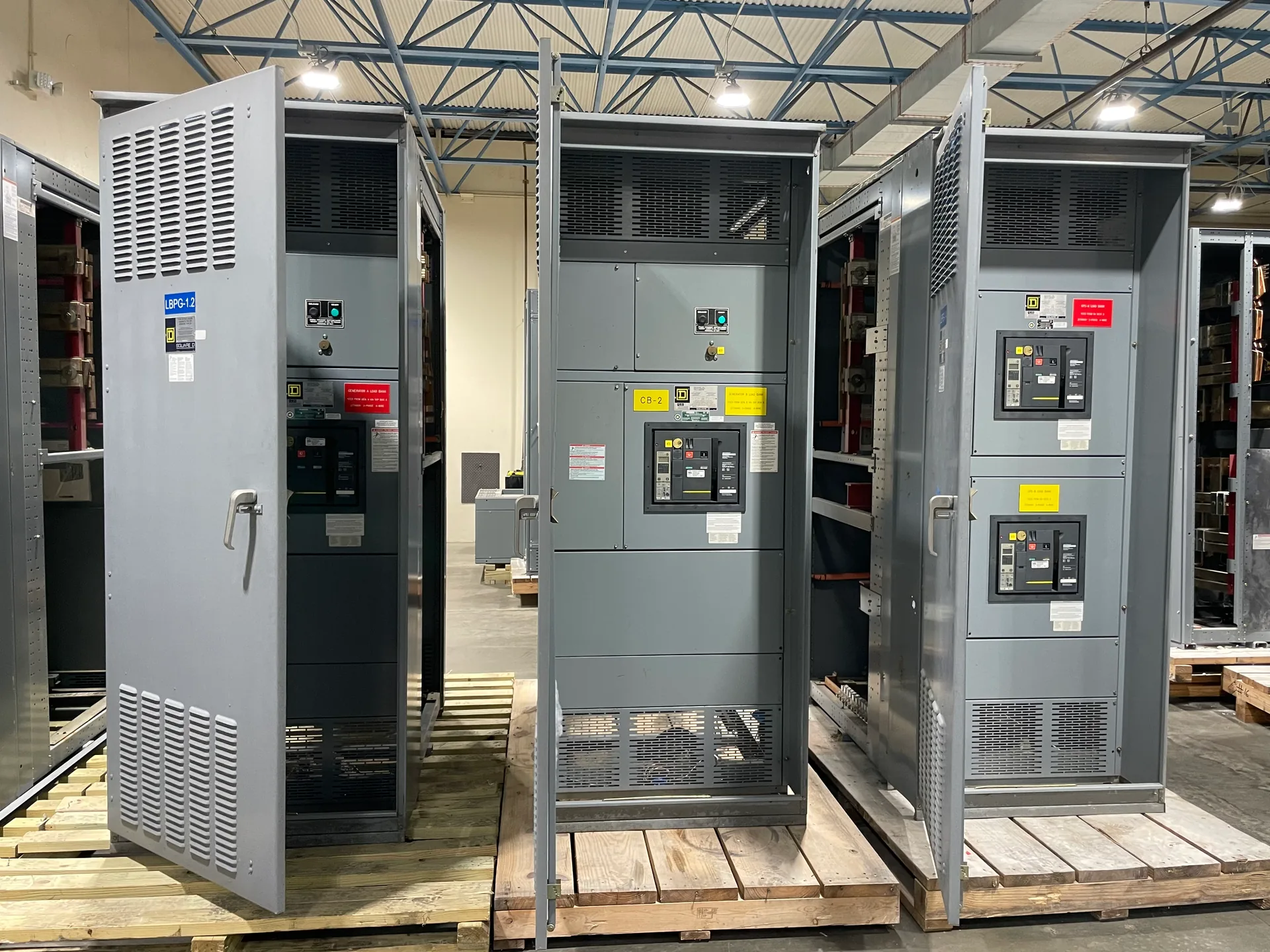
Warehouse switchgear planning starts with the loads that must operate together: lighting, material handling equipment, charging systems, and building services. Switchgear Builder Virginia manufactures new, custom-built switchgear in the USA using all-American components, with nationwide shipping. The right arrangement depends on project requirements, available installation space, operating needs, and plans for future expansion. Define those conditions before selecting an assembly or feeder layout; schedules and ratings must be established and verified for each project.
Map the Loads
Build a load schedule that separates warehouse lighting, conveyors, lifts, dock equipment, charging stations, and support systems. Note which loads may run at the same time, which operate in shifts, and which could be added later. This helps the design team assess feeder needs without treating every connected load as a constant demand. Identify equipment with manufacturer-specified electrical requirements and provide those documents for review; do not infer voltage, current, or starting characteristics from equipment names alone. Also clarify whether critical operations need distinct distribution or monitoring provisions. Those are project decisions, not automatic features. A complete, verified load picture supports practical choices about assembly configuration, feeder allocation, and space for future circuits. Switchgear Builder Virginia can develop custom new equipment to project requirements, with final ratings and configuration subject to quote and verification.
Plan Feeder Growth
Warehouse operations often change as storage layouts, automation, and charging needs evolve. Decide whether the project should include capacity for later feeders, and specify how much physical and electrical allowance is actually needed. Spare breaker positions, additional bus capacity, and reserved wall or floor space are different considerations; one does not automatically provide the others. Ask the project engineer to define the intended expansion scenario and confirm that the proposed assembly and upstream system can support it. Oversizing without a stated need may consume budget and installation space, while leaving no room can make later changes more disruptive. Record known near-term phases separately from uncertain future possibilities. For applicable low-voltage switchboards, UL 891 requirements may apply; applicability and assembly details must be verified for the specific project. Ratings remain subject to quote and verification.
Check Installation Access
Review the complete route from delivery point to final equipment location before settling the enclosure arrangement. Measure door openings, corridors, turns, ceiling clearances, elevator limits if relevant, and the available working area at the installation site. Consider whether equipment must be moved in sections, and confirm any shipping or handling constraints with the project team. The selected arrangement must also leave adequate access for installation, inspection, and planned maintenance under the applicable project requirements. Do not assume a clear receiving door means the full route is workable. If the warehouse remains active during construction, identify traffic, staging, and work-area restrictions early so they can inform the schedule and installation plan. Switchgear Builder Virginia ships nationwide; shipping options, equipment dimensions, schedule, and installation responsibilities must be confirmed for each quoted project.
Coordinate Site Conditions
Collect site information that could affect equipment selection before requesting a final configuration. This may include the electrical one-line diagram, available fault-current information, grounding approach, environmental conditions, service entrance requirements, and coordination with upstream and downstream equipment. Have qualified project professionals establish and verify those values rather than relying on assumptions or an old equipment label. Warehouse areas can differ substantially: a clean, conditioned electrical room presents different design questions from a location exposed to dust, moisture, temperature variation, or vehicle activity. Describe the actual proposed location and any enclosure or access requirements for review. Confirm interfaces with the utility or other project stakeholders where applicable. The manufacturer can use verified project documents to develop a custom new assembly; the buyer and project team should confirm specifications, approvals, and any required inspection or testing before release and installation.
Specify the Assembly
A clear request for quotation should identify the application, requested voltage and current ratings, system information, load schedule, one-line diagram, feeder requirements, installation location, access limits, and expected expansion needs. Include known project milestones, but treat any production or shipping schedule as subject to review and quote rather than a delivery promise. Ask which documents, drawings, and review steps are included in the proposed scope, and identify requirements that still need confirmation. For warehouse distribution, useful tradeoffs often involve present capacity versus planned growth, compact layout versus service access, and consolidated distribution versus separate sections for distinct operations. The project engineer should resolve those tradeoffs against the verified system conditions. Switchgear Builder Virginia manufactures new custom equipment in the USA with all-American components and offers nationwide shipping; applicable UL 891 low-voltage switchboard requirements must be specifically confirmed.