
LOCATION SERVICES / MANUFACTURER DIRECT
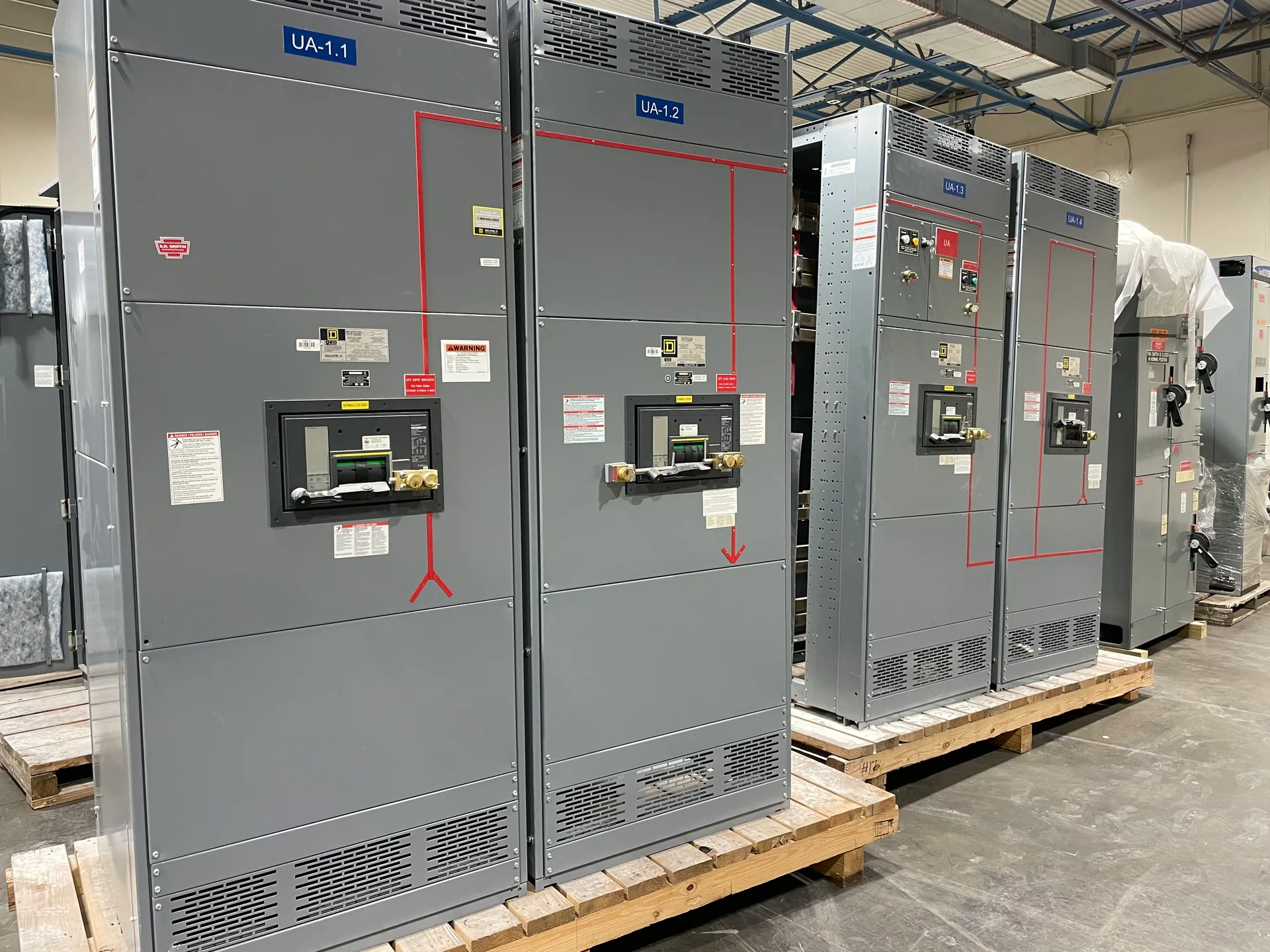
Switchgear Builder Virginia designs and manufactures new switchboards, including custom configurations for healthcare projects. For a hypothetical Charlottesville facility, design begins with the engineer’s load study and the project’s essential-system requirements—not with an assumed standard layout. The equipment schedule, ratings, interfaces, applicable approvals, and production timing require review and verification for the specific project. This page outlines decisions the design team can evaluate before requesting a quote; it does not represent a completed local project or establish site-specific utility or jurisdiction requirements.
Separate Load Groups
For a hypothetical Charlottesville healthcare project, start by listing normal loads and essential loads by function, location, and operating priority. The project engineer should establish which loads belong on each required source and identify any legally required, critical, or equipment branches that apply under the project’s code classification. Avoid treating every important-looking load as belonging to one undifferentiated emergency group: an approved grouping affects feeder routing, transfer arrangements, capacity planning, and what operators need to see. Record expected demand, starting characteristics, future additions, and loads that may be shed, with assumptions marked for review. Switchgear Builder Virginia can use that information to develop a custom new low-voltage switchboard layout. Final circuit assignments, ampacity, bus configuration, and protective-device selections depend on verified drawings, calculations, and specifications; this discussion does not establish a code classification or rating.
Coordinate Transfer Interfaces
The switchboard’s relationship to transfer equipment needs to be drawn, not left to a nameplate description. Show the normal source, alternate source, transfer equipment, downstream distribution, and any required control or status connections in the one-line and interface schedules. Confirm which components are part of the switchboard scope and which are furnished separately; unclear boundaries can leave gaps in responsibility for cable terminations, control wiring, testing coordination, and space. The engineer should specify the transfer sequence and operating intent, while the equipment team checks that the proposed sections and connections match the documented arrangement. Do not assume a particular automatic transfer scheme or source configuration without project direction. For a Charlottesville example, utility characteristics and site conditions must be verified by the project team rather than inferred from the city name. Proposed interfaces and ratings remain subject to quote and engineering review.
Verify Fault Duty
Available fault current and protective-device coordination are key inputs to switchboard selection. The engineer should provide the applicable short-circuit study assumptions, system voltage, source details, and required equipment withstand or interrupting criteria. Confirm that the proposed assembly and devices are suitable for the documented conditions, including the effect of alternate sources or operating configurations where relevant. Do not select a rating from building size, a typical hospital layout, or a broad description such as “critical power.” Those shortcuts can miss differences in transformer capacity, conductor impedance, generator contribution, and system arrangement. If study values or source data are pending, identify them as open items and keep the selection provisional. Switchgear Builder Virginia can review requirements for a custom new switchboard, but ratings and available options must be checked against the final project documents and applicable product scope. UL 891 applies only where the proposed low-voltage switchboard and project requirements make it applicable; confirm this during specification review.
Plan Feeder Sections
Feeder-section planning should account for the actual circuit schedule, cable entry direction, conductor size and quantity, termination method, and expected maintenance access. Ask the design team to mark which feeder sections serve normal distribution and which serve essential distribution, then check that labels and compartment arrangements make that distinction clear to installers and operators. Reserve capacity only when the project documents define what “spare” means: an empty space, installed provisions, or a fully equipped feeder are different scope decisions. Section dimensions, bus arrangement, barriers, and access are options to verify against the specification and site constraints, not assumed features. For a hypothetical Charlottesville healthcare facility, the team would also confirm room clearances, delivery path, and final connection locations from verified drawings. Custom construction can address documented needs, while the final configuration, ratings, and schedule require review and quotation.
Coordinate Outage and Quote
A new switchboard’s installation plan depends on how the existing facility can accommodate construction, cutover, and commissioning. The owner and engineer should define permitted outage windows, temporary-power responsibilities, sequencing constraints, and required acceptance activities before equipment scope is fixed. This is planning coordination, not a direction to perform live work; qualified project personnel must establish safe work methods and applicable procedures. Identify whether feeder sections are intended for a new building, an expansion, or a planned replacement, and document connection points and responsibilities accordingly. For a Charlottesville project, any utility coordination, jurisdictional review, and healthcare-specific requirements must be confirmed with the relevant project parties; this page does not establish local approvals. Switchgear Builder Virginia manufactures and supplies new equipment, with direct USA manufacturing, all-American components, custom builds, short lead times, and nationwide shipping. Actual configuration, applicable UL 891 scope, ratings, schedule, and shipping arrangements are subject to quote and verification.