
LOCATIONS / MANUFACTURER DIRECT
Switchgear Builder Virginia manufactures new switchgear for commercial and industrial projects in Danville, Virginia, with direct USA manufacturing, all-American components, custom builds, short lead times and nationwide shipping. For an industrial capacity addition, start by documenting the existing service limits, planned feeders and installation sequence—not by assuming a larger lineup alone will solve the constraint. The right equipment depends on verified electrical data, utility coordination and project requirements. Use this guide to organize those decisions before requesting a manufacturer-direct quote.
Map the Capacity Addition
Begin with the load the expansion is expected to add, when that load will operate, and how it relates to the existing service. Gather available one-line diagrams, equipment schedules, nameplate information and demand data for review by the project’s qualified electrical professionals. Identify whether the addition needs new distribution, a changed lineup, or coordination with equipment upstream; those are different scopes with different space and shutdown implications. Do not assume the existing service has spare capacity or that a proposed switchboard rating is suitable. For a hypothetical Danville industrial project, planners might compare a phased production addition with a single larger buildout, then document how each scenario affects feeder count, future connections and commissioning sequence. Confirm actual site conditions and the serving utility rather than relying on a location-based assumption. These inputs help define a quote scope without treating preliminary estimates as approved ratings.
Check Service Constraints
Service limitations can involve more than the main device rating. Available fault-current information, conductor routes, upstream protective devices, grounding arrangements, physical clearances and utility requirements may affect equipment selection and coordination. Have the responsible engineer and relevant project parties verify which information applies to the site. If records are incomplete, list the missing data explicitly and identify who will obtain it; do not fill gaps with assumed values. The utility serving the actual project must be confirmed, and its applicable service requirements should be reviewed before the design is finalized. A new lineup may need to connect with existing distribution, but compatibility cannot be established from a city name or general product description. Record the proposed connection points and the boundaries of manufacturer, engineering and installation responsibilities. Ratings, construction details and any required approvals remain subject to project review and quotation. This disciplined check can expose constraints before procurement timing is set.
Plan Feeders and Space
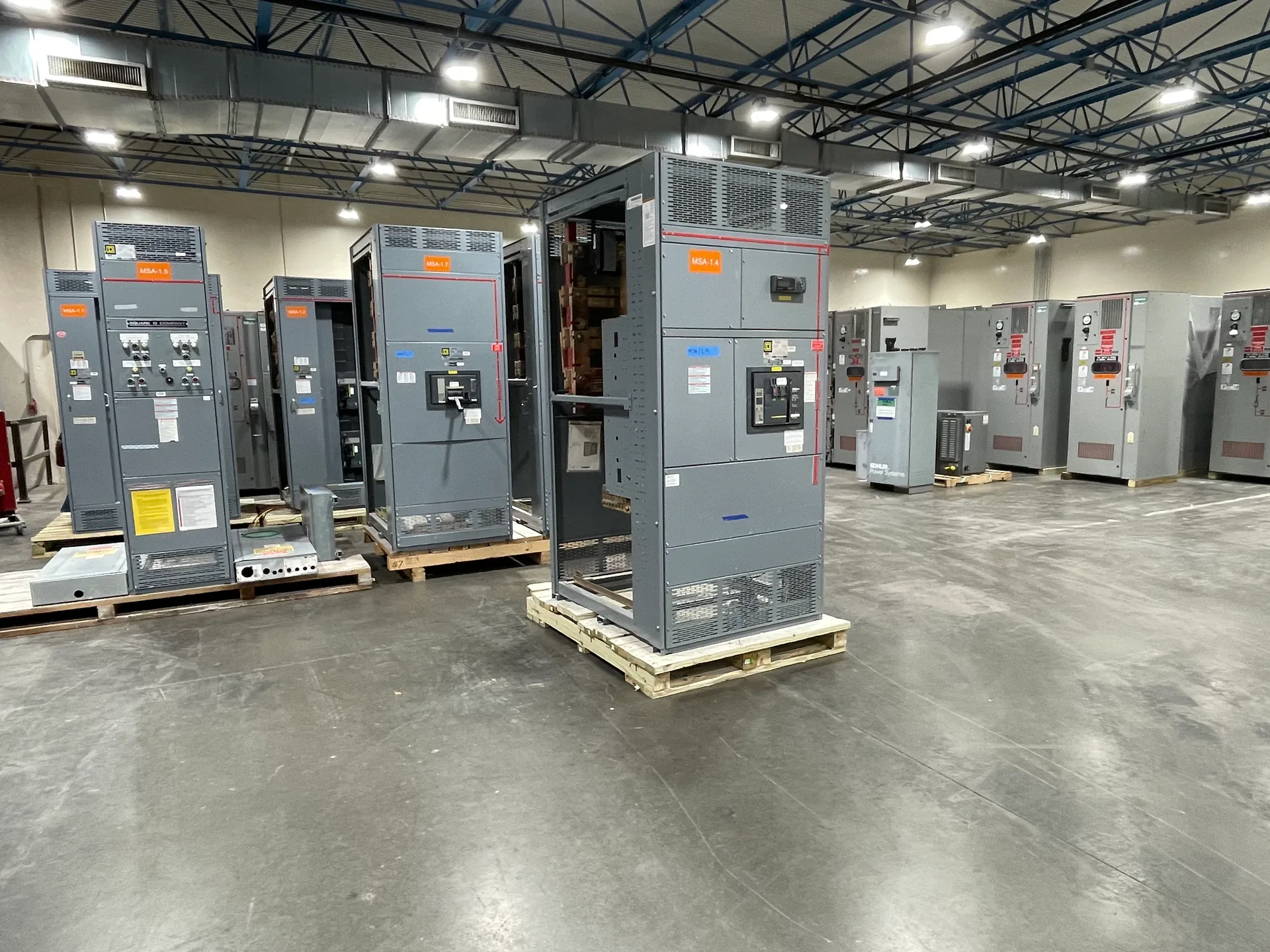
Translate the expansion plan into a feeder schedule that distinguishes initial loads from reasonably anticipated future circuits. For each feeder, record the load served, expected operating conditions, routing assumptions and any project-specific protection or metering needs for engineering review. Avoid adding empty future spaces without checking lineup dimensions, bus arrangements, heat, access and the requirements of the complete assembly. A multi-section switchboard may be an option when the project’s distribution and site layout support that approach; section count alone does not establish suitability or a rating. Review room access, working clearances, cable entry, lifting path and final placement with the design and installation teams. For a hypothetical capacity addition, staging sections near the installation area could reduce handling steps, but only if the route, floor conditions, weather protection and construction sequence allow it. Treat staging as a site logistics decision, not a product capability or delivery commitment, and verify dimensions before equipment is released.
Coordinate Installation Phases
A phased expansion can help a facility plan around production needs, but the electrical sequence must be developed for the actual system. Identify which existing loads must remain available, where an interruption may be required, and who is responsible for outage planning, switching procedures and field verification. Do not presume that new equipment can be energized alongside existing gear without engineering review. Confirm access for receiving, storage and movement, and protect equipment according to the manufacturer’s instructions and project conditions. The quote package should state whether the scope is new equipment supply only or includes defined documentation or other deliverables; do not assume installation, field service, testing or utility coordination is included. Switchgear Builder Virginia can consider custom builds and nationwide shipping, while schedule and ratings are subject to quotation and verification. Any applicable UL 891 assembly requirements should be identified for low-voltage switchboards; UL 891 does not apply to medium- or high-voltage switchgear.
Prepare a Useful Quote
A clear request can include the project location, application, desired procurement window, one-line diagram, load and feeder schedules, available fault-current data, service information, room and access constraints, and the planned expansion phases. Mark preliminary documents as preliminary, identify open engineering questions and note any specifications that require confirmation. Include the requested equipment type and describe whether the project is a new lineup or an addition coordinated with existing distribution; compatibility and scope must be reviewed rather than presumed. Ask for the proposed configuration, applicable ratings, included documentation, exclusions and shipping assumptions to be stated in the quote. For a Danville project, confirm the serving utility and site-specific requirements with the responsible parties instead of relying on generalized local assumptions. The related section-expansion service page and multi-section switchboard product information can help organize the inquiry, while a quote checklist can make missing inputs visible. Final schedules, ratings and availability require verification; no delivery date should be assumed before quotation.