
LOCATIONS / MANUFACTURER DIRECT
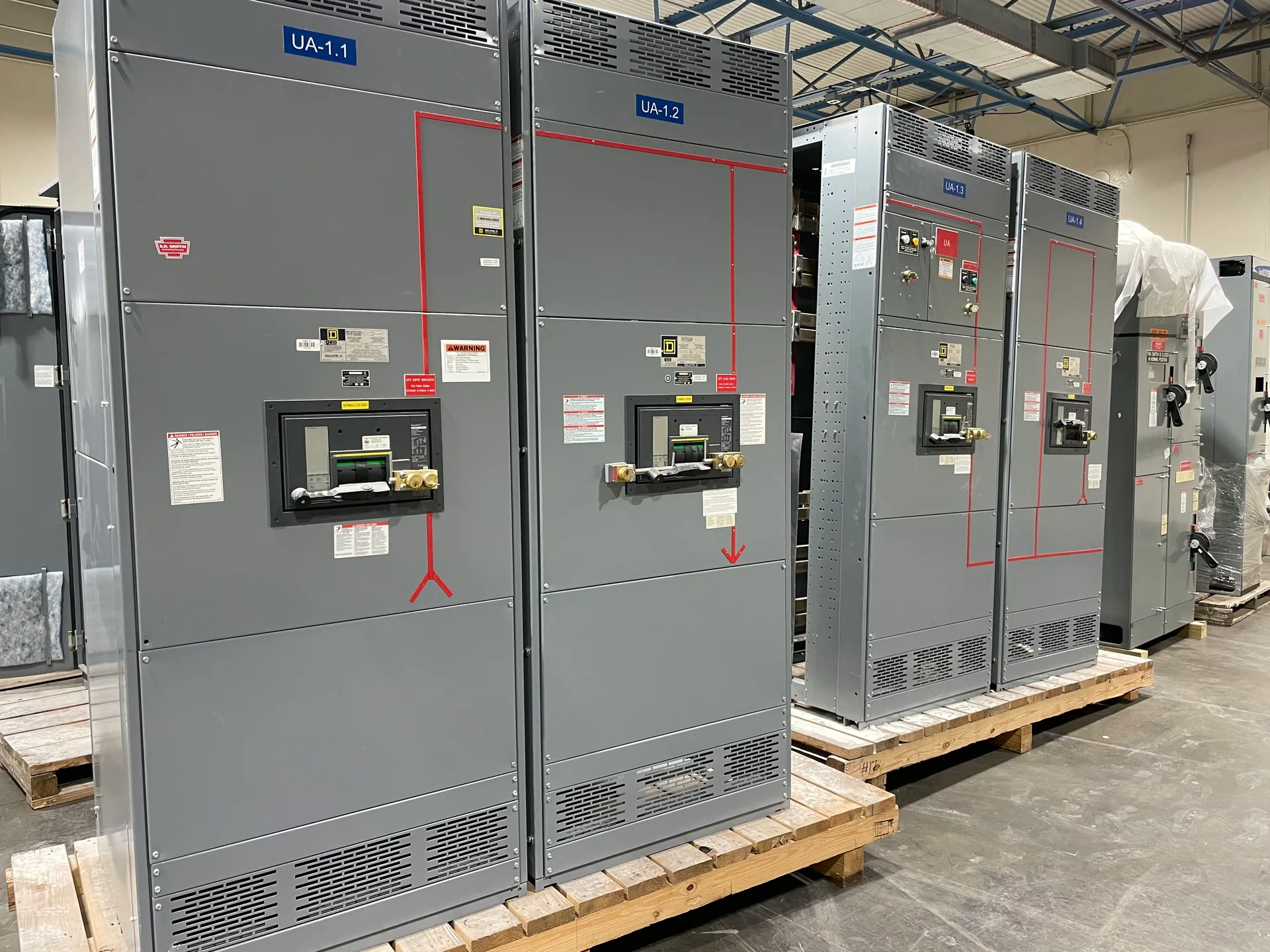
Switchgear Builder Virginia manufactures new switchgear for commercial and infrastructure projects in Salem, Virginia, with direct U.S. manufacturing, all-American components, custom builds, and nationwide shipping. For a hypothetical water-system upgrade, begin by defining how pump loads, normal and standby sources, controls, and shutdown windows must work together. The right equipment depends on verified site conditions and owner requirements, not a generic local package. Use the planning points below to organize technical decisions and prepare a manufacturer-direct quote request.
Define the Transfer Plan
For a hypothetical Salem-area pump station upgrade, first establish what must happen when the normal source is unavailable and how the standby source is intended to serve the loads. Identify which pumps, controls, heating or ventilation loads, and auxiliary equipment are essential, and whether they are expected to operate together or in stages. Source-transfer equipment should reflect the actual operating sequence and the owner’s requirements; it should not be selected from a broad assumption that every load needs standby power. Confirm the source arrangement, available fault-current information, grounding approach, and any required separation or interlocking with the project engineer and responsible utility or authority. These inputs shape the switchgear configuration and affect coordination with upstream and downstream equipment. If source capacity is limited, load sequencing may be a practical alternative to supplying every motor at once, subject to engineering review.
Account for Pump Loads
Pump motors can make a station’s electrical demand behave differently from a steady building load. Gather motor nameplate details, starting method, expected starts per hour, operating combinations, and any variable-frequency-drive requirements before equipment is specified. Starting current and the sequence of motor starts can influence source capacity, protective-device coordination, and whether staged restart logic is needed after a transfer. Do not assume that a standby generator or alternate source can start all pumps simultaneously; verify its capability against the actual load profile and project criteria. Also identify how the switchgear must interface with motor control equipment, alarms, remote monitoring, and operator controls. Control signals and communications should be documented with their source, destination, and expected response so the design team can resolve interface responsibilities early. Final ratings, functions, and compatibility remain subject to project documentation, engineering review, and quotation.
Plan Shutdown Coordination
A switchgear replacement or major power upgrade can affect pumping availability, so the project plan should address outage boundaries before equipment is ordered. Ask the owner which pumps may be unavailable, what temporary operating arrangements are acceptable, and whether work can be divided into phases. The answers depend on the site’s actual process needs and approved operating procedures; they should not be presumed from the project description. Document equipment that must remain energized, temporary connection requirements if any, access constraints, and who approves each outage and return-to-service step. Coordinate the schedule among the owner, engineer, electrical contractor, controls team, and other responsible parties. Factory build timing and shipping schedules are confirmed through quotation and project coordination, not assumed from a general lead-time statement. A clear shutdown plan helps buyers evaluate scope, identify dependencies, and avoid treating switchgear delivery as the only schedule driver.
Verify the Equipment Scope
Before comparing proposals, assemble the one-line diagram, load and motor schedules, source information, available fault-current data, control narratives, enclosure and installation conditions, and applicable owner specifications. Mark what is fixed and what still requires engineering confirmation. Ask the project team to verify voltage, continuous current, interrupting and withstand requirements, bus arrangement, metering, protective devices, transfer method, and required interfaces. These are project-specific design decisions, not standard features to infer from a location or application. For an applicable low-voltage switchboard, confirm whether the project requires UL 891 construction and the exact scope to be quoted; that standard does not apply to medium- or high-voltage equipment. Switchgear Builder Virginia can develop custom new equipment from confirmed requirements. Ratings, features, schedules, inspections, and approvals must be reviewed for the particular project and stated in the quote.
Prepare a Quote Request
A focused quote package makes it easier to identify open technical questions before the design is finalized. Include the project location, equipment application, requested delivery window for evaluation, drawings, specifications, source-transfer sequence, pump and motor data, control interfaces, and known installation constraints. Note who will approve submittals and which requirements are mandatory versus preferred. If the project includes existing equipment, describe its role and interfaces as background for the new scope; the request should clearly identify the new equipment being specified. Buyers considering modernization can also review the related switchgear modernization service page, while the pump station power distribution application page provides relevant application context. Use the request-a-quote checklist to organize project documents and questions. Switchgear Builder Virginia offers direct U.S. manufacturing, all-American components, custom builds, and nationwide shipping; configuration, ratings, and schedule are confirmed through project review and quote.