
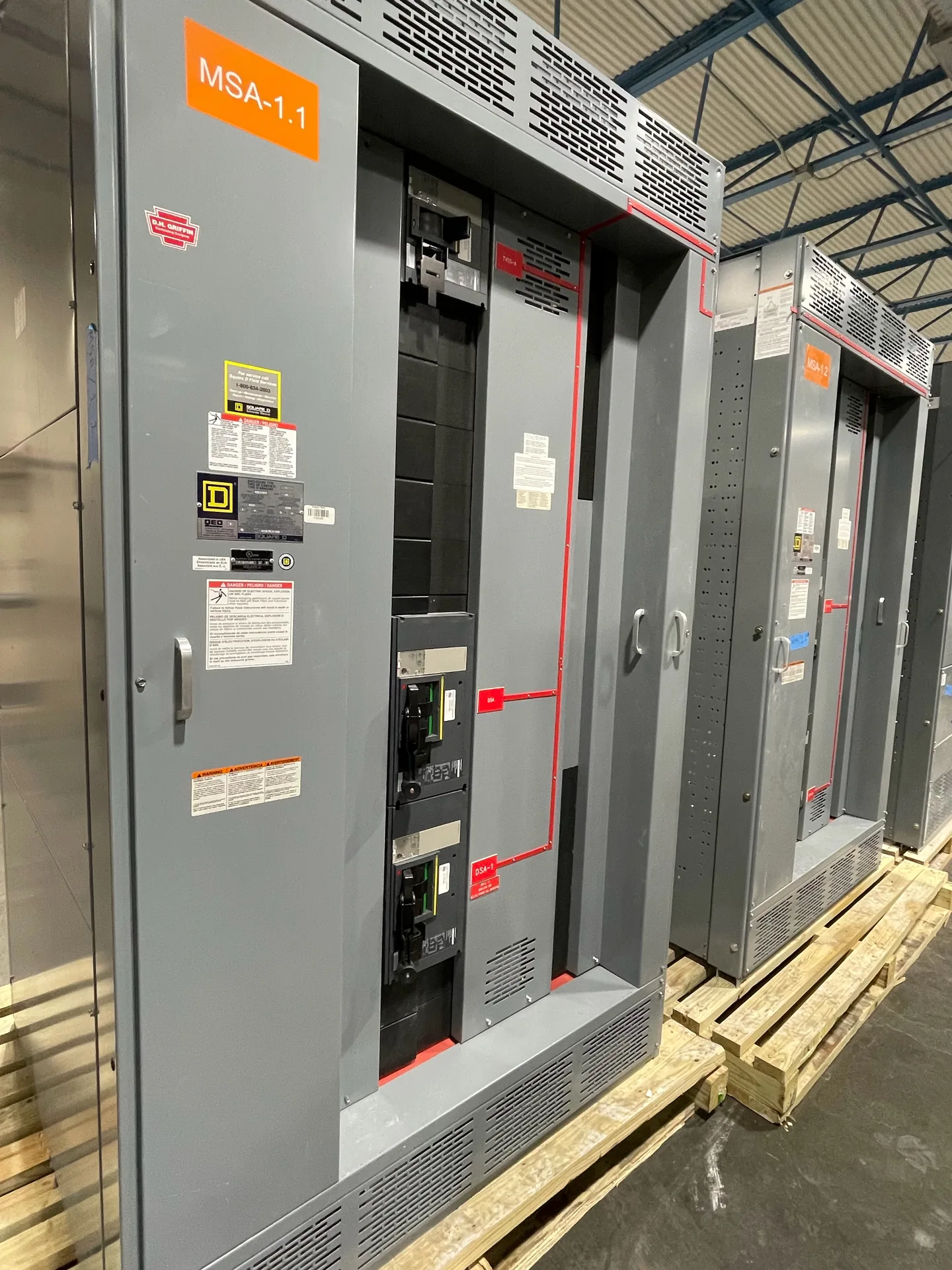
PRODUCTS / MANUFACTURER DIRECT
Service entrance transfer switches combine source selection with decisions about where service disconnecting, overcurrent protection, and grounding functions belong. The right arrangement depends on the one-line diagram, utility source, generator configuration, transfer method, and the equipment already serving the installation. Switchgear Builder Virginia builds new custom equipment with all-American components and direct USA manufacturing; proposed schedules and ratings are subject to quote and verification. Share the project drawings, electrical characteristics, and approval requirements so the intended configuration can be reviewed before it is specified.
Service-Entrance Role
A service-entrance transfer switch is not simply a standard transfer device placed near the utility meter. Depending on its design and application, it may combine transfer functions with a service disconnect and other service equipment provisions. That can simplify equipment layout, but it also changes how the incoming utility conductors, alternate source, and downstream distribution are arranged. Start by identifying whether the transfer equipment is intended to serve as the service disconnect or whether a separate service disconnect remains upstream. Then compare the one-line diagram with the utility’s service requirements and the authority having jurisdiction’s project requirements. Do not assume a product’s name alone establishes its suitability. Switchgear Builder Virginia can review a new custom assembly against the documented application; the precise arrangement, ratings, and any applicable product approvals must be confirmed for the quoted design.
Grounding and Neutral
Grounding and neutral treatment deserves early attention because the transfer arrangement affects how the sources connect to the load. Whether the neutral is switched depends on the system design and the relationship between utility and generator neutrals; that choice can affect bonding and the grounding path. A solid neutral and a switched neutral are not interchangeable options to select by habit. Provide the engineer with the system grounding method, source configurations, transfer sequence, and any existing bonding details shown in project documents. Have the responsible design professional determine the intended arrangement and verify it against applicable requirements. The quotation should identify the neutral configuration and any required bonding provisions rather than leave those details implicit. Where the existing installation is being extended, document its actual configuration before specifying new equipment; assumptions can produce a mismatch even when voltage and current appear to align.
Disconnect and Protection
Clarify which source disconnects and overcurrent devices are included, and which remain elsewhere in the electrical system. A service-entrance arrangement may place utility-side disconnecting and protective functions within the transfer equipment, while other designs depend on separate upstream or downstream devices. The choice affects enclosure space, conductor routing, coordination, maintenance boundaries, and how the equipment ties into distribution. Provide available fault-current information, protective-device details, system voltage, and the planned connection points for review. Do not infer interrupting or withstand capability from an ampere rating alone: the proposed equipment must be checked against the project’s fault-current and protection requirements. Likewise, describe any required device type, trip or fuse provisions, and access constraints in the request. Switchgear Builder Virginia can develop a custom new-equipment configuration, with component selection and ratings subject to engineering review and quote.
Transfer Method and Layout
The transfer method should match the loads and operating sequence, not just the generator size. An open-transition design disconnects one source before connecting the other; other transfer approaches may be considered when the system design and load behavior call for them. Confirm whether automatic or manual operation is intended, which loads are transferred, and what control signals or interlocks the project requires. These choices influence device selection, control wiring, and enclosure layout. Include the available floor space, cable entry direction, conductor sizes, service access needs, and adjacent equipment dimensions in the design package. A compact arrangement may reduce footprint but leave less room for routing and maintenance; a larger enclosure may support clearer segregation and access. Final clearances, construction details, and operating features must be reviewed for the specific site and proposed assembly.
Approval and Submittal Review
Approval is tied to the exact equipment configuration and its intended use, so request documentation that identifies the proposed transfer device, disconnecting means, ratings, and service-entrance provisions. Verify what the project engineer, utility, inspector, and authority having jurisdiction need to review; approval by one party does not automatically settle every other review. Ask for submittals that let the design team compare the equipment with the one-line diagram and specifications, and resolve deviations before release. UL 891 applies only to applicable low-voltage switchboard assemblies; it should not be treated as a blanket approval for every transfer-switch component or complete configuration. Where a listing, test, or other approval is required, confirm its applicability to the quoted design rather than relying on a general product description. Switchgear Builder Virginia ships nationwide, with schedules established through quote and verification.