
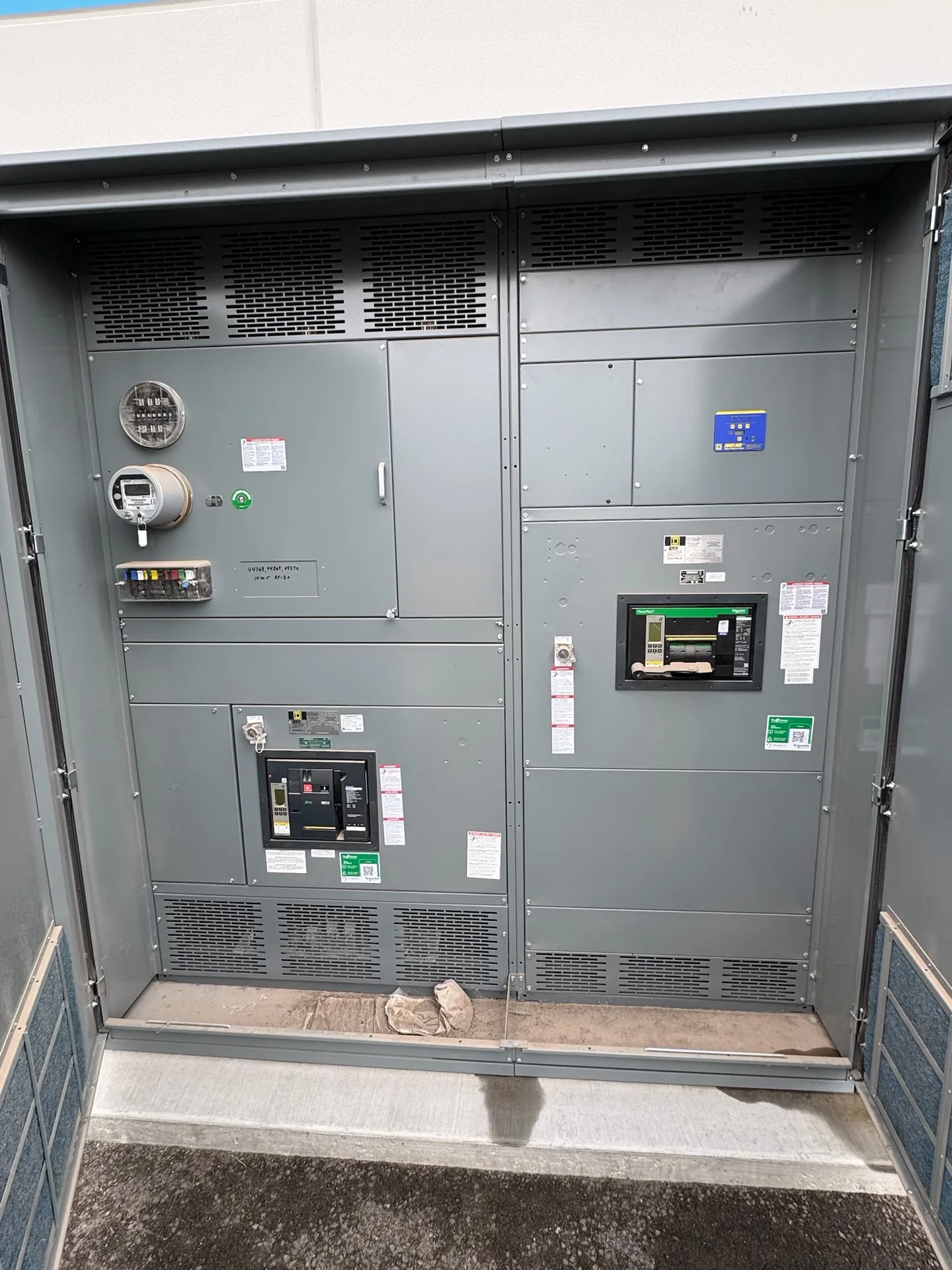
RATINGS / MANUFACTURER DIRECT
A 1200 A designation identifies a current rating to evaluate, not a complete equipment specification. Switchgear Builder Virginia builds new switchgear to project requirements, with direct USA manufacturing, all-American components, custom builds, short lead times, and nationwide shipping. The right configuration depends on the bus, main device, feeder loads, environment, service access, and verified system requirements. Use the rating as a starting point, then confirm the complete design and applicable standards during quoting.
Define the 1200 A Rating
Start by identifying exactly what the 1200 A value describes: the main bus, the incoming main device, or both. Those ratings are related, but they are not interchangeable. A 1200 A bus does not, by itself, establish the rating or suitability of the main breaker, fused switch, or other incoming device. Likewise, a main-device rating does not establish every bus section’s rating. Specify the system voltage, phase, wire arrangement, source details, and whether the equipment is service entrance equipment or downstream distribution. Provide the one-line diagram and load information so the proposed arrangement can be reviewed against actual requirements. Confirm ratings, configurations, and applicable standards in the project documents and quote. For applicable low-voltage switchboard assemblies, UL 891 may be relevant; its applicability must be verified for the equipment and scope.
Select the Main Device
Choose the incoming main device around the electrical system and operating plan, rather than assuming any device marked 1200 A will serve. The selection may involve a circuit breaker or fused switch, subject to available options and project requirements. Review the device’s continuous-current rating alongside the system voltage, interrupting duty, protective functions, and coordination needs. The available fault current and upstream protection information matter to the design review; do not infer performance from the amperage label alone. Ask whether the main should be fixed or drawout only after weighing equipment footprint, inspection approach, operating frequency, and budget. A more serviceable arrangement may add complexity or space requirements, while a simpler arrangement may constrain maintenance choices. Confirm the selected device and associated ratings against engineering documents, manufacturer data, and the quoted configuration before final approval.
Compare Feeder Arrangements
Lay out feeder ways from the connected loads, expected additions, and cable entry plan. A few larger feeder devices may suit concentrated loads, while more smaller feeders may improve distribution flexibility; either choice affects space, bus layout, wiring, and maintenance access. Record each feeder’s expected load, protective-device type and rating, destination, and any required metering or control functions. Leave room for future circuits only when the design and physical dimensions support that plan; do not assume spare spaces can be added later without limits. Compare vertical sections, device sizes, and cable compartments against the room layout and the path for conductors. The useful comparison is not simply maximum circuit count: it is whether the arrangement supports the loads and permits intended operation and service. Verify each feeder and section rating in the final drawings and quote.
Check Environment and Access
Environmental conditions can influence enclosure selection, ventilation, and equipment arrangement, so document the actual installation location. Identify indoor or outdoor placement, ambient temperature range, altitude, humidity, dust, corrosive exposure, and other conditions called out by the project engineer. Derating may be required in some conditions, but the need and amount depend on the equipment, components, and applicable design criteria; do not assume a 1200 A nameplate remains adequate under every environment. Also check access for operating handles, opening doors, removing devices where applicable, routing cables, and completing planned inspection or maintenance. Confirm working clearances and room constraints with the responsible design professional and applicable requirements. Provide relevant site information before the configuration is finalized. Environmental and access details should be reflected in the quoted design, rather than left as assumptions that could complicate installation or operation.
Verify the Complete Specification
Before requesting a quote, assemble the one-line diagram, load schedule, system voltage, available fault-current information, protective-device requirements, feeder list, metering needs, and site conditions. Identify required interfaces with existing equipment and any constraints on dimensions, cable entry, or sequence of operation. Ask for the proposed bus and main-device ratings to be stated separately, with feeder details and applicable assembly standards clearly identified. For low-voltage switchboards, confirm whether UL 891 applies to the specified assembly; it does not establish a medium- or high-voltage rating. Switchgear Builder Virginia provides custom new equipment, and configuration, ratings, schedule, and compliance details remain subject to quote and verification. Nationwide shipping is available, but the project schedule should be confirmed for the quoted build rather than assumed from a general lead-time statement. Review approved drawings and submittals before release.