
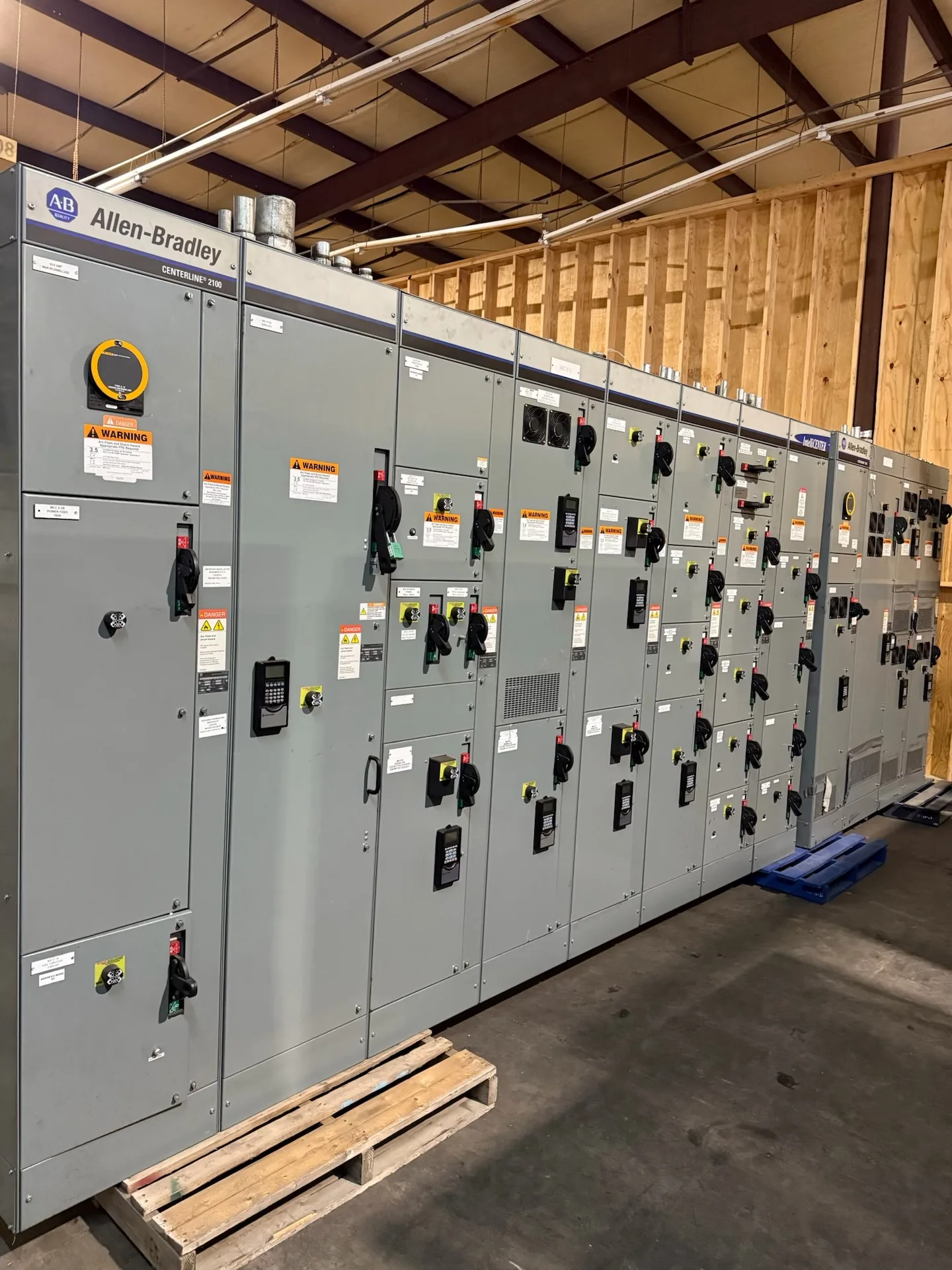
RATINGS / MANUFACTURER DIRECT
Neutral bus sizing is a project decision, not a fixed percentage that fits every switchboard. The right specification depends on the connected loads, expected current, harmonic content, grounding arrangement, and the equipment design. A neutral sized only from phase-conductor assumptions may miss important operating conditions; specifying extra capacity without a calculation can add cost and consume space without addressing the actual need. Switchgear Builder Virginia manufactures new custom switchgear in the USA using all-American components. For a low-voltage switchboard, share the load information and project requirements so the proposed neutral arrangement can be evaluated and confirmed for the application.
Start With Load Data
Begin with the actual and planned load schedule, not a blanket rule that the neutral should match, exceed, or fall below the phase bus. Identify which circuits are line-to-neutral, how loads are distributed among phases, and whether equipment may operate together at peak demand. Lighting, office electronics, power supplies, and other nonlinear loads can affect neutral current differently from predominantly linear loads. Include operating profiles where available: a nameplate total alone may not describe coincident demand or the mix of equipment in service. For expansions, distinguish existing loads from future allowances and state which additions are firm versus speculative. That clarity helps prevent both undersizing against a credible operating case and paying for capacity that has no defined purpose. The engineer of record should establish design assumptions; the manufacturer needs those assumptions to evaluate the bus arrangement and quote a suitable custom build.
Account For Harmonics
Balanced fundamental-frequency phase currents can largely cancel in the neutral, but balance alone does not establish neutral current when nonlinear loads are present. Certain triplen harmonics, including third-order components, can add in the neutral rather than canceling across phases. The relevant question is therefore not simply whether phase loads are balanced, but what harmonic current the expected load mix can produce. If measured data exists, provide the measurement conditions and harmonic information; if the installation is new, provide equipment schedules or a documented engineering estimate. A single current reading without its operating context may not represent future peak conditions. Harmonic assessment can influence conductor capacity, thermal considerations, and the selected bus configuration, but it does not by itself dictate one universal oversized-neutral solution. Confirm the design basis with the project engineer and applicable requirements. Harmonics can contribute to elevated neutral current even in a balanced system. ([fluke.com](https://www.fluke.com/en-us/learn/blog/power-quality/installation-harmonics))
Separate Neutral And Ground
Neutral and equipment grounding serve different functions, so the neutral bus decision must match the specified grounding arrangement and system configuration. Provide the one-line diagram and identify where the system bonding point is intended to be located; do not assume the switchboard should combine or separate conductors based only on a generic description. The design team should clarify whether the neutral is switched, how feeder and service arrangements are defined, and what grounding provisions belong in the assembly. These choices affect bus layout, terminations, and coordination with upstream and downstream equipment. They are not substitutes for a neutral-current calculation, and changing a bonding arrangement to address measured current is not a shortcut to sizing. Have the responsible electrical engineer confirm the grounding design and governing project requirements before the equipment is finalized. Switchgear Builder Virginia can review the provided specifications and identify details that need resolution for the quoted configuration.
Compare Capacity And Fit
A larger neutral bus may provide useful thermal margin where the calculated load and harmonic profile support it, but it should not be selected as a reflex. Added copper can affect material cost, enclosure space, connection planning, and the arrangement of other conductors. Conversely, a minimal bus assumption can leave little room for a documented future load or a known nonlinear-load profile. Compare options against a stated design current and defined assumptions, including the operating scenario used for the calculation. Ask how the proposed bus rating, termination details, and physical layout relate to the one-line and load schedule; confirm any project-specific conditions rather than inferring them from a catalog label. No universal neutral-to-phase ratio can replace application review. Final ratings and construction details are subject to quote and verification, with the project engineer responsible for establishing the required design criteria and approvals.
Prepare A Clear Specification
For a useful review, provide system voltage and phase, the one-line diagram, phase and neutral load estimates, major nonlinear-load types, available harmonic measurements, grounding arrangement, and anticipated additions. Note which values are calculated, measured, or provisional, and identify the source and date of measurements where possible. State the required neutral bus capacity or the calculation basis if the engineer has established one; avoid embedding an unverified percentage as though it were a code requirement. Also identify enclosure constraints and any interface details the manufacturer must coordinate. Switchgear Builder Virginia builds custom new switchgear and ships nationwide; lead time and configuration depend on the quoted project. Applicable UL 891 construction may be specified for qualifying low-voltage switchboards, with details verified for the assembly. A complete specification makes the tradeoffs visible before procurement and helps align the quote with the actual electrical design.