
SERVICES / MANUFACTURER DIRECT
Switchgear fabrication brings enclosure design, sheet-metal details, finish, and project dimensions together before equipment is built. For buyers specifying new custom switchgear, these choices affect installation fit, access for maintenance, and how the equipment can be moved into place. Clear drawings and confirmed site constraints help resolve tradeoffs early, before fabrication details are approved. Switchgear Builder Virginia manufactures in the USA, builds custom equipment, and ships nationwide. Project scope, schedules, ratings, and applicable requirements are subject to quotation and verification. Use the following considerations to prepare a fabrication package that can be reviewed against the actual electrical design, installation location, and transport route.
Enclosure layout
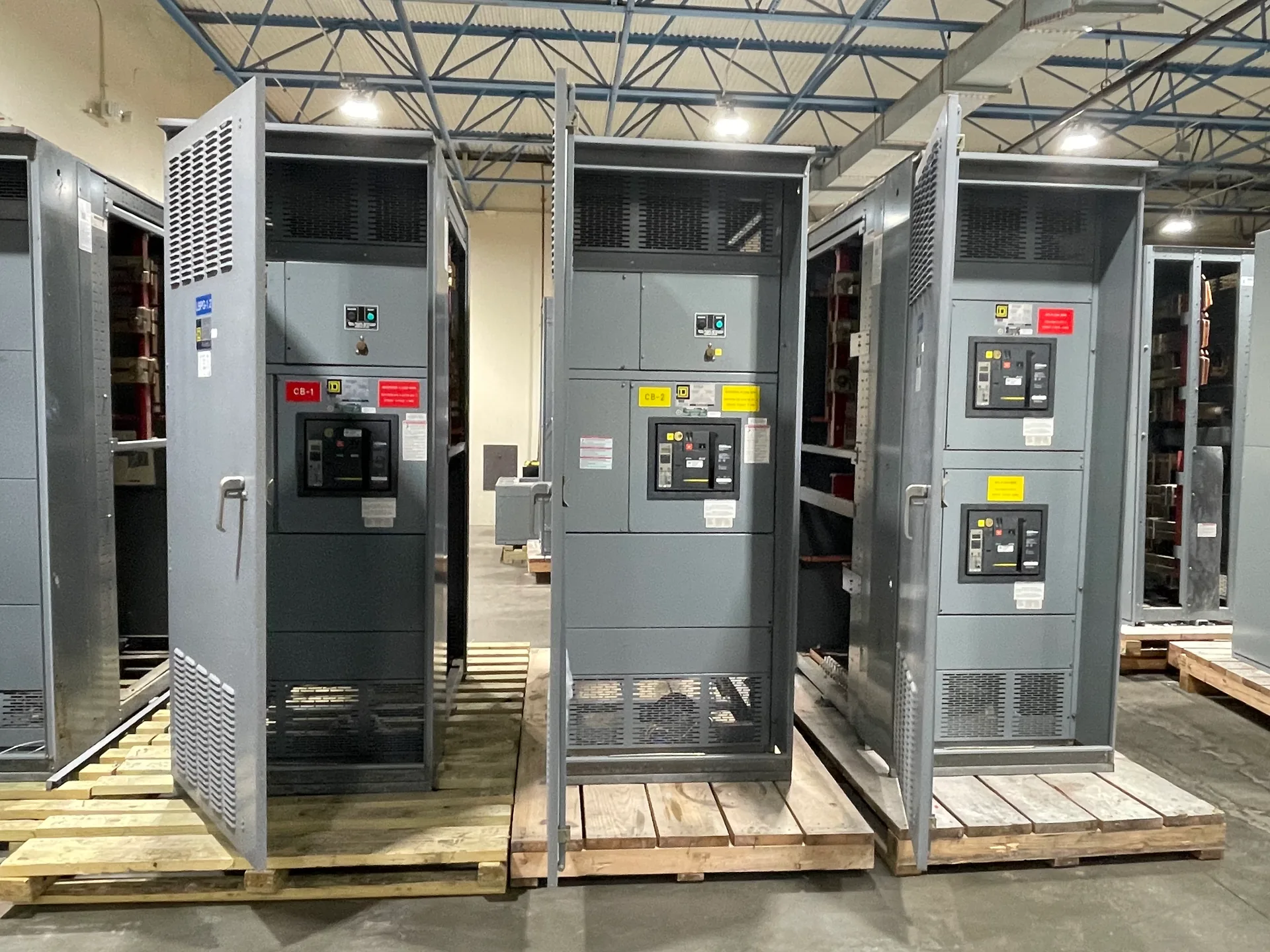
Start with the one-line diagram, equipment schedule, and room plan, then coordinate the enclosure arrangement with the people responsible for installation and maintenance. Door swing, aisle clearance, cable entry, conduit paths, and access to operating handles can shape the layout as much as the electrical lineup does. A compact arrangement may reduce floor space, but tight access can complicate wiring, inspection, or later component replacement. More separation and working room can improve access while increasing footprint or affecting how sections are transported. Identify whether feeders enter from above, below, or another direction, and confirm where the site allows openings. Specify adjacent equipment, wall conditions, and any planned future sections on the drawings. Review those assumptions before approving fabrication drawings; a late change to section order or cable access may affect several connected dimensions and interfaces.
Sheet-metal details
Sheet-metal decisions should support the specified enclosure arrangement and the conditions expected at the installation site. Drawings can identify panels, doors, openings, mounting surfaces, barriers, and access points, but buyers should avoid assuming that a particular material thickness or construction detail is suitable without project review. Required strength, equipment configuration, handling, and applicable electrical requirements all matter. Larger openings may simplify cable routing, yet they can affect panel structure or leave less room for internal components. Removable panels can help with access, while fixed construction may suit other layouts. Call out interfaces with cable trays, conduits, foundations, and neighboring sections, and provide dimensions from an agreed reference point. Confirm that the approved drawings show the intended access and clearances. Fabrication details and ratings must be evaluated for the specific build rather than inferred from a generic enclosure description.
Finish selection
Choose a finish with the installation environment and maintenance plan in mind. Indoor electrical rooms, exposed areas, and locations with moisture, dust, or chemical exposure may call for different finish requirements; the project team should identify the actual conditions rather than rely on a broad label such as “industrial.” Specify the color, finish expectations, and any surface-preparation or coating requirements in the procurement documents, then verify what can be provided for the quoted build. A finish that meets appearance goals may not address the site’s exposure, and a coating selected for environmental protection can affect cost, preparation, or schedule. Consider how surfaces will be inspected and maintained after installation. Avoid treating a finish description as proof of a corrosion rating or environmental suitability. Have the responsible design or facility team confirm the applicable requirements and document accepted deviations before fabrication drawings are released.
Dimensions and tolerances
Dimensional coordination begins with reliable site information. Confirm the available footprint, equipment-room access, floor or housekeeping-pad dimensions, overhead obstructions, door openings, and the route from the delivery point to the final location. A lineup that fits on a plan can still be difficult to move through a corridor or around a turn. Drawings should identify overall dimensions, section boundaries, interface points, and the reference surfaces used for measurements. State project-specific dimensional tolerances where fit is critical, and clarify which dimensions must be checked in the field. Do not assume every measurement can be held to an unstated tolerance or that site conditions match older drawings. Resolve discrepancies with the design team before approval. Transport limits may influence section size and division, but the feasible arrangement depends on the shipment and installation plan; confirm those constraints for the project rather than presuming a standard split.
Drawing approval and delivery
Treat drawing approval as a technical checkpoint, not a formality. Compare the fabrication drawings with the electrical documents, room layout, cable-entry plan, interface dimensions, and transport constraints. Identify who has authority to approve the arrangement and how comments or revisions will be recorded. For applicable low-voltage switchboards, UL 891 requirements may be relevant; confirm applicability and the quoted assembly’s requirements rather than applying that standard to medium- or high-voltage equipment. Any other inspections, tests, approvals, or listings should be specified and verified for the particular project. Before release, reconcile open dimensions, finish notes, access needs, and any exceptions in writing. Switchgear Builder Virginia offers custom builds, direct USA manufacturing, and nationwide shipping; availability and schedule are subject to quote and verification, not a delivery promise. Clear approved documents help align the new equipment with the intended installation and reduce avoidable fabrication changes.