
APPLICATIONS / MANUFACTURER DIRECT
Planning distribution for an EV fleet starts with the charging duty, not just the number of plugs. Switchgear Builder Virginia can build custom new equipment for projects that need coordinated distribution, with all-American components and direct USA manufacturing. Before selecting a configuration, buyers should document charger quantity, expected simultaneous operation, daily schedule, utility service constraints and likely growth. Those inputs help define what the equipment must accommodate; they do not establish a rating or delivery schedule, which must be confirmed for the project.
Map the Charging Duty
Count the chargers, but also describe how vehicles will use them. A depot returning most vehicles within a narrow evening window has a different demand pattern from a site where vehicles charge throughout the day. Record charger input requirements, planned charging windows, typical dwell time and any operational priority for specific vehicles. Note whether the design must support all chargers at once, a defined subset, or a managed sequence; do not assume that connected charger count equals simultaneous peak demand. These details help the project team assess feeder and distribution needs and compare practical operating scenarios. Confirm equipment data with charger suppliers and the project electrical designer. Final switchgear configuration, voltage, current ratings and interrupting requirements depend on verified system conditions and the selected design, not on charger count alone.
Check Service Constraints
Gather available utility service information early, including the service voltage, available capacity, connection requirements and any known limits on demand or expansion. The utility and project engineer should confirm which details apply and whether a service study or other coordination is needed. A planned fleet load may compete with building loads, HVAC, process equipment or future site additions, so evaluate the complete facility demand rather than treating chargers as an isolated panel schedule. Ask whether the project expects a new service, a change to existing distribution, or a separate charging area; these paths can lead to different equipment arrangements. Do not select a switchboard rating from an assumed utility capacity. Verified service data, system calculations and the applicable project requirements must establish ratings and protective-device choices before a quote is finalized.
Plan Load Management
Load management can shape how much charging demand is expected at the distribution equipment, but its operating rules need to be explicit. Identify who controls charging, whether chargers share a site limit, how priorities are assigned, and what happens when communications or control functions are unavailable. Compare a case with unmanaged simultaneous charging against the intended managed profile, then have the responsible engineer verify the resulting electrical assumptions. Switchgear and charging controls perform different roles; do not treat a software schedule as a substitute for correctly rated distribution equipment or required protection. If the charging strategy may change, document the range of operating cases the design should accommodate. The selected equipment and any control interfaces remain subject to detailed design review, verified ratings, manufacturer coordination and the project’s applicable requirements.
Allow for Expansion
A credible expansion plan names the likely additions: more chargers, higher-power units, a second charging area, or new building loads. Record the anticipated phases and the conditions that could trigger each one. Then evaluate whether future work would require spare distribution capacity, reserved space, additional feeder provisions or a different service arrangement. These are design options to assess, not features to assume are included. Space, bus capacity, fault-duty limits, heat, protective-device coordination and utility capacity can each constrain growth, so a physically open position alone does not establish that an addition is feasible. Ask the engineer to distinguish what can be accommodated within the initial design from what would require replacement or system changes. Confirm all reserve assumptions before specifying the new equipment and requesting a project quote.
Specify the Assembly
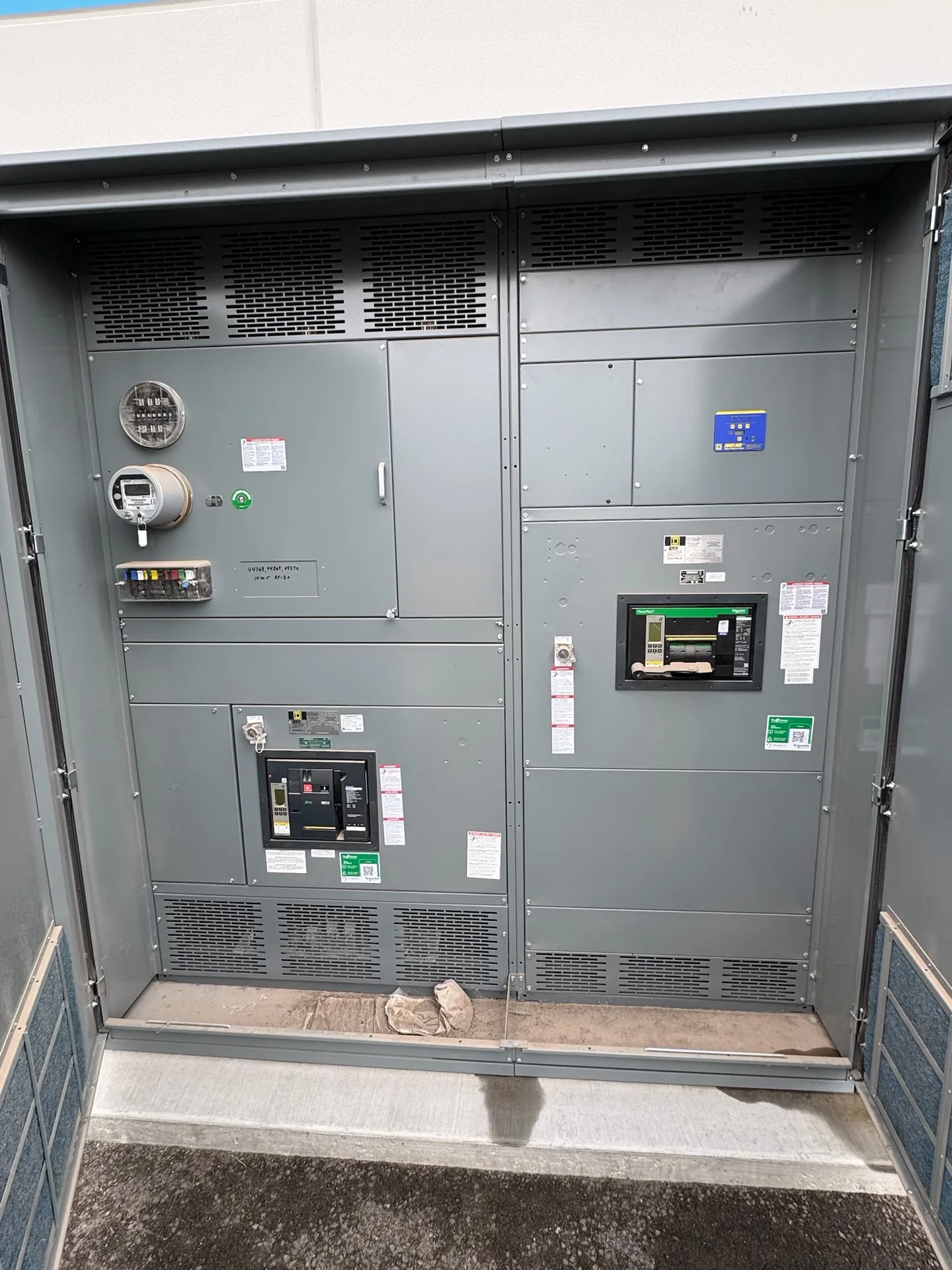
A useful request for quotation includes the one-line diagram or preliminary distribution concept, verified service data, charger information, operating scenarios, site constraints and a clearly stated expansion plan. Identify required enclosure conditions, incoming and outgoing arrangements, metering or controls, and any project-specific inspection or approval requirements for confirmation. For applicable low-voltage switchboard assemblies, ask whether a UL 891 assembly is required and verify the requested construction and ratings during quote review; that standard does not apply to medium- or high-voltage switchgear. Switchgear Builder Virginia manufactures new custom equipment in the USA using all-American components and ships nationwide. Lead times and schedules depend on the confirmed scope and must be verified with the quote. Final ratings, options, interfaces and approvals are subject to engineering review and project requirements, not inferred from this application description.