
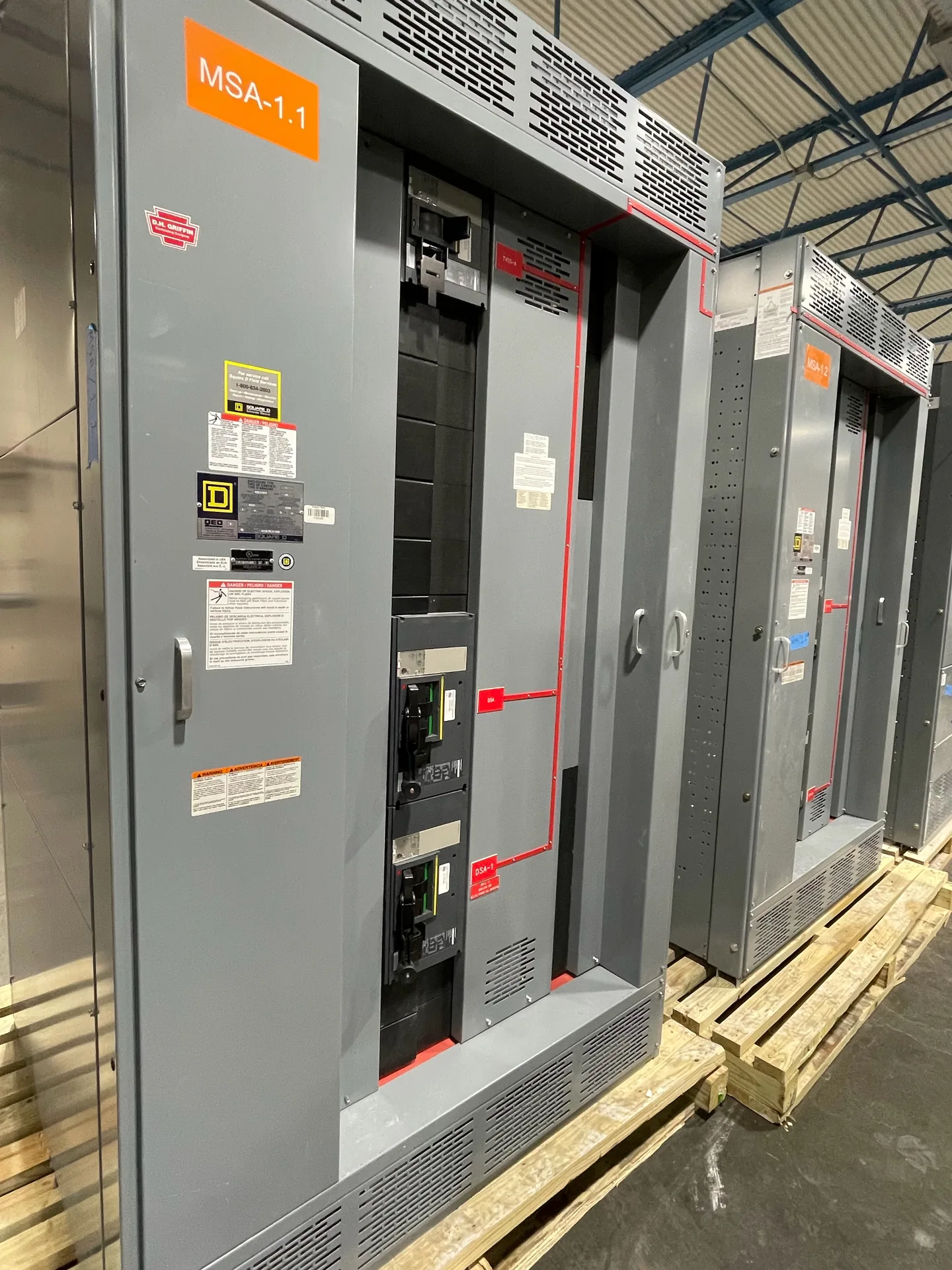
APPLICATIONS / MANUFACTURER DIRECT
A transformer’s medium-voltage primary switching arrangement affects how the transformer is isolated, how faults are cleared, and how the assembly connects to the source and transformer. Switchgear Builder Virginia builds new switchgear to project requirements, with direct USA manufacturing, all-American components, custom builds, and nationwide shipping. The right configuration depends on verified system data, the owner’s operating approach, and utility requirements—not voltage alone. Use the decisions below to organize an engineering review and prepare a quote request. Final equipment ratings, device selection, schedule, and interface details require project documentation and verification.
Define the Source
Start with the actual primary system information, not a nominal voltage copied from an old schedule. Provide the system voltage, frequency, grounding method, available fault-current data, and any known operating configurations. Ask the utility or electrical engineer to confirm source conditions and the point of connection; values can differ by location, transformer arrangement, or future system changes. Also identify whether the transformer is supplied from a radial feeder, a loop, or another arrangement, and describe normal and alternate operating states. These facts influence insulation requirements, switching duty, protection choices, and how the lineup is arranged. If data is preliminary, label it clearly so assumptions are visible during review. Switchgear Builder Virginia can develop a custom new assembly around the confirmed project basis, while final ratings and interface details remain subject to quote and engineering verification. Clear source data helps avoid selecting devices against mismatched assumptions.
Choose the Switching Device
A load-interrupting switch and a circuit breaker serve different protection and operating strategies; neither is an automatic fit for every transformer. A switch-fuse arrangement may suit a defined application where the selected fuses and switching device meet the required duties. A breaker with protective relaying may offer adjustable protection and coordination options, but also brings relay settings, control power, sensing, and maintenance considerations. Compare the owner’s operating practices, desired selectivity, available fault current, transformer characteristics, and upstream protection before choosing. Confirm whether switching is expected only for isolation and routine operation or is part of a broader protection scheme. The device’s interrupting and short-time capabilities, as applicable, must be checked against system conditions. Do not treat a catalog description or nominal voltage as a complete selection basis. Request a documented engineering review of the specific configuration before release for manufacture.
Coordinate Fuse or Breaker Protection
Protection should be evaluated as a system, not as a fuse size or relay setting chosen in isolation. Coordination review typically needs transformer kVA, primary and secondary voltages, impedance, inrush characteristics, downstream protective devices, and upstream utility or facility settings. For a fuse scheme, confirm the fuse type and rating against transformer needs and the intended clearing relationships; fuse behavior and switch-fuse compatibility must be verified for the proposed equipment. For a breaker scheme, relay functions, sensing inputs, settings, trip mechanism, and available control power become part of the design discussion. Ask who will provide the coordination study and approved settings, and identify which documents govern the final selection. Switchgear Builder Virginia can use project requirements to configure a new assembly, but protection performance cannot be inferred from a brief alone. Verify each setting and device choice with the responsible engineer and relevant system data before ordering.
Confirm the Transformer Interface
The connection between the primary switchgear and transformer deserves its own drawing review. Identify the transformer manufacturer or project specification, primary termination arrangement, conductor type and size, entry direction, phase sequence, grounding provisions, and the physical distance or transition between equipment. Confirm whether cable terminations are indoor or outdoor, and whether the proposed enclosure and termination space suit the specified components and site conditions. If the transformer is by another supplier, establish who provides primary cables, connectors, grounding conductors, and installation labor; do not assume these are included in the switchgear scope. Share approved transformer connection drawings and relevant dimensional information before layout is finalized. Where a transition compartment or cable section is required, describe its function and access constraints. Final compartment dimensions, cable bending space, and accessory compatibility must be reviewed against actual equipment documentation and project requirements.
Send a Complete Quote Basis
A useful inquiry includes a one-line diagram, equipment schedule, site and indoor-or-outdoor conditions, utility requirements, transformer data, fault-current information, and the intended protection approach. Include required lineup arrangement, cable entry and exit directions, metering or control needs, and any owner-specific documentation or inspection requirements. Mark each item as confirmed, pending, or an assumption so the quote review can surface gaps instead of concealing them. Ask the project engineer to resolve open protection and interface decisions before equipment approval. Switchgear Builder Virginia manufactures new custom switchgear in the USA using all-American components and ships nationwide. Available configurations, applicable ratings, compliance requirements, and schedules are subject to quote and verification; no brief establishes a particular rating or delivery date. A complete, coordinated basis lets the manufacturer identify what can be built and what information remains necessary for final review.