
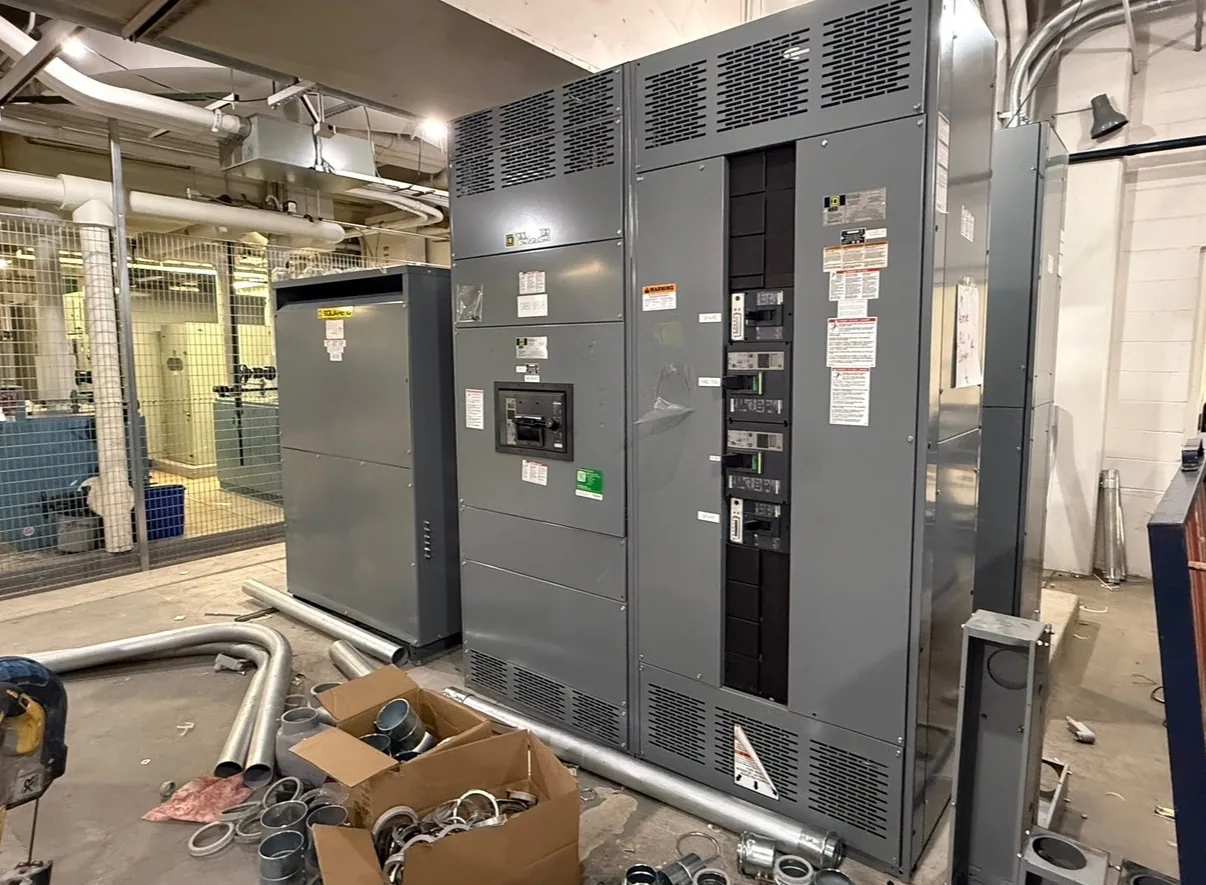
BUYING INTENT / MANUFACTURER DIRECT
A clear scope of supply shows what the new switchgear package includes, where the manufacturer’s work ends, and which tasks belong to the project team or field contractor. Before comparing quotes, align equipment boundaries, components, engineering documents, factory checks, exclusions, delivery assumptions, and commissioning responsibilities. Switchgear Builder Virginia manufactures custom equipment in the USA using all-American components, with nationwide shipping; lead times and schedules are confirmed for each quote. Use this checklist to identify unanswered questions, not to assume a particular feature, rating, test, approval, or service is included.
Set the Equipment Boundary
Start by defining exactly which equipment the quote covers: lineup, sections, cubicles, enclosures, and any separately quoted assemblies. Identify the physical endpoints, such as incoming and outgoing cable terminations, bus connections, or interfaces to transformers and downstream equipment. Show those boundaries on the one-line diagram or a marked-up layout, and note who supplies connecting conductors, transition pieces, supports, and fasteners. For a project with multiple packages, assign each shared interface to one party so components are not omitted or duplicated. Also state whether the scope includes only manufacture and shipment or additional engineering coordination. Confirm voltage class, system configuration, available fault current, and required ratings through project documents and the supplier’s quote; a general equipment label does not establish suitability. If a low-voltage switchboard is involved, specify whether applicable UL 891 construction is required and verify its treatment in the quote.
List Included Components
Request a component schedule that names the devices and accessories included in each section. Depending on the design, the schedule may identify breakers or other switching devices, bus, instrument transformers, meters, relays, control power components, terminal blocks, and wiring. Treat every feature as subject to the project specification and quote rather than assuming it comes standard. For protective devices, align device type, trip or setting requirements, accessories, communications, and coordination responsibilities with the approved design. Clarify whether spare provisions mean empty space, installed devices, or merely mounting and wiring allowances; these are different deliverables. Identify special enclosure, finish, labeling, heaters, lighting, or environmental provisions only when required for the site and confirmed by the manufacturer. Ask which loose-shipped items are included and who installs them. A concise, section-by-section bill of material helps buyers compare proposals on equivalent boundaries instead of relying on broad product descriptions.
Assign Engineering and Drawings
Separate design inputs, manufacturer engineering, and customer approvals in the scope. Provide the latest one-line diagram, load and fault data, control schematics, physical constraints, cable entry preferences, and applicable project specifications, while flagging any information still pending. Ask which drawings the manufacturer will prepare, such as arrangement, elementary diagrams, connection details, and bills of material, and whether the quoted package includes revisions after review. State who checks coordination, protection settings, arc-flash study inputs, and interfaces with other equipment; do not assume drawing production includes those studies. Define the review cycle, required file formats, submittal milestones, and approval authority. Record what changes after approval may affect price or schedule, with any effect confirmed in writing. Custom builds can address defined project requirements, but dimensions, ratings, device choices, and interfaces need review against the actual application before release. Keep the approved drawing set aligned with the equipment ultimately manufactured.
Define Factory Checks
Write down what factory inspection or testing is required, who performs it, what records are supplied, and whether customer attendance is expected. A quote should distinguish routine checks included in manufacture from optional tests, witnessed inspections, special documentation, or third-party activities. Specify the requested procedures and acceptance criteria in project documents, then confirm feasibility and responsibility with the manufacturer before award; the phrase “tested” alone leaves important questions open. Ask whether reports, test sheets, nameplate data, and final drawings are included in the turnover package. For applicable low-voltage switchboards, identify any required UL 891 construction and confirm the exact assembly and documentation covered; do not extend that standard to medium- or high-voltage equipment. Agree on how identified discrepancies are recorded and resolved before shipment. Switchgear Builder Virginia can quote new custom assemblies, but required tests, approvals, listings, and records must be explicitly stated and verified for the particular build rather than presumed from a general description.
Close Exclusions and Field Work
Finish with a responsibility matrix covering packaging, shipment, unloading, storage, setting, anchoring, interconnections, field wiring, terminations, site testing, energization, and commissioning. Mark each task as included, excluded, or assigned to a named project party; shipment to a site does not itself include unloading or installation. Clarify who provides cranes, access, permits, labor, temporary protection, and site readiness when those items apply. List excluded equipment, studies, controls, cables, and services in plain terms, then check that each exclusion has an owner and budget allowance. Commissioning should be separately defined: identify its provider, deliverables, prerequisites, and relationship to the site’s approved procedures. Do not infer startup or field service from a factory supply quote. For schedule planning, confirm the quoted lead-time basis, drawing-release dependencies, shipping assumptions, and current milestones in writing; dates remain subject to quote and verification. A complete checklist leaves fewer costly gaps between manufacture and a functioning installation.