
COMPARISONS / MANUFACTURER DIRECT
Choosing between a switchboard and a panelboard starts with the job each must perform, not a universal ampacity cutoff. Both can distribute power, but their construction, feeder arrangement, branch-circuit capacity, working space, and coordination with upstream equipment differ. The right choice depends on the service or distribution layout, load schedule, available fault-current information, expansion plans, and project specifications. Switchgear Builder Virginia manufactures new, custom-built switchgear and switchboards in the USA using all-American components. For applicable low-voltage switchboards, UL 891 assemblies may be specified; the project documents and equipment details must establish what applies.
Different distribution roles
A switchboard commonly serves as a larger distribution point, receiving power from a service or upstream source and feeding downstream equipment, such as other switchboards, panelboards, or major loads. Its arrangement may combine a main device with feeder devices in a floor-standing assembly. A panelboard is typically a more compact assembly organized around a bus and branch-circuit overcurrent devices, often serving lighting, receptacles, or smaller equipment loads. These are practical role descriptions, not a rule that determines every design: project specifications and the equipment’s listed configuration govern. A buyer should map each source, feeder, and load before choosing. If a panelboard would require too many branch positions or an awkward feeder arrangement, a switchboard may fit the distribution task better. If the loads are mostly individual branch circuits, a panelboard may provide a simpler endpoint.
Capacity is more than amperage
Do not choose by applying a single ampacity boundary between the two product types. Both the required current rating and the available construction depend on the specific equipment, devices, bus arrangement, enclosure, and application. Start with the calculated or specified loads, expected demand, source characteristics, and any planned growth. Then verify the main and feeder device ratings, bus rating, interrupting ratings, short-circuit information, and coordination requirements against the project documents. A larger nominal rating does not by itself show that an assembly suits the available fault current or the connected loads. Buyers should also compare the number and types of outgoing circuits, spare positions, and the sizes of feeder devices. When these details are still developing, identify assumptions clearly in the equipment inquiry and have the responsible design team confirm them before release.
Construction and access
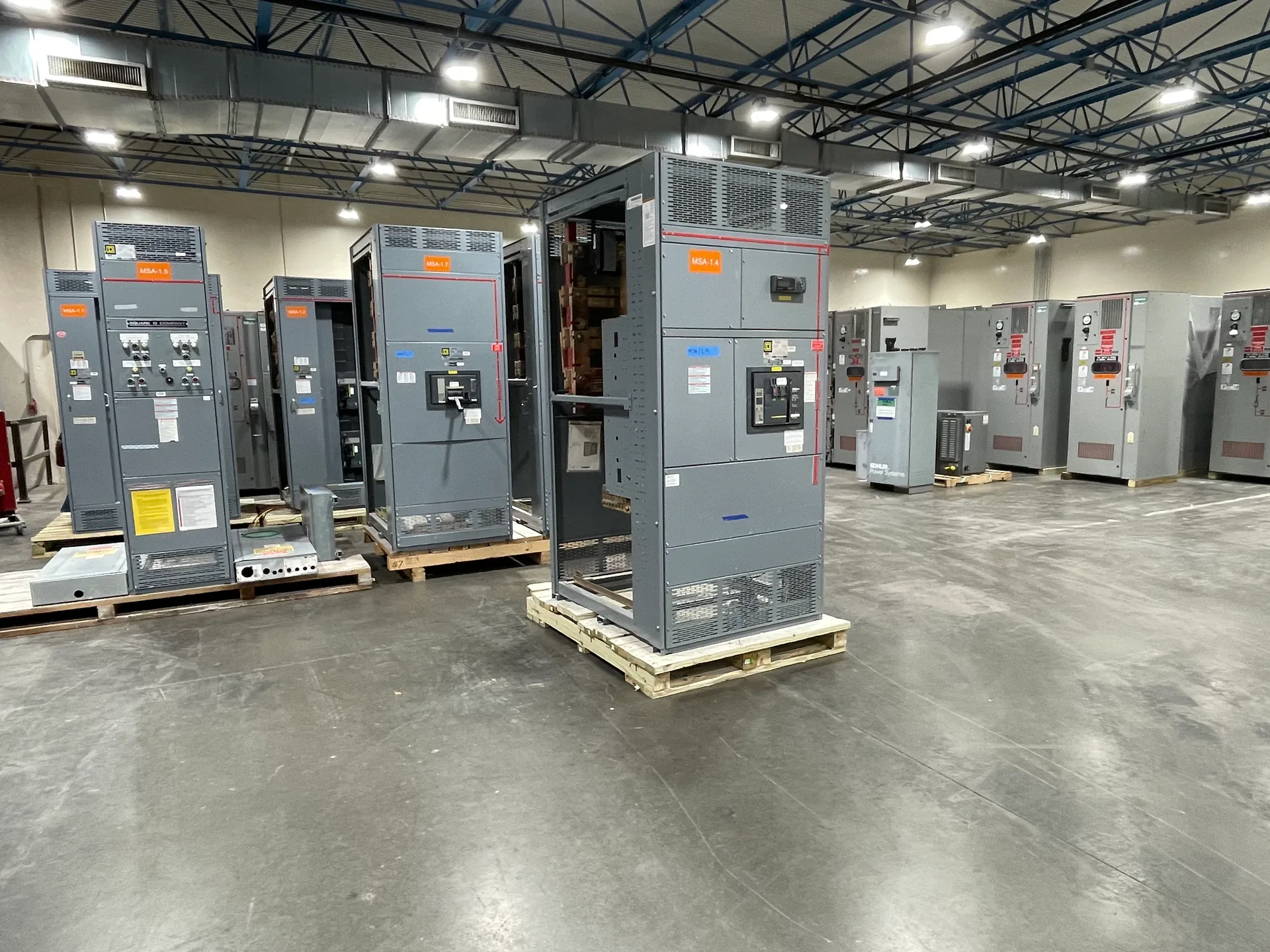
Switchboards are often assembled as floor-mounted sections, with equipment and cable spaces arranged to suit feeder routing, device placement, and service access. Panelboards are generally wall-mounted or recessed where the specified enclosure and installation allow, with branch devices grouped for circuit identification and maintenance. Neither description settles the dimensions or access needs of a particular project. Confirm enclosure type, indoor or outdoor location, mounting method, cable entry and exit, conductor bending space, room layout, and required working clearances with the project documents and qualified design professionals. Also check whether the proposed lineup can pass through the building route and fit its final location. A compact panelboard may be difficult to install if access is restricted; a switchboard can require more floor area and planned section handling. Early dimensional review helps avoid a distribution choice that conflicts with the room or construction sequence.
Circuit layout and coordination
A panelboard can be a natural choice when a project needs a clearly grouped set of branch circuits serving a defined area or function. A switchboard can organize larger feeders and multiple distribution destinations, but it may also supply downstream panelboards for local circuiting. That division can make circuit schedules easier to follow, while adding equipment, feeder conductors, and coordination work. Compare the full path from source to end loads rather than treating either assembly as a stand-alone purchase. Review the one-line diagram, load and circuit schedules, protective-device requirements, available fault-current data, and space for future circuits. The intended device types and settings should be reviewed as a coordinated system by the responsible electrical design team. If those inputs are incomplete, list them as open items; do not assume that a device will fit, coordinate, or meet a rating until the configuration is verified.
Specify the right assembly
A useful equipment request identifies the distribution role, system voltage and phase, source and main arrangement, feeder and branch-device needs, required ratings, enclosure conditions, dimensions, cable entry, and project documentation. Include the current one-line diagram and relevant schedules, and flag any details awaiting design confirmation. For a low-voltage switchboard, specify UL 891 only when it applies to the requested assembly and project requirements; do not extend that designation to a panelboard by assumption. Switchgear Builder Virginia manufactures new custom assemblies in the USA using all-American components and ships nationwide. Short lead times may be available, but schedule and ratings are subject to quote and verification, not a delivery promise. A clear comparison of switchboard and panelboard roles can help buyers choose an arrangement that fits the loads, installation, and documented requirements before procurement.