
TECHNICAL GUIDES / MANUFACTURER DIRECT
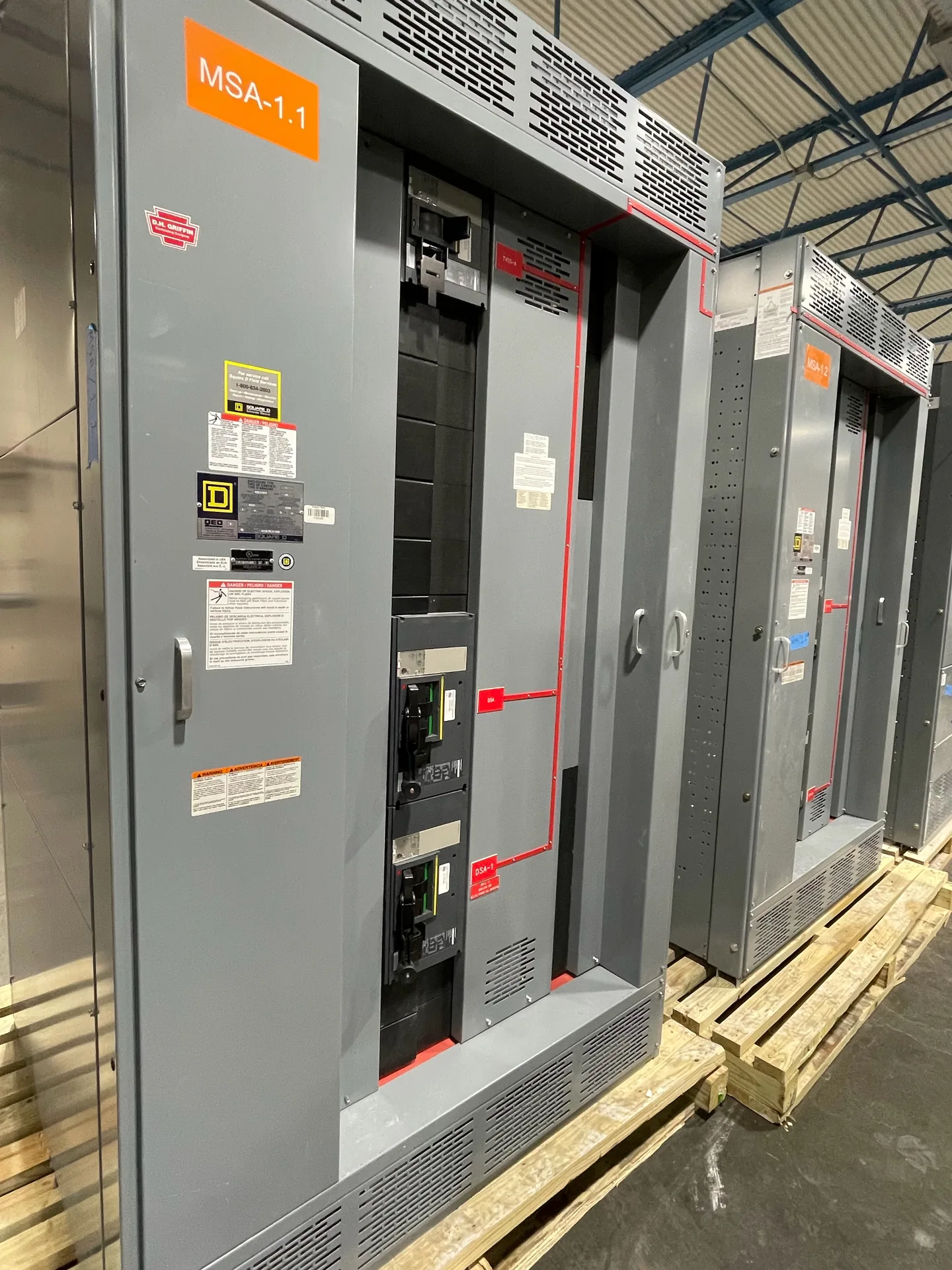
Bus arrangement design determines how power moves through a switchboard and how the assembly responds to heat, fault forces, maintenance needs, and connected equipment. Main buses carry power along the lineup; distribution buses and feeder connections route it to individual circuits. Their layout affects more than conductor size: joint locations, supports, barriers, access, and incoming and outgoing interfaces all matter. Switchgear Builder Virginia manufactures custom new switchgear in the USA using all-American components, with short lead times subject to project review and nationwide shipping. For applicable low-voltage switchboards, UL 891 assemblies may be specified. The design and any ratings must be confirmed against the project requirements and quoted configuration.
Main and Distribution Buses
A main bus typically runs through the lineup and connects incoming power with the sections that serve outgoing circuits. A distribution bus, where used, branches power toward feeder devices or other equipment. The arrangement influences where current enters, how it is divided, and which sections must be coordinated with the rest of the installation. Buyers should provide a one-line diagram, source and load information, section order, and any required future provisions. These details help distinguish a straightforward single path from a layout needing alternate feeds, ties, or additional separation. Each added path can affect space, switching functions, and the number of interfaces requiring review. There is no universal layout that suits every project: the selected arrangement must fit the electrical scheme and equipment configuration. Confirm the proposed bus path and connection points during design review, before fabrication details are finalized.
Joints and Connections
Bus joints connect conductor sections, and their placement can affect access, assembly, inspection, and heat management. A joint may occur at a lineup section, a transition, or an interface with another piece of equipment; the exact approach depends on the approved design. Buyers should identify incoming conductors, feeder connections, tie points, and any planned connection to transformers or downstream gear. Provide conductor material and termination requirements when known, along with equipment drawings and space constraints. Avoid assuming that a familiar lug, splice, or joint detail will suit a different lineup or rating. Contact surfaces, fastening approach, alignment, and access are design matters for the manufacturer to verify. Clear interface information helps prevent field conflicts, but does not by itself establish a rating. The final joint configuration and any inspection or test requirements should be stated in the project documents and confirmed before release.
Supports and Fault Forces
Bus supports hold conductors in position and help the assembly withstand the mechanical forces associated with electrical faults. Their placement, material, spacing, and relationship to barriers must be considered as part of the assembly design; a single spacing rule cannot establish suitability across different configurations. Buyers should provide the available fault-current information, protective-device details, and the required short-circuit withstand rating for the complete equipment. Clarify whether the stated requirement applies to the bus assembly and identify the duration or other rating basis required by the project documents. These values need engineering review against the proposed equipment rather than selection by a generic rule of thumb. Changes to section arrangement, conductor geometry, or connection points can affect the design. Switchgear Builder Virginia can develop a custom new assembly around verified project requirements, with final ratings and configuration subject to quotation and confirmation.
Thermal Design Requirements
Current produces heat in bus conductors and connections, so thermal review considers more than nominal amperage. Enclosure conditions, the number and arrangement of sections, connected devices, ventilation provisions, and the expected operating environment can all influence heat behavior. Buyers should provide the required continuous-current rating, loading expectations, enclosure and installation conditions, and any project-specific temperature or ambient requirements. Do not infer a bus rating from conductor dimensions alone or assume that a configuration’s rating carries over to a modified lineup. Thermal performance and short-circuit withstand are separate design considerations, though both apply to the assembly. Their verification depends on the actual construction and applicable project requirements. For a low-voltage switchboard where applicable, UL 891 assembly requirements may be specified; this is not a rating for medium- or high-voltage gear. Any requested listing, test, or approval should be confirmed for the exact quoted configuration.
Interfaces and Submittals
A workable bus arrangement depends on clear boundaries between the switchboard and the surrounding electrical system. Document the source, load locations, cable or busway entry points, phase sequence, neutral and grounding needs, room clearances, and connection constraints. Identify whether conductors enter from above or below and note any limits on bending space or access, subject to field verification. Provide the latest one-line diagram, equipment schedules, fault-current data, and applicable project specifications; mark assumptions that remain unresolved. These inputs let the manufacturer review the main and distribution paths, joints, supports, and external interfaces as one coordinated design. They also reveal where a change in section order or connection location may affect fit or scope. Switchgear Builder Virginia builds new equipment to confirmed project requirements and ships nationwide. Schedules, ratings, and configuration are subject to quote and verification, so resolve open items before approval for fabrication.