
TECHNICAL GUIDES / MANUFACTURER DIRECT
A switchgear equipment schedule turns a project’s one-line diagram, specifications and equipment descriptions into a coordinated list of what the switchboard or switchgear lineup must contain. It helps buyers compare bids and identify missing details before those gaps become clarifications, redesigns or scope disputes. The schedule is a coordination document, not a substitute for approved drawings or verified ratings. Switchgear Builder Virginia manufactures new equipment in the USA using all-American components and can provide custom builds; specific configurations, ratings and schedules are subject to review and quotation.
Connect Tags to Equipment
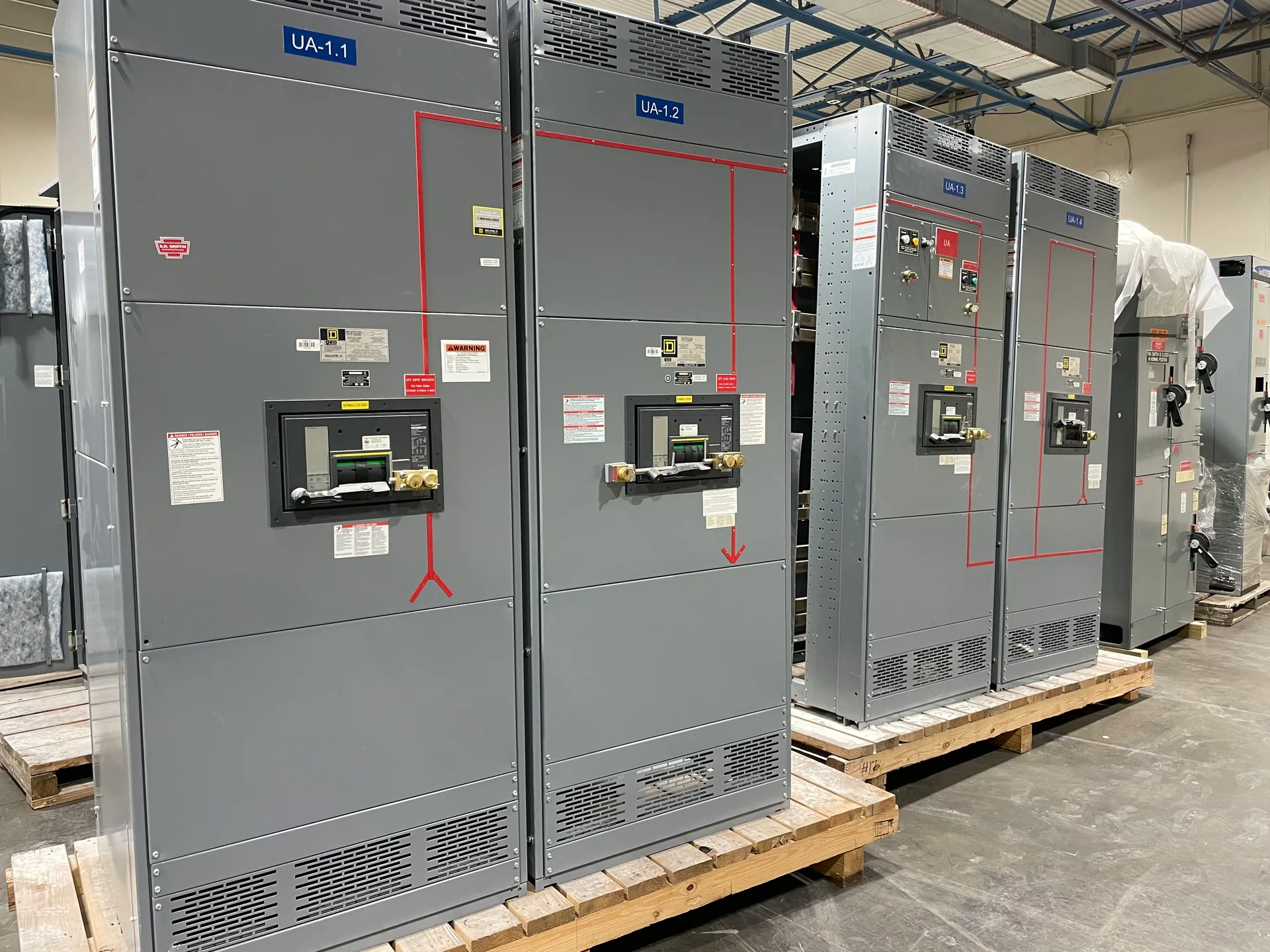
Begin with a unique tag for each lineup, section, main device and feeder, using the same identifiers on the one-line diagram, floor plan, elevations and schedule. A tag that changes between documents can cause a bidder to price the wrong device or leave an item out. For each entry, state whether it represents a complete assembly, a section within an assembly, or a separately supplied device. Show the source and destination when known, such as a named upstream source and the panel or load served, while flagging information that remains pending. Distinguish existing equipment from new work and identify any equipment outside the supplier’s scope. Consistent naming makes it easier to trace feeder counts, compare proposed lineups and resolve discrepancies without assuming that similar-looking tags refer to interchangeable equipment.
Specify Ratings Carefully
List the system voltage, phase, frequency, number of wires, grounding arrangement and applicable system fault information where the design team has established them. For each breaker or other protective device, identify the intended function and the rating or setting information required by the project documents. Separate continuous current, interrupting capability and assembly withstand requirements rather than compressing them into one ambiguous number. These values describe different design considerations and must be checked against the system study, specifications and equipment configuration. Do not infer a rating from a feeder name, a nearby device or a typical application. If short-circuit data, protective-device settings or coordination requirements are incomplete, mark them for confirmation by the responsible project team. A manufacturer can review proposed equipment against confirmed requirements, but final suitability depends on the complete design and quotation.
Count Feeders and Spaces
For every feeder, show the device tag, destination, quantity and any specified poles, frame or trip information. State whether a listed quantity means individual breakers, parallel conductors, spare devices or repeated identical circuits; those interpretations affect both the lineup and the bid. Identify spare breakers separately from blank spaces and indicate whether future provisions require a device now or only room for later work. Note any specified metering, control, communication or accessory requirements against the relevant device, rather than leaving them in a general note that could be missed. Confirm how many sections and feeder positions the lineup must accommodate, including documented spare capacity. If the schedule and one-line show different counts, do not silently choose one: record the conflict and request clarification. Clear quantities let bidders compare scope on an equal basis and expose omissions before ordering.
Describe the Assembly
The equipment description should state the intended equipment type and the project requirements that shape its arrangement, such as indoor or outdoor installation, access direction, enclosure conditions, incoming arrangement and cable entry where specified. Include bus requirements, barriers, metering and control features only when supported by the design documents or confirmed as options. Note applicable dimensions, room clearances, shipping splits and connection constraints when the project team has established them. For low-voltage switchboards, identify whether UL 891 is an applicable project requirement and have its applicability and assembly details verified for the proposed configuration. Do not apply that standard to medium- or high-voltage switchgear. A schedule should not imply that unverified features, listings, tests or approvals are included. Describe requirements precisely enough to compare proposals, and flag open choices for resolution rather than treating assumptions as accepted scope.
Catch Bid-Time Gaps
Before bid, compare each schedule row with the one-line diagram, specifications, panel or load lists, site information and stated scope boundaries. Common omissions include an untagged main, mismatched feeder quantities, missing spare-device requirements, unclear source or destination, absent system fault data, unspecified metering, conflicting cable-entry assumptions and no indication of what is existing. Also look for inconsistent voltage or device descriptions across documents, and for notes that assign responsibility without naming the responsible party. Record each unresolved item as a question, assumption or exclusion, and ask bidders to identify deviations in their proposals. A clean schedule does not eliminate engineering review; it gives the project team a practical way to see what is known, what is included and what still requires confirmation. Switchgear Builder Virginia can review a proposed scope for a custom new build, with ratings and configuration subject to verification and quote.