
TECHNICAL GUIDES / MANUFACTURER DIRECT
Spare space in a switchgear lineup can mean an empty compartment, an installed spare device, or capacity left unused in the electrical design. These are different provisions, and one does not automatically provide the others. Switchgear Builder Virginia builds new custom switchgear in the USA with all-American components and ships nationwide; project schedules and ratings are confirmed through quotation and design review. Use the planning distinctions below to record what a proposed lineup actually reserves, what remains to be selected, and which system limits still need engineering verification.
Name the Reserve
Start by defining what “spare” means in the project documents. An empty compartment is physical room in the lineup, but it may lack bus connections, a device, control wiring, or the clearances needed for a future installation. An installed spare device is equipment already included in the assembly, although its rating, trip settings, controls, and intended duty still need to be specified. Spare electrical capacity is room in the system’s calculated loading or distribution plan; it is not a compartment or device. List these provisions separately on the one-line diagram, equipment schedule, and scope notes. For each, identify its location, intended future use, and design limits. This avoids a common handoff problem: one team assumes a breaker is included while another has reserved only a blank space. Clear terminology lets bidders price the same scope and gives operations staff a useful record.
Empty Compartments
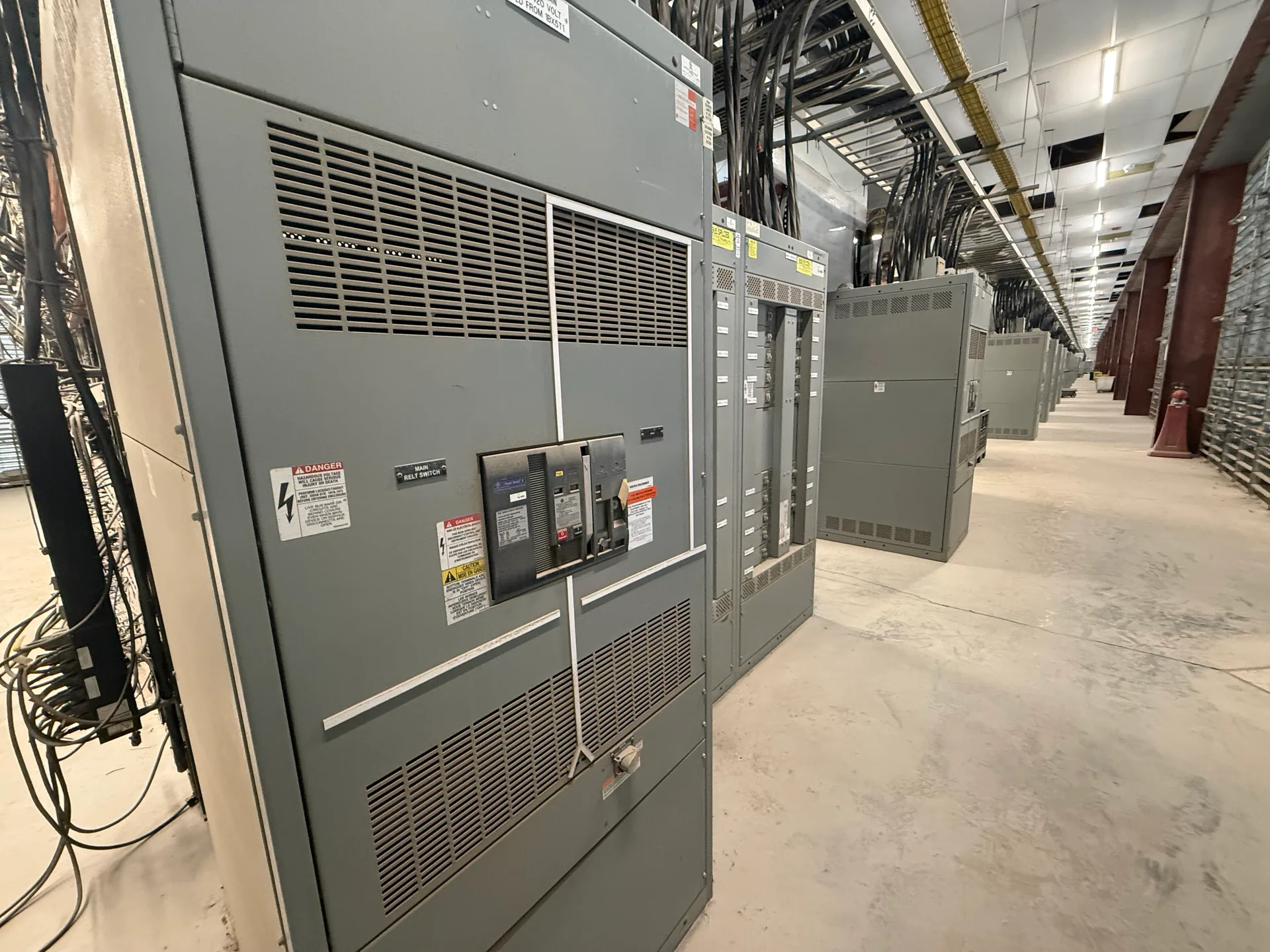
An empty compartment can preserve a future mounting position, but its practical value depends on how the assembly is arranged. Confirm whether the space is intended for a future device, cable terminations, or simply a physical separation, and state that purpose in the schedule. Ask the design team and manufacturer to verify dimensions, barriers, access, bus arrangement, heat effects, and any required future connection provisions for the specific design. Do not assume that an open section can accept any device or that later installation will avoid changes to adjacent equipment. A future addition may require a compatible device, planned connections, engineering review, and work coordinated with the facility. If the intended use is not yet known, record that uncertainty instead of describing the compartment as universally expandable. The quote and drawings should identify whether the compartment is supplied empty and which provisions, if any, are included for later work.
Installed Spare Devices
An installed spare device is more immediately defined than an empty compartment, but it still needs a documented purpose. Identify the device type, frame or continuous-current rating, trip or protective functions, voltage class, connection arrangement, and any control or metering needs as applicable to the project. These details must be selected and verified for the actual system; a spare device is not automatically suitable for every future load or fault condition. Clarify whether the device is intended to remain unused, serve as a ready replacement, or feed a planned future circuit. Those uses can affect labeling, settings, commissioning scope, and how the device is represented in drawings. Confirm which accessories and wiring are included, and whether testing or approvals are required for the specified configuration. An installed spare adds equipment cost and occupies a defined position, so compare that certainty with the flexibility—and limitations—of reserving an empty compartment.
Spare Electrical Capacity
Spare electrical capacity is a system-planning allowance, not unused hardware. It may refer to projected load headroom, a reserved feeder allocation, or another documented design margin; define the term rather than relying on a percentage with no stated basis. Have the responsible electrical engineer assess anticipated loads, demand assumptions, conductor and bus limits, protective-device coordination, and applicable project requirements. A lineup can have vacant compartments while the source, bus, or distribution path has little usable capacity. Conversely, a load forecast may show headroom even when no physical position is available for another device. Record the assumptions, calculation references, and limits that support the claimed reserve, and identify who must review them when loads change. Treat available capacity as conditional on the complete system and verified design data, not as a promise that a future addition will fit or operate without modification.
Document the Reserve
Make the reserve visible in documents that will travel from design through procurement and operation. On the one-line diagram, distinguish installed spare devices from empty positions and annotate planned future feeders separately from calculated load headroom. In the equipment schedule and specification, state the quantity, location, intended function, included components, and boundaries of each provision. Request drawings that show the actual arrangement, and resolve differences between notes, schedules, and quoted scope before approval. Keep a concise assumptions list covering future loads, ratings to verify, accessories not included, and any engineering review needed before expansion. For new custom switchgear, the manufacturer can confirm the quoted configuration and applicable ratings through design review; the project team remains responsible for defining system needs and validating future use. Where UL 891 assemblies are applicable, confirm the specified assembly and listing details for the actual low-voltage switchboard configuration rather than assuming a reserved space establishes them.