
TECHNICAL GUIDES / MANUFACTURER DIRECT
Utility coordination for equipment submittals starts by defining who owns each part of the electrical service and what information the serving utility must review. Switchgear Builder Virginia manufactures new, custom switchgear and can prepare equipment submittal information for project review. Requirements differ by utility and project, so confirm the current drawing format, metering arrangement, review sequence, and required approvals with the utility and design team before equipment details are finalized.
Map Ownership First
Start the submittal with a clear boundary between utility-owned equipment and customer-owned equipment. The boundary may affect who supplies, installs, maintains, and approves service components, but its exact location is project-specific. Do not infer ownership from physical position or from a one-line diagram alone. Ask the serving utility and project electrical engineer to identify the ownership and responsibility demarcation in writing, then show it consistently on the one-line, plans, and equipment drawings. Identify interfaces such as service conductors, termination points, metering provisions, and any utility-required compartments without assuming they are part of the switchgear scope. This early clarification helps prevent a drawing from assigning customer equipment to the utility, or the reverse. Switchgear Builder Virginia can use confirmed project requirements when developing a custom new-equipment submittal; scope and details remain subject to review and quote.
Confirm Service Drawings
A useful service drawing set gives reviewers enough information to understand how the proposed equipment connects to the service, without presenting assumptions as approved design. Coordinate the one-line diagram with equipment elevations, plan views, connection details, and any available utility service information. Check that equipment labels, voltage and phase information, conductor entry direction, termination locations, and ownership boundaries agree across documents. Have the responsible electrical designer confirm project-specific ratings and fault-current information; do not treat a preliminary utility value or an example drawing as a verified equipment rating. Ask the utility which drawing types, details, file formats, and revision labels it expects. If information is pending, mark it clearly as pending rather than silently filling gaps. Consistent, traceable drawings make it easier to identify conflicts before manufacturing details are released and reduce the risk of avoidable resubmittals.
Resolve Metering Details
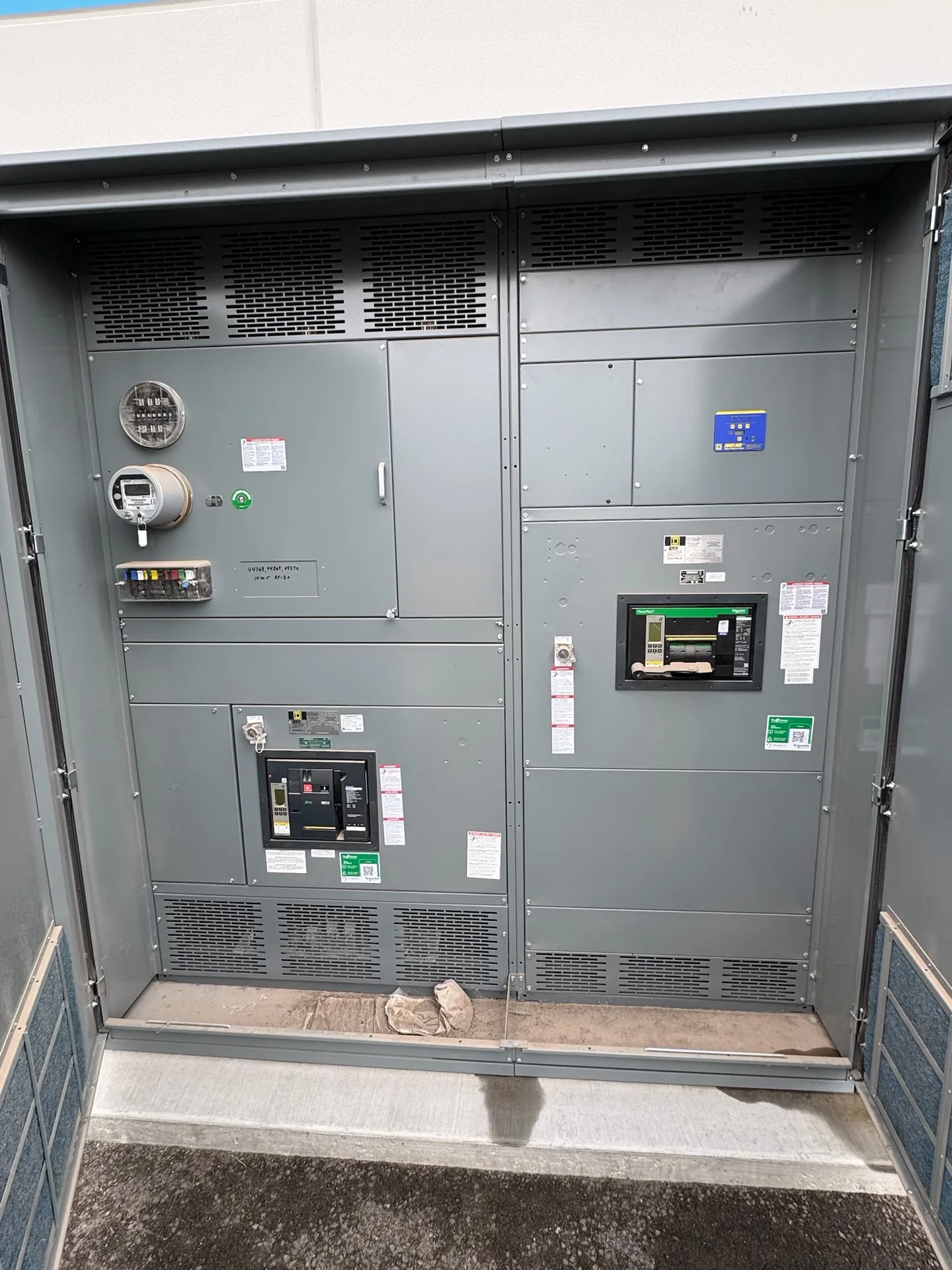
Metering requirements can influence equipment layout, compartments, access, and the division of work, so confirm the arrangement before the submittal is treated as complete. Ask the serving utility whether it specifies meter location, instrument-transformer provisions, enclosure access, sealing provisions, wiring interfaces, or particular drawing details. These items vary; do not assume a familiar arrangement from another site will be accepted. Distinguish utility-furnished devices or requirements from customer-furnished equipment and manufacturer scope on the drawings and scope notes. If the utility has not confirmed a detail, identify the open question and show the design as subject to that confirmation. For applicable low-voltage switchboards, UL 891 assemblies may be relevant, but that does not by itself establish utility acceptance or satisfy project-specific metering requirements. Confirm applicable construction and review requirements with the project team and utility before finalizing the equipment configuration.
Plan Review Timing
Utility review can involve separate steps, reviewers, and revisions, so build coordination into the project schedule rather than assuming one submission produces immediate approval. Ask when the utility wants preliminary drawings, what information is needed for a complete review, how comments are returned, and whether revised drawings need another formal review. Coordinate those milestones with the engineer, electrical contractor, owner, and equipment manufacturer. Keep a record of the submitted revision, open comments, responses, and the person responsible for each decision. Avoid releasing details that depend on unresolved utility requirements as though they were settled; identify dependencies and confirm what may proceed. Review durations and manufacturing schedules depend on project scope, document readiness, and utility response, and should be verified for the specific quote and schedule. Early communication can expose timing conflicts, but it cannot control the utility’s review process or establish a delivery date.
Close the Approval Loop
Before equipment drawings are finalized, reconcile utility comments against the latest project documents and confirm which changes affect ownership, service interfaces, metering, dimensions, or electrical requirements. Route technical decisions to the responsible designer and utility contact rather than interpreting a comment beyond its stated meaning. Record accepted revisions and carry the same revision status onto related drawings so reviewers and installers are working from coordinated information. Confirm whether the utility requires a further drawing review, a separate field or service-process approval, or additional documentation; requirements vary and should not be assumed from a drawing stamp alone. Switchgear Builder Virginia can incorporate confirmed requirements into custom new switchgear submittals, with scope, ratings, and schedule subject to quote and verification. Nationwide shipping is available, but it does not replace local utility coordination. Clear responsibility and documented decisions help keep the equipment package aligned with the project review path.