
LOCATIONS / MANUFACTURER DIRECT
For Hampton, Virginia projects, Switchgear Builder Virginia manufactures new custom switchgear in the USA using all-American components, with nationwide shipping and short lead times subject to quote and verification. The right configuration depends on the actual power sources, transfer scheme, loads, controls, and room constraints—not simply the facility’s location. This guide outlines what to document when planning generator backup and requesting a manufacturer-direct quote.
Define the backup sequence
Consider a hypothetical Hampton facility that needs generator backup while keeping parts of the building occupied. Start by documenting the normal source, generator source, loads requiring backup, and the intended transfer sequence. Identify which loads may be interrupted and which need a defined restoration priority; do not assume that every panel or feeder belongs on emergency power. The design team should establish how the transfer equipment and switchgear are intended to coordinate, including source-status signals, transfer commands, and any required interlocks. Those decisions affect the arrangement, control wiring, and space needed in the assembly. Automatic transfer switches are a related product category, but the project documents must establish whether separate transfer equipment, switchgear-integrated functions, or another arrangement is appropriate. Request an integration review when that scope is part of the project; confirm exact functionality and ratings against approved design documents and the manufacturer’s quote.
Check room constraints
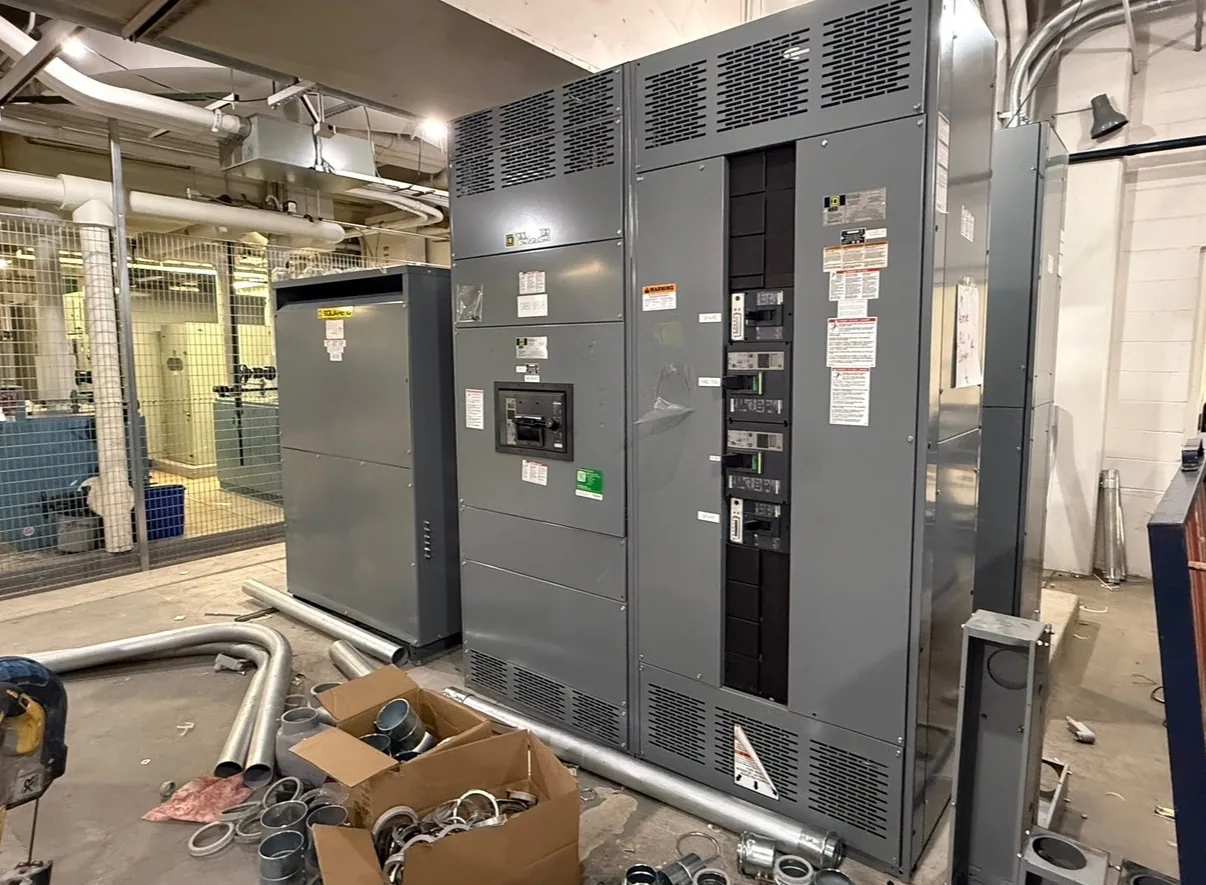
An occupied electrical room changes how buyers should plan equipment replacement or expansion, even when the work is new construction or a planned upgrade. Record the available wall and floor space, door openings, access routes, ceiling obstructions, and the location of existing equipment that must remain in service. Have the project team identify any limits on shutdown windows, staging, temporary power, or work-area access. These details can affect lineup segmentation, connection locations, and the sequence for bringing equipment into the room, but they do not by themselves establish a workable design. Share dimensioned drawings and relevant site information early so proposed equipment can be checked against the actual space and installation plan. If dimensions or clearances are uncertain, flag them for field verification by the responsible project professionals. Do not assume a standard arrangement will fit an occupied room or preserve required access.
Specify sources and controls
A useful quote request describes how the normal and generator sources behave, rather than simply asking for “generator-ready” switchgear. Provide available one-line diagrams, source voltage and phase, system grounding details, calculated load information, protective-device requirements, and the planned transfer equipment or control interface. Identify which signals are available from the generator and transfer equipment, what the control sequence should accomplish, and any alarms or remote status points required by the project. State whether open-transition, closed-transition, or another transfer approach is specified, but have the engineer confirm suitability and compatibility before procurement. These are design inputs, not assumed product features or ratings. Switchgear Builder Virginia can review the requested scope for a custom new build; schedules, ratings, and configuration remain subject to quote and verification. For low-voltage switchboards, specify whether applicable UL 891 assemblies are required and confirm the proposed assembly’s applicability.
Coordinate the project team
Before ordering, align the electrical engineer, generator supplier, transfer-equipment supplier, contractor, and facility representative on interface responsibilities. Clarify who provides control power, who furnishes and terminates interconnecting conductors, how source availability is communicated, and which party confirms the operating sequence. Resolve discrepancies between drawings, equipment schedules, and specifications before they become procurement assumptions. If the facility must remain occupied, describe the operating constraints and planned outage windows, while leaving safe work methods and switching plans to qualified project personnel. A related automatic-transfer-switch integration page can help frame coordination questions; it does not replace project-specific engineering or establish that any particular integration is included. Likewise, a product page for automatic transfer switches is useful when that equipment is in scope. Confirm compatibility, interface details, approvals, and responsibilities in the project documents and written quote before release.
Prepare a quote request
A complete quote checklist can reduce avoidable back-and-forth. Include the project location, requested delivery point, one-line diagram, equipment schedule, applicable specifications, source and load data, control narrative, room drawings, and the required submittal or review milestones. Note any known constraints on access, staging, outages, and coordination with existing systems. Identify requested options separately from mandatory requirements, and call out items still awaiting engineering confirmation. Manufacturer-direct custom builds, all-American components, USA manufacturing, short lead times, and nationwide shipping are available context for planning, not a promise of a particular schedule or configuration. Delivery timing and ratings must be verified in the quote. Use the request-quote page to submit the project information and ask about the proposed scope. No Hampton office or prior local installation is implied; the hypothetical example here is only a planning scenario for buyers specifying new equipment.