
PRODUCTS / MANUFACTURER DIRECT
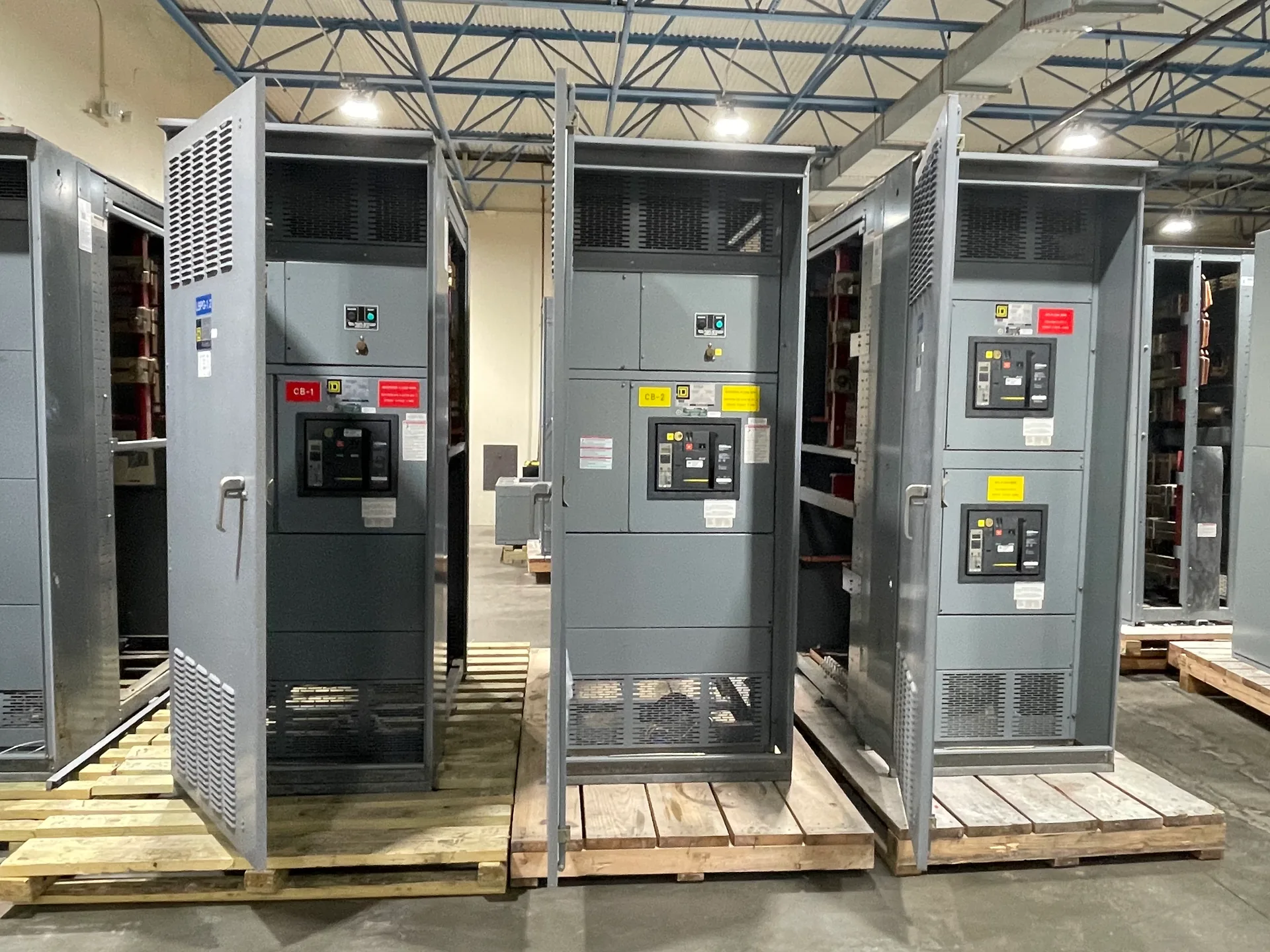
Main-tie-main switchboards connect two incoming power sources to separate bus sections, with a tie breaker that can link those sections when the operating plan calls for it. The arrangement can support source transfer or planned bus coupling, but its behavior depends on the one-line diagram, controls, interlocks, and switching sequence—not just the breaker layout. Switchgear Builder Virginia builds custom switchboards in the United States using all-American components, with nationwide shipping. For applicable low-voltage switchboards, UL 891 requirements can be addressed as specified and verified for the quoted assembly.
Two sources, two mains, one tie
A typical main-tie-main lineup has an incoming main breaker for each source, two bus sections, and a tie breaker between them. With the tie open, each source normally feeds its own section. If one source is unavailable, an approved sequence may open that source’s main and close the tie so the remaining source can serve both sections, provided the source and equipment are suitable for the combined load. The one-line drawing should identify sources, bus sections, normal breaker positions, connected loads, and any alternate feeds. Buyers should also clarify whether the sources are independent utility services, transformers, generators, or another arrangement; their characteristics affect transfer logic and fault review. The three-breaker label alone does not define the intended operation. A custom lineup should be reviewed against the actual distribution plan before its arrangement is specified.
Choose the normal tie position
A normal-open tie keeps the bus sections separated during ordinary operation. This can simplify source separation, but transfer requires a defined sequence and may interrupt selected loads while breakers change state. A normal-closed tie connects the sections during normal operation, allowing both sources to serve a common bus arrangement; that choice changes how sources interact and can increase available fault current or create parallel-source conditions. Whether paralleling is allowed depends on source design, protection, utility requirements, and the approved operating scheme. Do not select open or closed solely for convenience or assume either is universally safer. Provide the intended normal breaker positions, transfer objective, source details, and any restrictions to the design team. Confirm whether the requested sequence is automatic, supervised manual, or another specified method, and verify it against the project’s protection and operating requirements.
Interlocks and sequence
Interlocks help prevent breaker combinations that the approved scheme does not permit, but they must reflect the actual source and transfer strategy. For example, a break-before-make sequence may require one main to open before the tie closes, while a scheme that permits momentary or sustained source paralleling needs a different, carefully reviewed basis. Mechanical interlocks, electrical permissives, key interlocks, control logic, or combinations may be considered as design options; the required arrangement must be established for the project, not presumed from the product name. Buyers should request a clear sequence of operation that describes normal conditions, loss of a source, restoration, alarms, and operator actions. Identify whether automatic transfer controls are in scope or supplied separately. Review control power, sensing, and any bypass or test provisions with the responsible engineer. Verify the final interlock design and sequence before release for manufacture.
Review fault duty and protection
Before choosing breakers or bus, gather available fault-current information at each source and the intended operating conditions, including tie-open and tie-closed cases where applicable. With the tie closed, sources may contribute to a fault through different paths, so the review cannot rely on only one incoming condition. The engineer should coordinate interrupting ratings, short-circuit withstand, protective-device settings, and selective coordination with the system study and project requirements. Generator contribution, transformer impedance, utility changes, and future expansion can affect the results. Do not infer an assembly rating from a breaker frame, a voltage label, or a generic example. Ratings and construction details require confirmation for the actual configuration. For applicable low-voltage switchboards, specify UL 891 requirements for review; applicability and the quoted assembly details must be verified. The design record should state the assumptions used for fault-duty review.
Define the order clearly
For a useful quote, provide the one-line diagram, source voltages and capacities, available fault-current data, load schedule, normal breaker positions, and desired transfer sequence. Note critical loads, generator or utility constraints, future sections, metering needs, and any project-specific control requirements. Ask the supplier to identify which controls and interlocks are included, which are options, and which are by others. Also confirm lineup dimensions, cable-entry preferences, environmental conditions, and connection details against the site design. Switchgear Builder Virginia manufactures new custom switchboards in the United States with all-American components and offers nationwide shipping; lead times and ratings are subject to quote and verification. Review drawings, sequence, fault-duty assumptions, and applicable construction requirements before approving the build. This keeps commercial decisions tied to a documented operating plan rather than assumptions based on the main-tie-main name alone.