
PRODUCTS / MANUFACTURER DIRECT
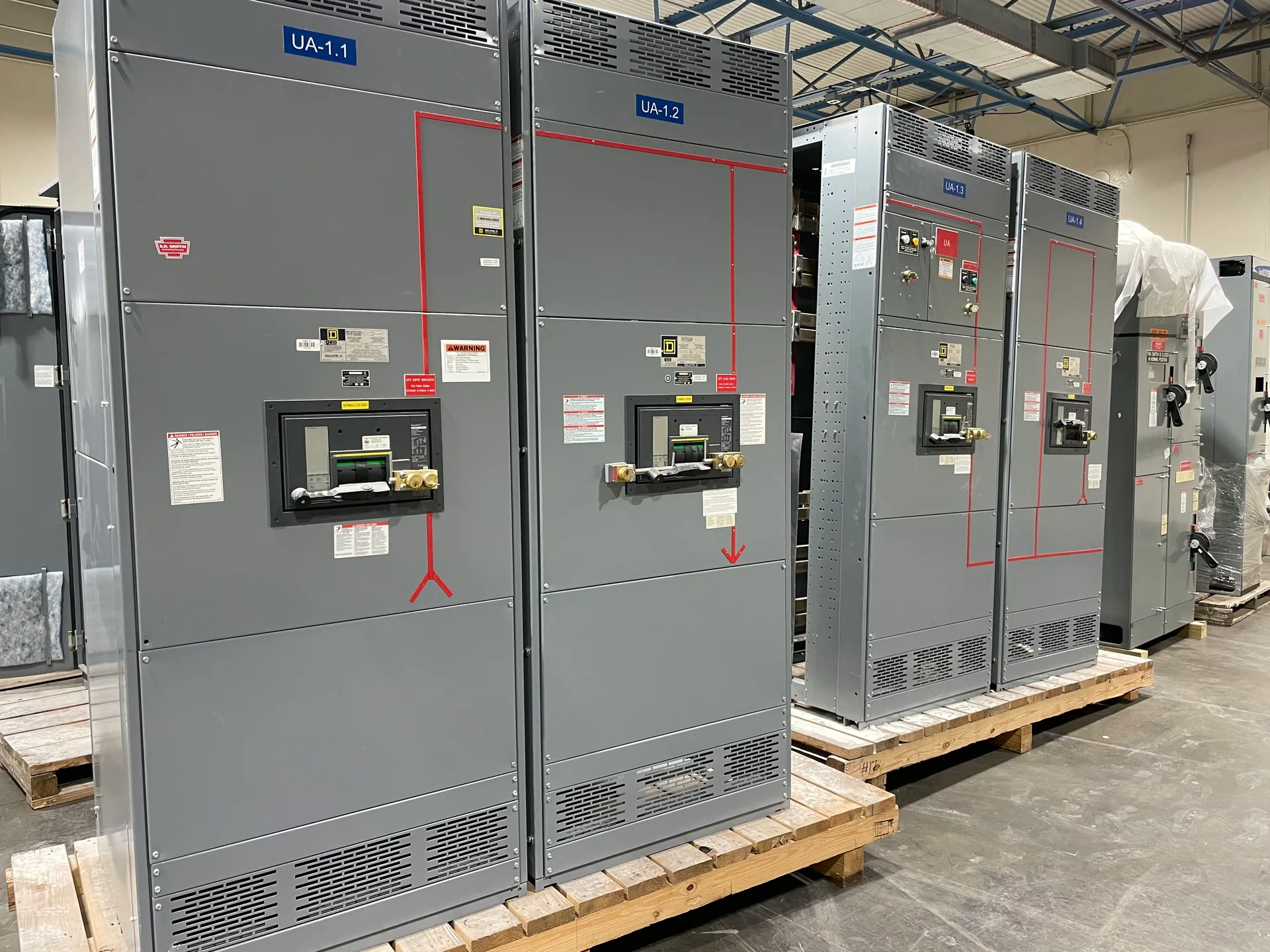
Secondary selective switchgear serves loads from two secondary sources, commonly through two main devices and a tie device. The arrangement can support transfer when one source is unavailable, but its behavior depends on the specified controls, interlocks, and operating sequence. Switchgear Builder Virginia manufactures custom switchgear in the USA using all-American components, with nationwide shipping. For applicable low-voltage switchboards, UL 891 requirements may apply. Confirm the project’s voltage, fault-duty data, and transfer expectations before selecting an arrangement; schedules and ratings require quote and verification.
Two Sources, One Tie
A typical secondary-selective lineup has a main breaker for each transformer or other secondary source, plus a tie breaker connecting the two bus sections. With the tie open, each source normally supplies its assigned section, keeping the sources separated during ordinary operation. If one source is lost, the system may transfer selected loads to the other section, provided the alternate source and its equipment can carry the added demand. That outcome is not automatic merely because a tie is installed: sensing, controls, interlocks, and operating instructions determine how transfer occurs. A custom layout should identify the normal state of every device and which loads may transfer. Switchgear Builder Virginia can configure new switchgear to project requirements; the one-line diagram and load assumptions should be reviewed together before the arrangement is quoted.
Choose the Transfer Mode
Open-transition transfer breaks the connection to one source before connecting the alternate source, so the bus experiences an interruption. It is a common design choice when the sources must not be paralleled, but the acceptable interruption depends on the connected loads and their controls. Closed-transition transfer briefly connects sources in parallel during transfer, which introduces additional protection, control, and utility coordination considerations; it should not be assumed available or acceptable. Some projects instead specify manual transfer, while others require automatic sensing and operation. State whether transfer is required, which source-loss conditions initiate it, whether return to normal is automatic or manual, and what alarms or bypass features are needed. These requirements shape the controls and interlocking approach, and must be reconciled with the project’s operating procedures and source constraints.
Check Fault-Duty Inputs
Fault-duty evaluation needs more than the system voltage or a target short-circuit number. Provide transformer kVA and impedance, available fault current at each source, upstream protective-device information, and relevant conductor lengths and sizes when known. If the two sources differ, the available fault current may differ by bus section; the tie-closed condition can create a separate operating case with higher fault contribution. The engineer must establish which device states are permitted and evaluate the applicable cases rather than treating one value as universal. Confirm the required equipment ratings against the verified study and project specifications before release. Switchgear ratings and protective-device selections are subject to quote and engineering verification. Missing or preliminary source data should be clearly identified, because later changes can affect device selection, coordination, and the physical configuration.
Coordinate Protective Devices
Coordination is a system study, not a label applied to the lineup. The engineer compares protective-device time-current behavior for relevant fault and overload conditions, considering both source paths and the tie arrangement. A setting that supports selectivity on one transformer may not produce the same result on the alternate path or with the tie closed. Share the latest one-line diagram, study assumptions, upstream device data, downstream feeder loads, and any required operating states with the project team. Confirm who will perform or approve the study and whether settings are to be provided as project documents. Device families, trip functions, and adjustment ranges are options to verify against the study and specified equipment. No coordination outcome should be presumed from a brief description alone; documented inputs and review establish whether the proposed arrangement fits the intended system.
Define the Project Package
Before requesting a quote, identify nominal voltage, phase, frequency, bus arrangement, source and load information, enclosure location, cable-entry preferences, metering needs, and the expected sequence of operation. Clarify whether each source serves equal or different loads and whether any loads are intentionally excluded from transfer. Provide available drawings and state which details remain provisional. For low-voltage switchboards where applicable, identify UL 891 requirements in the project specification; applicability and assembly details require verification. Switchgear Builder Virginia manufactures custom new switchgear in the USA with all-American components and ships nationwide. Lead times, ratings, scope, and schedule are established through quote and project review, not assumed from a general product description. A complete requirement set helps buyers compare configurations on practical operating behavior, protection, and documentation rather than on the tie device alone.