
SERVICES / MANUFACTURER DIRECT
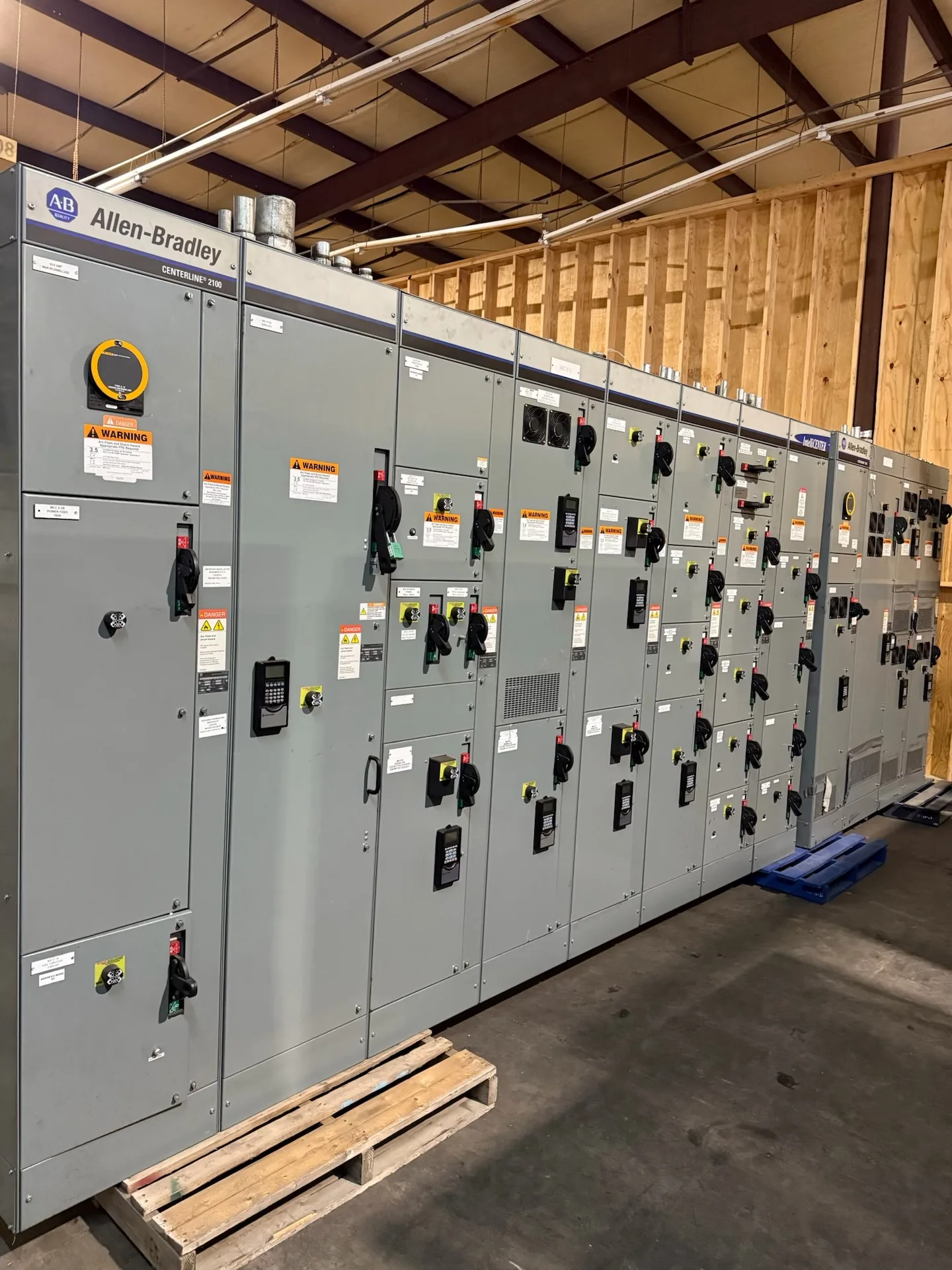
A sound switchboard design starts with the documents that define the electrical system, then tests whether the proposed arrangement fits the loads, space, operating needs, and project requirements. Switchgear Builder Virginia manufactures new custom switchboards in the USA using all-American components, with nationwide shipping and short lead times; schedule and configuration depend on the quoted scope and verification. The design-and-build process should make assumptions visible early, so buyers can resolve missing information before sections, protective devices, and interfaces are finalized.
Start With System Inputs
Provide the latest one-line diagram, load schedule, service characteristics, available fault-current information, and project specifications. These inputs serve different purposes: the one-line maps electrical relationships, while the load schedule helps establish feeder and section requirements. Confirm system voltage, phase, frequency, grounding arrangement, and whether the equipment is service equipment or downstream distribution. Identify loads that are continuous, motor-driven, sensitive, or expected to expand, and flag any standby or alternate-source arrangement. Missing or conflicting values should be listed as open items rather than silently assumed. The design team can then distinguish confirmed requirements from selections that need engineer, utility, or authority review. Early alignment reduces redesign risk, but it does not replace the project engineer’s responsibility for system calculations and approval. Document revisions and responsible reviewers so subsequent layout decisions use the same basis.
Shape Sections Around Use
A section layout should reflect the one-line and the way operators need to access, isolate, and maintain circuits. Grouping incoming, distribution, and tie functions can make the arrangement easier to follow, but physical order must still match project constraints and the approved electrical design. Review room dimensions, door swings, cable entry direction, conduit zones, housekeeping pads, and service clearances before selecting enclosure dimensions or section count. Top or bottom entry, rear access, and front-only access can affect cable space and installation planning; verify each against the room and site drawings. Consider future spare provisions deliberately: an unused space, provision for a future device, and a fully equipped spare feeder are not interchangeable. The buyer should identify which future capacity is needed, where it belongs, and whether it must be included now. Final dimensions and access assumptions require coordination with the project team.
Select Devices From Duties
Protective-device selection depends on the circuit duty, system data, coordination objectives, and specified equipment arrangement—not simply the connected load. Use the verified load and conductor information to establish device functions and ratings for review, then compare those choices with available fault-current calculations and the project’s protection strategy. Interrupting and withstand capabilities, trip functions, sensor or frame selections, and any coordination requirements must be checked for the actual system and proposed assembly. Where a project specifies selective coordination, arc-energy reduction, ground-fault protection, or special metering, identify the requirement and responsible design professional before selections are frozen. Do not infer compatibility or a performance outcome from a device name alone. The approved one-line, specifications, and manufacturer documentation should agree on each device’s role. Final protective-device ratings and settings remain subject to engineering review, equipment availability, and verification against the quoted configuration.
Resolve Interfaces Early
Switchboards meet systems beyond the cabinet, so define those interfaces while the layout is still flexible. Confirm incoming and outgoing conductor sizes, material, quantity, termination requirements, and cable approach with the project documents. Coordinate neutral and grounding provisions, metering signals, control power, communications, and any interlocks or source-transfer functions that apply. If the board connects to generators, transformers, parallel sources, or downstream equipment, show the relationship clearly on the one-line and identify who supplies and wires each connection. Site conditions may affect enclosure type, environmental provisions, seismic requirements, or special construction; treat these as project requirements to verify, not assumed standard features. A responsibility matrix can distinguish manufacturer-supplied components from field-provided raceways, conductors, controls, and installation work. Resolving boundaries prevents gaps and overlaps, while preserving the engineer’s role in approving system design and applicable code requirements.
Approve, Build, Document
Set review checkpoints before release: confirm the design basis, resolve open technical questions, review the proposed section arrangement, and obtain the required customer and engineering approvals. The approved submittal should identify the agreed configuration, device schedule, dimensions, connection details, and exceptions so manufacturing follows a controlled record. Changes after approval can affect fit, device selection, cost, and schedule; assess each revision before incorporating it. For applicable low-voltage switchboards, UL 891 requirements and listing details should be verified for the specific assembly and scope rather than presumed from the product category. Inspection, testing, and documentation requirements should be stated in the quote and project documents, with acceptance criteria agreed in advance. Switchgear Builder Virginia builds new custom equipment in the USA and ships nationwide. Lead times, ratings, approvals, and included records depend on scope and verification; request confirmation against the project’s final documents.