
COMPARISONS / MANUFACTURER DIRECT
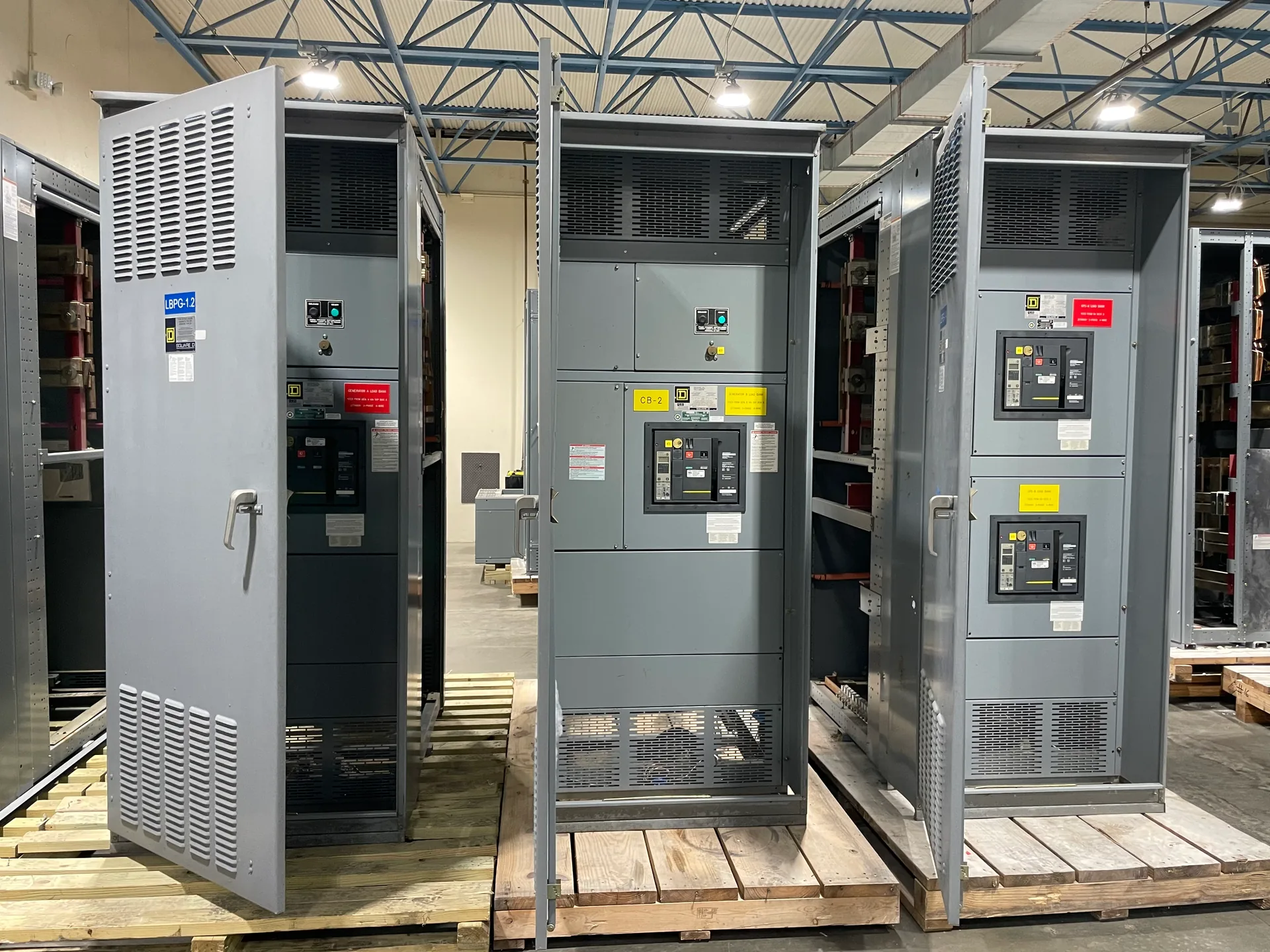
Low-voltage and medium-voltage switchgear serve different parts of an electrical distribution system, so the choice is not simply a matter of selecting a larger rating. It affects equipment classification, insulation design, protection coordination, installation clearances, operating procedures and maintenance planning. Switchgear Builder Virginia manufactures custom new switchgear in the USA using all-American components, with nationwide shipping and short lead times; project schedules and equipment ratings are confirmed through quotation and engineering review. Use the comparison below to organize design questions, then verify the applicable voltage classification, standards and site requirements with the project engineer and relevant authorities.
Start with system voltage
The first distinction is the system voltage at the equipment connection, not the building’s size or the amount of power it uses. Low-voltage switchgear serves circuits within the applicable low-voltage classification; medium-voltage switchgear is designed for a higher voltage class and its associated insulation and switching requirements. Exact boundaries and terminology can depend on the governing standard and project specification, so confirm the classification rather than relying on an informal label. A facility may use both types at different points: medium voltage can serve a distribution or service function, while transformers supply lower-voltage equipment downstream. This arrangement is not universal. Ask the electrical engineer to identify nominal and maximum system voltage, grounding method, available fault current, source arrangement and intended equipment location. Those inputs help determine the proper equipment family before comparing configurations or requesting a manufacturer’s quote.
Insulation and construction
Insulation systems must suit the equipment’s voltage class, operating environment and specified design requirements. Medium-voltage designs generally need insulation coordination appropriate to their higher system voltage, including consideration of clearances, barriers and the equipment’s specified withstand levels. Low-voltage equipment has its own bus insulation, spacing, enclosure and fault-duty requirements; it should not be treated as a simplified version of medium-voltage gear. The construction details depend on the design and must be verified against the project specification. Indoor or outdoor placement, altitude, temperature, contamination, moisture and available room can affect what should be specified. Do not assume a particular insulating medium, enclosure rating or construction feature is standard. Compare submittals for stated ratings and conditions, and ask the manufacturer to identify exceptions. The useful decision is not which design sounds more robust, but which documented construction matches the installation and system requirements.
Protection and interruption
Protection choices should follow the system study and operating objectives, rather than the equipment voltage label alone. The design team may need to assess available fault current, protective-device ratings, time-current coordination, grounding and the consequences of a fault at each location. Depending on the specified design, low-voltage and medium-voltage equipment can use different protective devices and switching arrangements; their functions and ratings are not interchangeable by assumption. Request documentation showing how proposed interrupting and withstand ratings relate to the project’s calculated conditions. Also clarify which protective functions are provided in the equipment and which depend on relays, controls, upstream devices or the wider system. Changes to source capacity, transformer impedance or circuit configuration can affect the study and equipment selection. A manufacturer can build to quoted requirements, but the engineer of record should establish and approve the protection scheme and confirm coordination with connected equipment.
Clearances and installation
Compare the complete installation footprint, not only the lineup dimensions. Required access, working space, cable entry, bending room, ventilation, lifting route and future maintenance access can influence room planning. Medium-voltage equipment may require different separation, access controls and installation provisions from low-voltage equipment, but the exact requirements depend on its design, location, governing documents and applicable rules. Verify dimensions and clearances from approved equipment drawings and project requirements; do not estimate them from a generic comparison chart. Review floor loading, anchorage, seismic criteria where applicable, conduit locations, doors and routes for removing or servicing components. If the site has constrained access, identify that early because shipping sections and assembly plans may need coordination. For a custom order, provide the latest one-line diagram, layout, connection details and site conditions available, then resolve deviations before release. Final installation planning belongs with qualified project professionals.
Maintenance and selection
Maintenance planning starts with the equipment documentation, operating environment and the owner’s capabilities. Inspection intervals, cleaning methods, testing scope and replacement planning should follow applicable instructions and the project’s maintenance program; do not assume both voltage classes use the same tasks or intervals. Ask what access is needed, which components are maintainable, what records and drawings will be supplied, and which services are included in the quote. Any field inspection, testing, approval or service support should be confirmed rather than presumed. For selection, compare verified ratings, construction, protection interfaces, footprint, connection arrangement, documentation and lifecycle needs—not just purchase price or voltage category. Switchgear Builder Virginia can quote custom new equipment for the specified application, with ratings, configuration and schedule subject to engineering review and confirmation. The engineer and owner should verify the applicable classification, standard, site conditions and acceptance requirements before equipment is finalized.