
COMPARISONS / MANUFACTURER DIRECT
Switchgear and motor control centers can sit side by side in an electrical room, but they serve different design priorities. Switchgear primarily distributes and protects electrical power; a motor control center groups equipment used to control multiple motors. Choosing between them—or deciding that a project needs both—starts with the loads, operating responsibilities, available space, and protection requirements. Switchgear Builder Virginia manufactures new, custom-built switchgear in the USA using all-American components, with nationwide shipping. Equipment configuration, ratings, schedules, and applicable standards must be confirmed for each project.
Different jobs
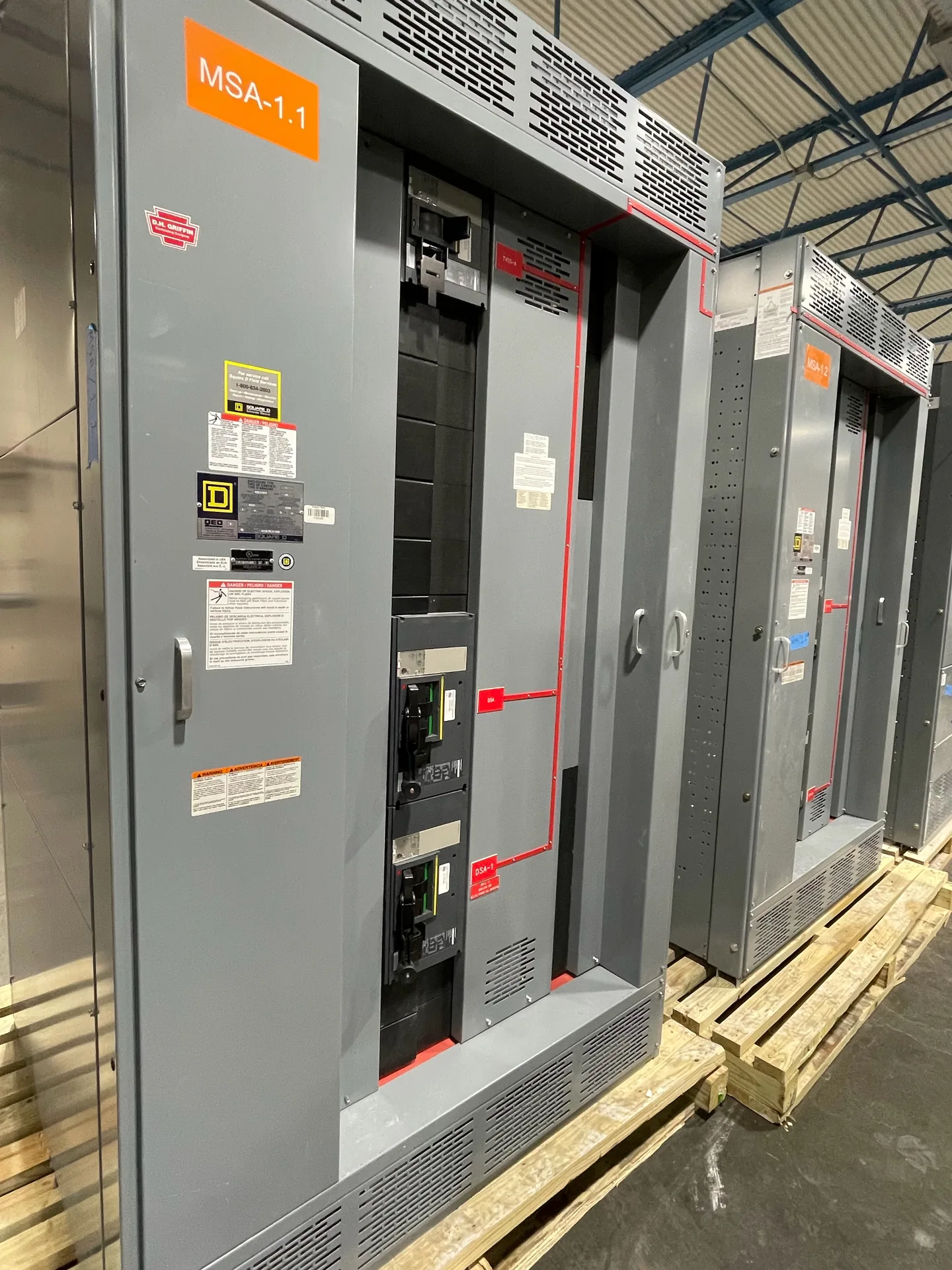
Switchgear is generally selected to receive, distribute, switch, and protect electrical power across a system. Its lineup may include incoming and feeder sections, protective devices, metering, and controls, depending on the project requirements. A motor control center (MCC) is organized around motor loads: it groups motor-control units in a common assembly, often with compartments for individual starters or other specified control equipment. The distinction is functional, not simply a difference in cabinet shape. A distribution lineup can feed an MCC, while the MCC handles the control and protection functions assigned to its motor circuits. Neither label alone establishes the available fault rating, interrupting capability, or suitability for a particular installation. Buyers should define what equipment must be switched, what loads must be controlled, and how each assembly interfaces with the rest of the electrical system before comparing proposals.
Distribution needs
A project focused on distributing power to buildings, panels, or major equipment may call for switchgear with incoming and outgoing circuits arranged around the one-line diagram. The practical design questions include the number and purpose of feeders, source arrangement, protective-device coordination, metering needs, and provisions for future circuits. Those choices affect lineup layout, access, wiring, and the space reserved for the assembly. An MCC is not automatically a substitute for a distribution lineup just because it contains protective devices; its sections and units are intended to meet the specified motor-control functions. Conversely, a project may not need a broad distribution lineup at every point where motors are located. Confirm the system voltage, load data, available fault current, and protection study inputs with the responsible electrical design team. The manufacturer can then configure the new assembly to the documented requirements, subject to quote and verification.
Motor-control needs
An MCC can make sense when a facility has several motors whose control equipment benefits from a grouped, organized arrangement. Each motor circuit may require a specified starter type, disconnecting means, overload protection, control power, or interface points; exact provisions depend on the motor, operating method, and project design. Buyers should provide motor horsepower, voltage, full-load information, starting method, duty, control scheme, and any required communications or interlocks for review. Do not assume every MCC unit is interchangeable or that a listed starter option fits every application. A grouped assembly may simplify circuit identification and coordinated planning, but it also concentrates equipment and creates layout, access, and heat-management considerations. Verify compartment construction, spare-unit strategy, cable entry, and maintenance clearances against the actual room and operating plan. Ratings and features remain requirements to confirm, not assumptions drawn from the product category.
When both are needed
Many facilities need both functions: a distribution assembly can supply power to an MCC, while the MCC serves a group of motors. That arrangement separates system-level distribution decisions from motor-level control decisions, but it also requires careful coordination between the assemblies. Define the feeder serving the MCC, the protection at each point, the grounding and bonding approach, and the control interfaces shown in the project documents. Confirm that device selections and settings are coordinated by the responsible engineering team; a component rating by itself does not establish that the complete system is appropriate. Space planning matters too: account for lineup dimensions, working access, cable routes, ventilation, and the path for moving equipment into the room. For an applicable low-voltage switchboard, UL 891 requirements may be relevant to that assembly; they do not describe an MCC or medium- and high-voltage switchgear. Confirm applicable standards and scope in the quote.
Compare the project
A useful comparison begins with the project documents, not a generic claim that one assembly is better. Share the one-line diagram, load list, motor schedule, available fault-current information, environmental conditions, and installation constraints when available. Identify which circuits are general distribution and which require motor control, then note the required protection, metering, control, communications, and future-capacity provisions for each. Ask bidders to state the proposed lineup boundaries, device types, ratings, assumptions, exclusions, and interface points so the offers can be compared consistently. If existing equipment must remain in service, provide its relevant interface and condition information through the project team; the new equipment design still needs verified system data. Switchgear Builder Virginia provides custom new builds, with short lead times subject to schedule confirmation and nationwide shipping. Final configuration, ratings, standards, and schedule are subject to quote and verification before an order is placed.