
TECHNICAL GUIDES / MANUFACTURER DIRECT
A pre-energization review brings the approved drawings, equipment condition, field connections, protection plan and responsible sign-off together before a new switchgear lineup is placed in service. The exact steps depend on the equipment, project documents, applicable requirements and site procedures; this guide is an organizing aid, not a substitute for them. Assign the review to qualified personnel and use the manufacturer’s instructions and the project’s approved procedures. Switchgear Builder Virginia manufactures new custom switchgear, with configuration and ratings subject to project review and verification. Record open questions and resolve them through the responsible project team before authorizing energization.
Confirm the documents
Gather the approved, current documents for the specific lineup before beginning checks. These may include equipment drawings, wiring diagrams, nameplate or submittal data, installation instructions, the approved one-line diagram, coordination or protection studies, and the project’s commissioning and energization procedures. Compare equipment identification and configuration against the documents, including sections, feeder designations, control power arrangements and specified accessories. Confirm that revisions are consistent; a drawing marked preliminary or superseded should not silently govern field work. Where documents conflict, stop that part of the review and refer the discrepancy to the engineer or other designated authority for resolution. Record which revisions were used, who reviewed them and any unresolved items. Required records vary by project and equipment, so use the contract documents and applicable procedures rather than assuming every checklist applies uniformly.
Inspect condition
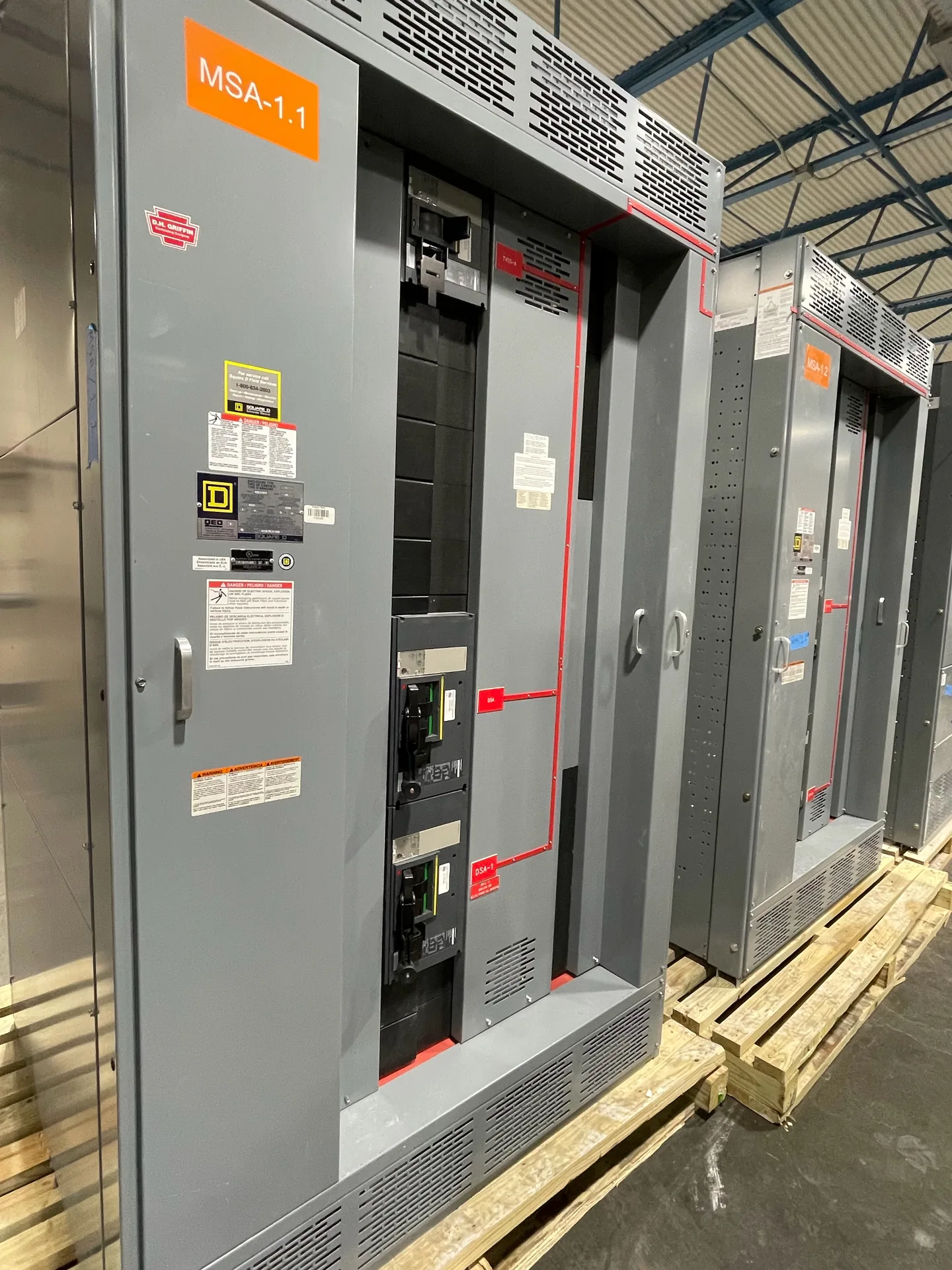
With equipment in the condition required by approved site procedures, qualified personnel can compare the lineup with its drawings and inspect accessible areas for shipping or installation damage, missing parts, loose debris, moisture, corrosion or other visible concerns. Check that identification labels and circuit markings are present and agree with the approved documents. Confirm that covers, barriers, doors and specified accessories appear complete and properly fitted, without reaching into hazardous spaces or bypassing safeguards. Look for signs that may warrant further evaluation, such as damaged insulation, displaced components or evidence of contamination; do not treat a visual review as proof of electrical integrity. If a concern is found, document its location and condition, keep the affected equipment out of service as required by site procedures, and refer disposition to qualified personnel and the manufacturer or project authority. Inspection criteria depend on the equipment and its instructions.
Verify connections
Review field terminations and wiring against the approved drawings and the equipment instructions, with the required safe work condition established under site procedures. Confirm that conductors, phase identification, control wiring and grounding or bonding arrangements match the approved design; do not infer correctness from appearance alone. Where project documents specify torque values or a verification method, qualified personnel should use the stated procedure and suitable calibrated tools, recording results when required. Values and methods are equipment-specific, so avoid substituting generic tables or assumptions. Confirm that cable routing and bend space do not conflict with barriers, moving parts or access requirements, and that temporary shipping restraints or installation materials are handled as instructed. Any mismatch, uncertain termination, damaged conductor or incomplete record should be resolved before sign-off. This review does not authorize energized work or replace required installation, testing or inspection procedures.
Review protection
Compare protective-device types, ratings, settings and related control functions with the approved coordination study, equipment schedule and project requirements. Confirm that the installed devices and their identifiers match the design, and that any adjustable settings have been documented and independently reviewed where project procedures require it. Do not copy settings from a similar lineup or rely on labels alone; settings are specific to the system and must be established or verified by qualified personnel using approved information. Check that trip units, sensors, relays, control power and interlocking functions included in the project scope have the required configuration and records. Testing, injection methods and acceptance criteria should follow the equipment instructions and approved commissioning plan, when applicable. If a study, setting, device or test result is missing or inconsistent, escalate it to the responsible engineer or designated authority rather than making an unapproved field change.
Record approval
Before energization, bring the completed inspection and verification records together with the open-item log, test reports required by the project, approved settings documentation and any applicable inspection or acceptance records. Confirm that exceptions have a documented disposition and that required covers, barriers, labels and access controls are restored in accordance with the equipment instructions and site procedures. The designated qualified personnel and project authority should review the evidence and provide the sign-off required by the project’s formal energization process. A checklist alone is not authorization to energize, and no single signature replaces permits, coordination, utility or owner approvals when those apply. Record the equipment identification, document revisions, dates, reviewers and any conditions or limitations. If required evidence is absent, results are unresolved or site conditions have changed, defer authorization and follow the established process for reassessment.