
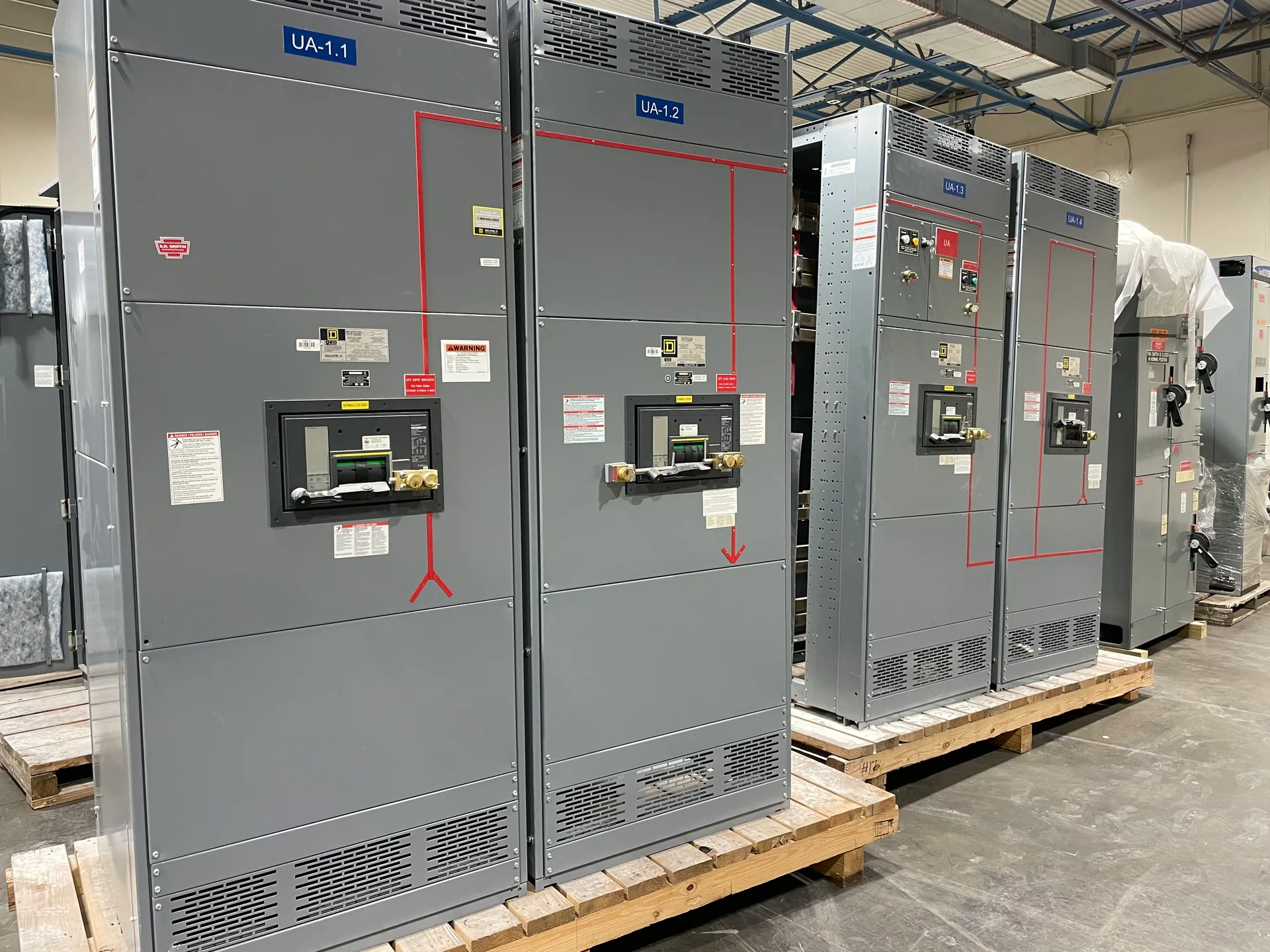
RATINGS / MANUFACTURER DIRECT
A 120/240 V label does not identify the service by itself. Buyers should confirm whether the project calls for single-phase split-phase power or a particular three-phase arrangement, then match the equipment design to the utility connection and actual loads. Switchgear Builder Virginia manufactures custom new equipment in the USA using all-American components, with nationwide shipping. The service configuration, ratings, schedule, and applicable requirements must be established and verified for each quote.
Confirm the Phase
Start with the utility’s stated service, not an assumption based on the 120/240 V notation. A common single-phase split-phase service provides 120 V line-to-neutral and 240 V line-to-line, but a three-phase system may present different conductors and relationships. Ask the serving utility or project electrical engineer to identify the available phase, voltage, grounding arrangement, and service point in writing. A drawing that simply says “120/240” may omit information needed to select an assembly. Confirm whether the equipment is service entrance equipment or downstream distribution, and identify the intended source and destination. These details affect bus configuration, neutral treatment, protective devices, and arrangement. A custom build can follow documented project requirements, but the quote should not treat an ambiguous voltage label as confirmation of phase or compatibility. Resolve discrepancies among utility documents, one-line diagrams, and equipment schedules before specifying.
Assess Delta Carefully
Some projects may involve a three-phase delta arrangement, but the voltage label alone does not establish that configuration or show which conductors are available. A high-leg delta service, where present, requires particular attention to conductor identification, phase-to-neutral voltages, and how single-phase loads are distributed. Do not infer the arrangement from an existing panel label or assume every 120/240 V load can connect in the same way. Request the utility service information and a current one-line diagram, then have the responsible electrical professional verify the source configuration. Specify whether the proposed equipment must serve three-phase loads, single-phase loads, or both, and document the required voltage at each load. Those decisions help define bus and circuit requirements. Any special phase arrangement, neutral provision, or protective-device selection must be confirmed against the actual project and the applicable design requirements before release.
Define Neutral and Loads
List the loads before choosing the assembly layout. Identify which equipment needs 120 V line-to-neutral, which requires 240 V line-to-line, and whether any three-phase loads are present. Include load schedules, expected demand, motor information, and planned future circuits when available; the design team can determine what information is needed for sizing. Confirm whether a neutral is required, which circuits use it, and how the specified grounding and bonding approach applies to the installation. Neutral requirements are not interchangeable across every service configuration, so a generic four-wire assumption may be wrong. Also note sensitive electronics, nonlinear loads, or equipment with special manufacturer requirements for the engineer’s review. These details influence circuit count, bus arrangement, device selection, and space planning. The final equipment ratings and configuration remain subject to project documentation, engineering review, and quote verification.
Verify Ratings and Scope
Voltage is only one part of an equipment specification. The buyer’s documents should establish the required continuous current, available fault current, protective-device characteristics, enclosure and environmental needs, and any applicable service or installation constraints. These are project-specific requirements, not ratings that can be inferred from “120/240 V.” Ask the design professional to coordinate the equipment specification with the utility information and the complete one-line diagram. Identify whether metering, distribution sections, incoming devices, or other components belong in the requested scope, and state any dimensional or access limits. For a low-voltage switchboard, determine whether UL 891 applies to the specified assembly; applicability and any listing or approval must be verified for the actual equipment and project. Switchgear Builder Virginia can quote custom new equipment against confirmed requirements; ratings, scope, and schedule are subject to review and quote.
Prepare a Clear RFQ
A useful request for quotation includes the utility’s confirmed service description, the one-line diagram, load schedule, required phase and neutral details, and the intended equipment role. Add specified ratings, protective-device requirements, enclosure conditions, available installation space, and any project standards that apply. If documents conflict or leave the phase arrangement unclear, mark the open questions instead of filling gaps with assumptions. Ask the engineer or utility to resolve them before equipment release. The manufacturer can then review the documented scope and identify information needed to prepare a quote. Switchgear Builder Virginia manufactures new custom equipment in the USA with all-American components and ships nationwide; actual configuration, ratings, and lead-time expectations require project review and quote verification. Clear inputs make it easier to compare proposals on the same technical basis, while avoiding an order based only on a nominal voltage label.