
RATINGS / MANUFACTURER DIRECT
A 3200 A designation is a starting point for defining a new assembly, not a complete equipment rating. Switchgear Builder Virginia manufactures custom switchgear in the USA using all-American components, with nationwide shipping and short lead times subject to project scope and quotation. Buyers should establish what the 3200 A figure applies to, how feeders divide the load, and whether shipping dimensions require transport splits. Final availability, configuration, schedule, and assembly-specific ratings must be confirmed for the project.
Define the 3200 A rating
First clarify whether 3200 A describes the main device, the bus, or both. Those values are related but do not automatically mean the assembly has a 3200 A rating in every operating condition. The design review should identify the system voltage, number of phases and wires, source arrangement, frequency, and intended duty. Also establish whether the equipment is a low-voltage switchboard or another type of switchgear, since construction and applicable standards differ. For applicable low-voltage switchboards, UL 891 may be a project requirement; confirm that the proposed assembly and configuration fall within its scope. Do not infer an interrupting rating, withstand rating, temperature rise, or suitability for a particular installation from the 3200 A label alone. Request documentation that states the specific ratings and conditions for the quoted assembly, then compare those details with the project electrical documents.
Match main and bus
A 3200 A main and a 3200 A bus are not interchangeable specifications. The main device must suit the source and protection plan, while the bus must be evaluated for the assembly configuration and the conditions stated in its documentation. Clarify whether the design has one main, multiple sources, a tie, or another arrangement, and define how normal and alternate operating modes affect current paths. Where a tie or alternate source is contemplated, the review should account for which devices can be closed together and what that means for the bus and protective scheme. Confirm the required short-circuit performance and coordination with the project engineer rather than selecting from amperage alone. A custom build can address project-specific layouts, but available devices, bus details, ratings, and any required approvals remain subject to quotation and verification for the actual design.
Plan feeder distribution
Feeder count and load distribution shape the lineup just as much as the main rating. Provide a schedule showing each feeder’s load, protective-device type and rating, cable or busway connection, and intended destination. Identify which loads are continuous, sensitive to interruption, or expected to start together, and have the responsible engineer determine how demand and protection should be evaluated. A 3200 A bus does not mean every feeder can operate at its nameplate current simultaneously, nor does it establish spare capacity. Reserve space only after considering future circuits, access, cable bending space, heat-producing devices, and the physical arrangement of sections. If metering, ground-fault functions, or special control features are needed, state them as project requirements for review; their inclusion and compatibility should be confirmed on the proposed drawings. This information helps buyers compare practical layouts instead of relying on a headline ampere value.
Review transport splits
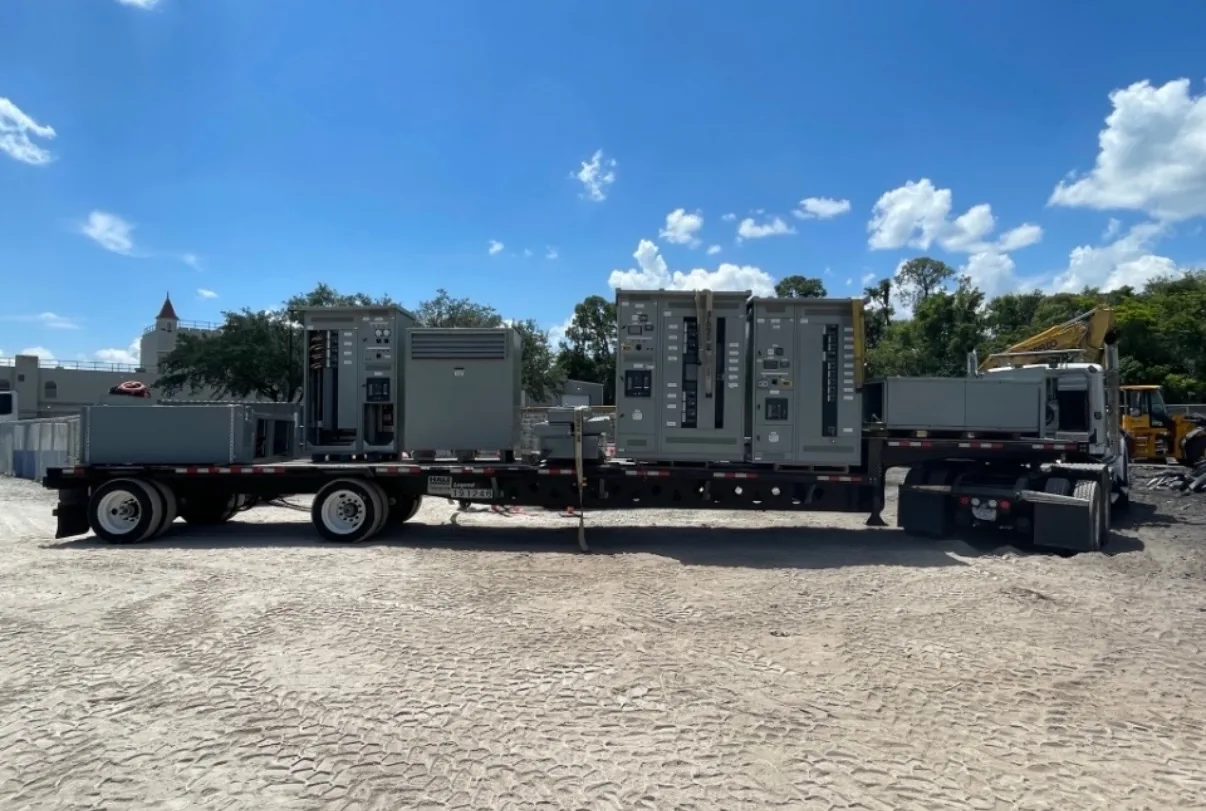
A high-current lineup may need to be divided into shipping sections to suit route limits, lifting arrangements, building access, or the installation sequence. Decide early whether sections can enter the electrical room, pass through doors and corridors, and be moved to their final position with the available rigging plan. A transport split is not merely a packaging choice: the field reassembly method, inter-section bus connections, alignment, and documentation must be addressed for the specific assembly. Ask the manufacturer to show proposed section dimensions and connection points on the layout, then have the project team check those details against site access and handling plans. Do not assume a preferred split preserves every rating without conditions; confirm the completed assembly’s applicable ratings and required field work. Shipping timing and configuration are established through the project quotation and review, not inferred from a nominal 3200 A rating.
Verify before release
Before approving drawings, reconcile the one-line diagram, equipment schedule, room plan, feeder list, source arrangement, and required ratings. Ask for the exact proposed main-device and bus ratings, short-circuit information, section arrangement, connection details, and any applicable listing or approval documentation. Resolve discrepancies between the specification and the proposed equipment before release; a general 3200 A description cannot settle those details. Switchgear Builder Virginia manufactures new custom switchgear directly in the USA with all-American components and ships nationwide. Lead times are short, but the project schedule must be confirmed for the quoted scope and current production plan. Check that submittals identify any assumptions, exclusions, or field responsibilities, including work associated with transport splits. Final suitability depends on the verified assembly and installation requirements, so the electrical engineer and other responsible project professionals should review the equipment documents before procurement and installation.